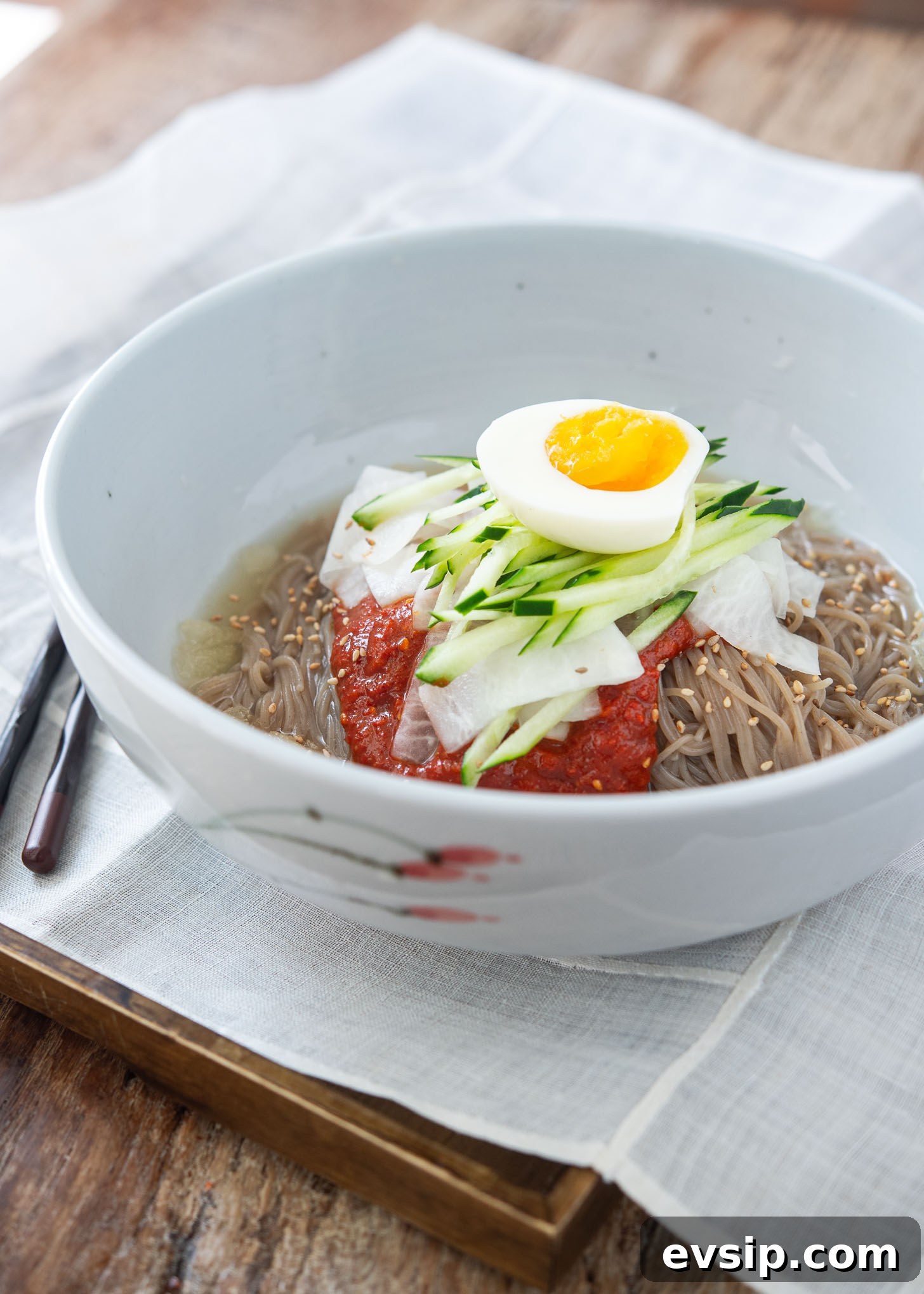
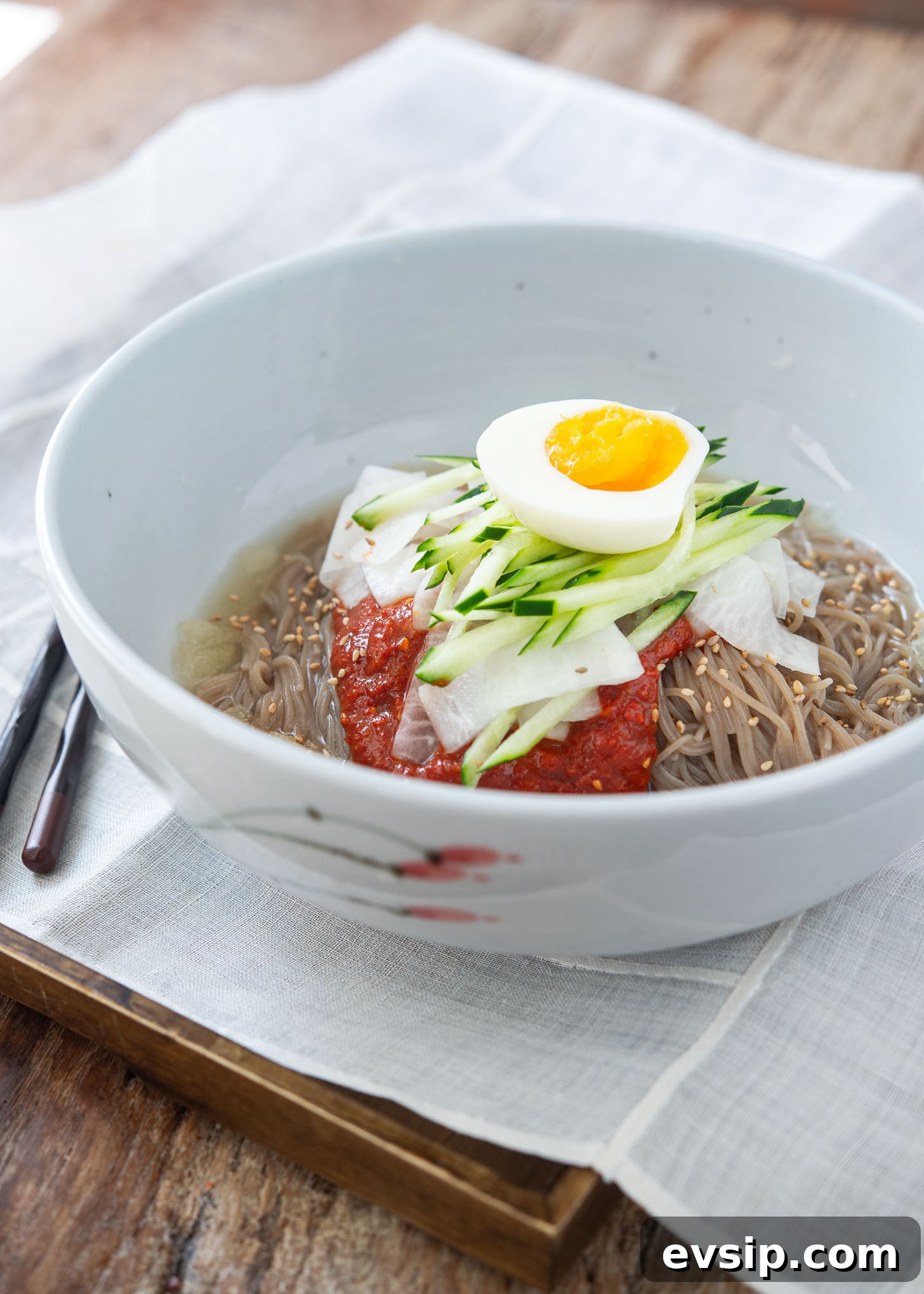
Bibim naengmyeon is a spicy Korean cold noodle dish featuring chewy buckwheat noodles tossed in a bright, gochugaru-based sauce and finished with crisp cucumber, pickled radish, pear, and a boiled egg. This no-cook, summer-ready meal comes together quickly and delivers a refreshing, flavor-packed bowl you can make at home.
Get new recipes via email:
I didn’t grow up eating much bibim naengmyeon, so discovering it later felt like unlocking a new favorite: spicy, cold, chewy noodles that hit the spot on hot days. Originating in Korea’s northern regions, naengmyeon has both broth-based and saucy versions; bibim naengmyeon is the dry, spicy style tossed in sauce rather than served in icy soup.
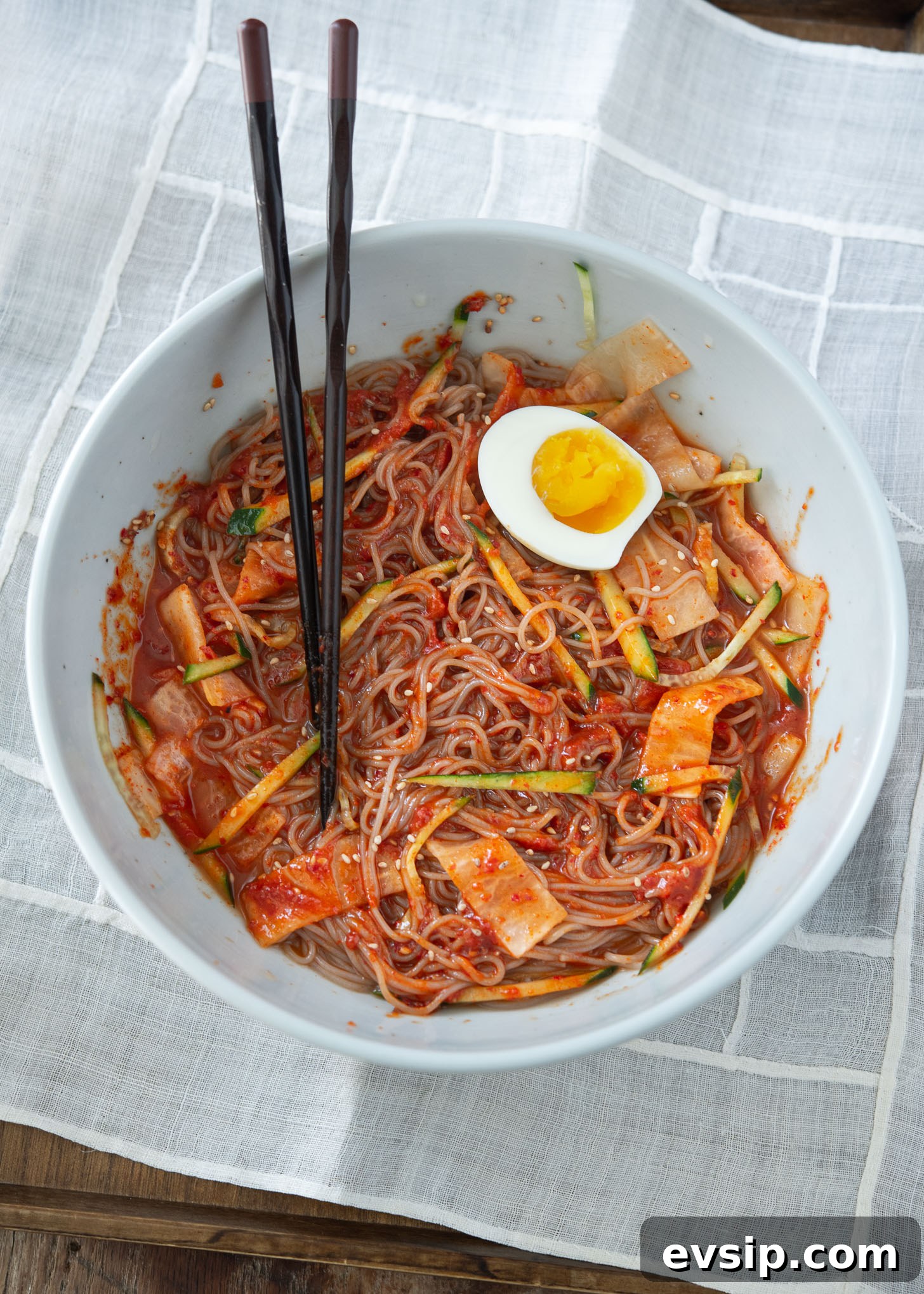
Over time I refined this recipe to capture that restaurant-style balance: bright heat from gochugaru, a hint of sweetness from fruit, a touch of tang from vinegar, and sesame for nuttiness. I include a couple of shortcuts—like using gochugaru instead of gochujang for a cleaner chili flavor—and an optional quick beef broth technique that gives a restaurant-like finish without hours of simmering.
If you prefer a milder, kimchi-forward cold noodle, bibim guksu is a great alternative that uses wheat noodles and a slightly tangier profile but keeps the slurp-worthy appeal.
Bibim Naengmyeon vs Mul Naengmyeon
Bibim naengmyeon is served without broth and is coated in a spicy, gochugaru-forward sauce for a bold, punchy flavor. Mul naengmyeon, by contrast, arrives in an icy, tangy broth that’s lighter and more refreshing. Both use chewy buckwheat noodles, but their textures and flavor profiles feel distinctly different.
When Koreans Eat Naengmyeon
Naengmyeon is most popular in the hot summer months, when cold, refreshing dishes are appealing. It’s also commonly served after Korean BBQ (samgyupsal) as a cool, spicy way to finish a meal.
Key Ingredients for Bibim Naengmyeon
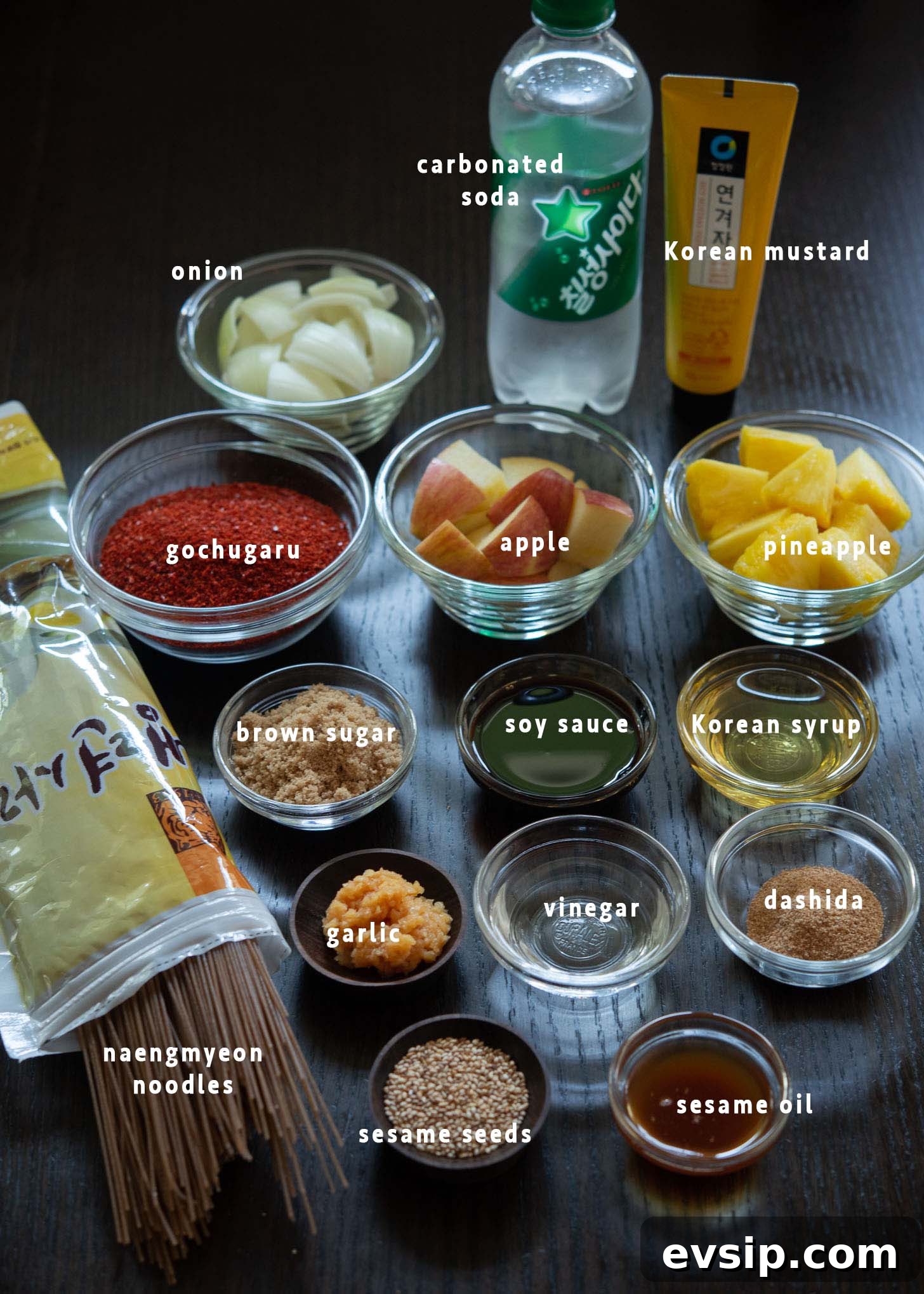
Naengmyeon Noodles (Buckwheat-Based)
Use dried naengmyeon noodles (naengmyeon sari) made from buckwheat and wheat flour for authentic texture. They’re chewy, slightly nutty, and hold up well to the sauce. If your bundle is long, snip the noodles with kitchen scissors before cooking, as many restaurants do.
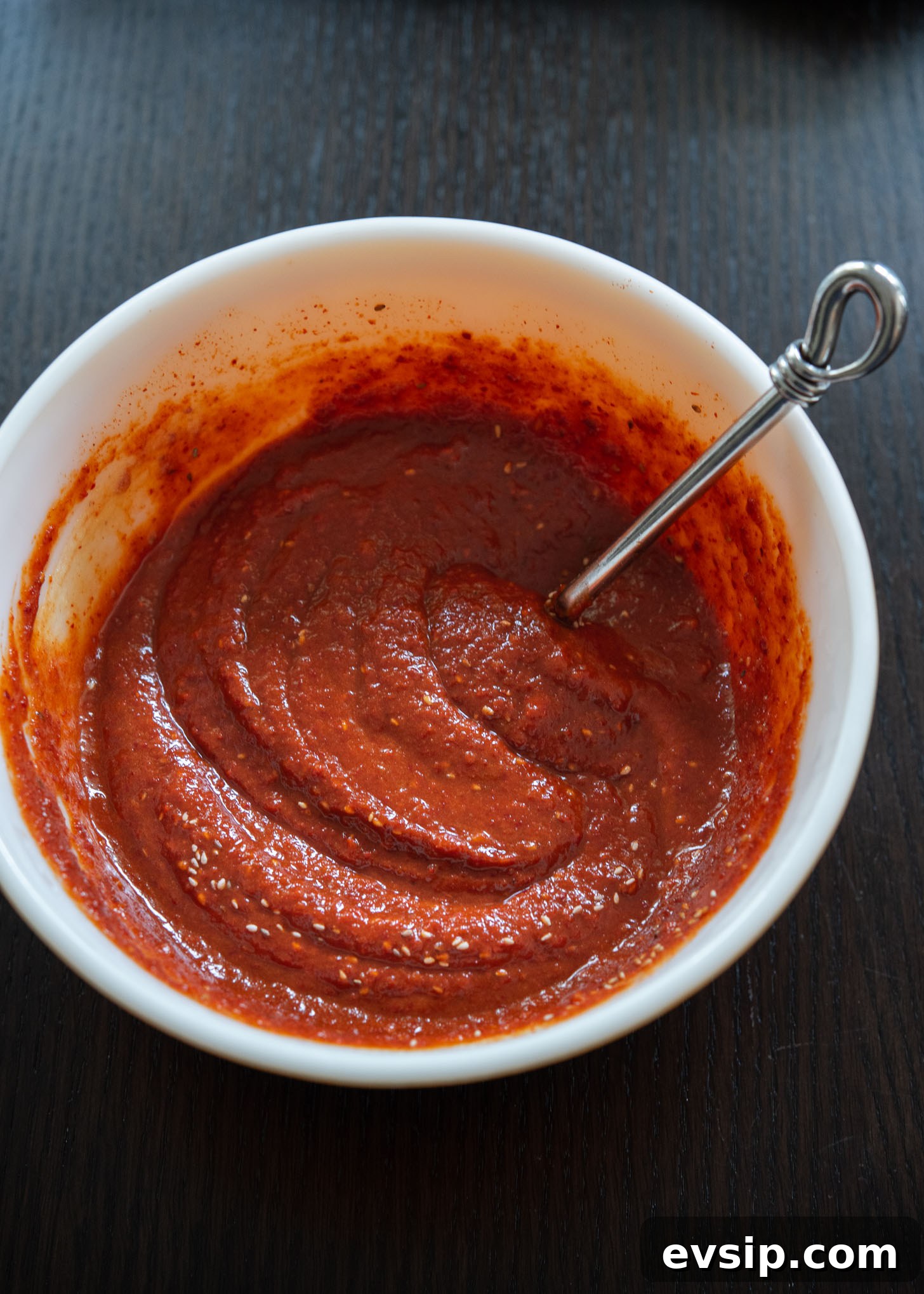
Bibim Sauce (Spicy Chili Sauce)
For a bright, clean heat I use gochugaru (Korean red chili flakes) rather than gochujang. The sauce combines gochugaru, a boiled soy sauce base, vinegar, brown sugar, and sesame oil, with fresh apple and pineapple blended in to add subtle sweetness and fruitiness. Make the sauce ahead and chill for at least 20 minutes—overnight is even better.
Beef + Broth (Optional)
Thinly sliced boiled or roasted beef is a classic topping. An icy, slightly savory broth can be added in small amounts to loosen the noodles and give a restaurant-style finish. One quick method is to mix water, a lemon-lime soda, beef bouillon powder, and a touch of mustard, then freeze flat until slushy and crush before serving. For a vegetarian option, use a light mushroom stock instead.
How to Make Bibim Naengmyeon (Spicy Cold Buckwheat Noodles)
Once your sauce and toppings are ready, the dish comes together quickly. The steps below cover the optional slushy broth, the bibim sauce, quick-pickled radish, noodle cooking technique, and assembly.
Quick Beef Broth (Optional)
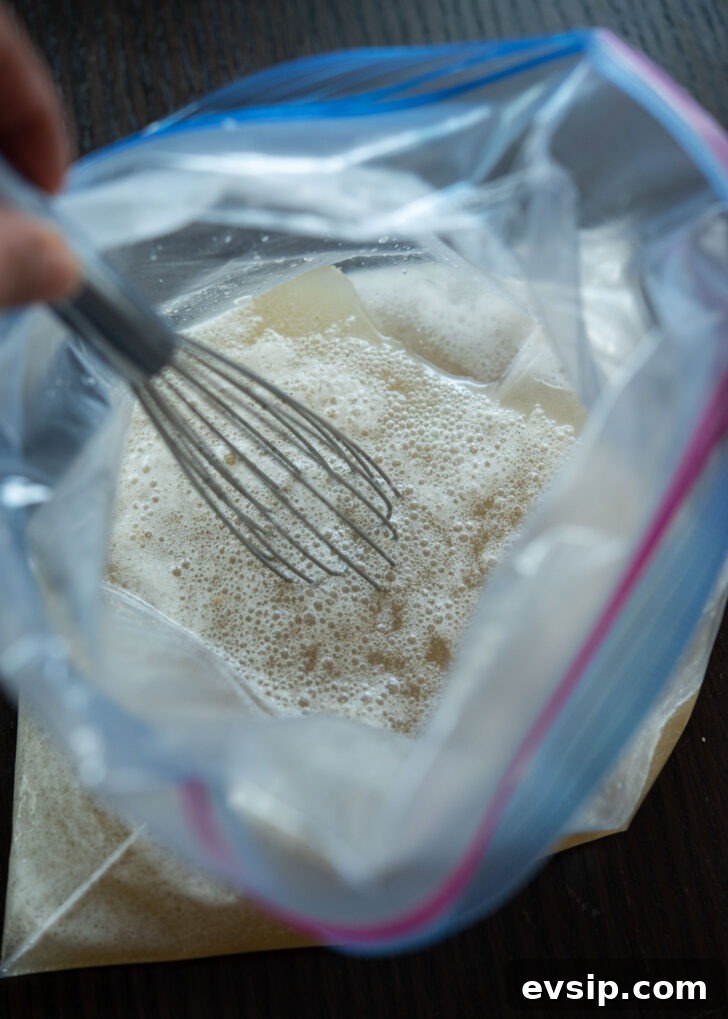
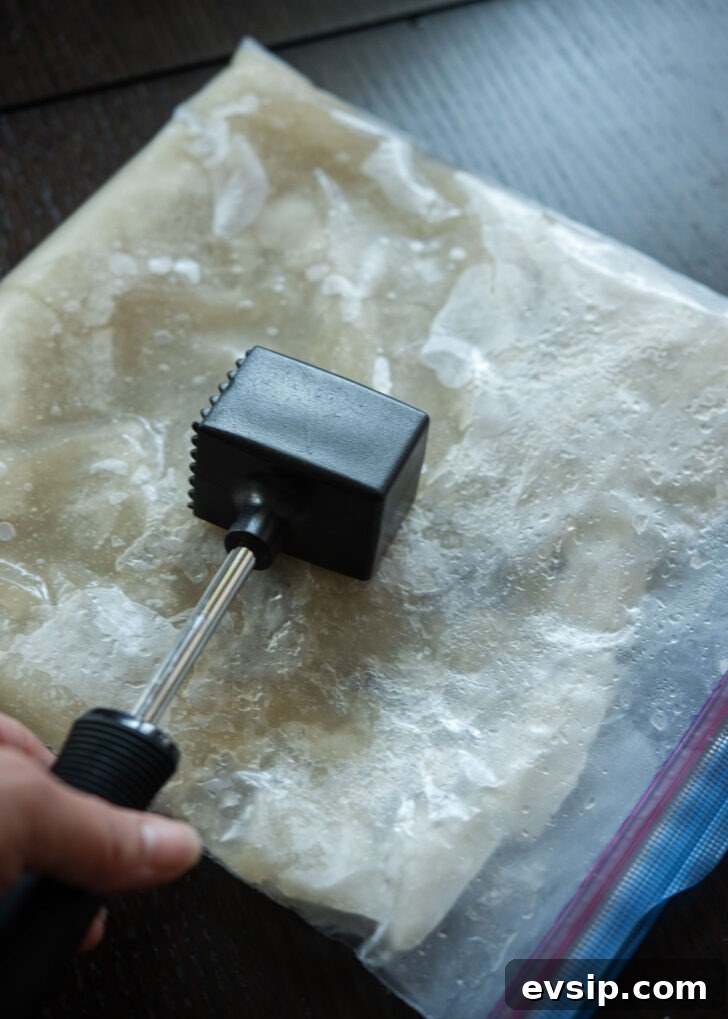
Mix water, a lemon-lime soda, beef bouillon powder, and mustard in a sealable bag. Freeze flat for 1–2 hours until partially frozen, then crush into a slush just before serving. Add a small scoop of this icy broth to the bottom of the bowl if desired.
Bibim Sauce
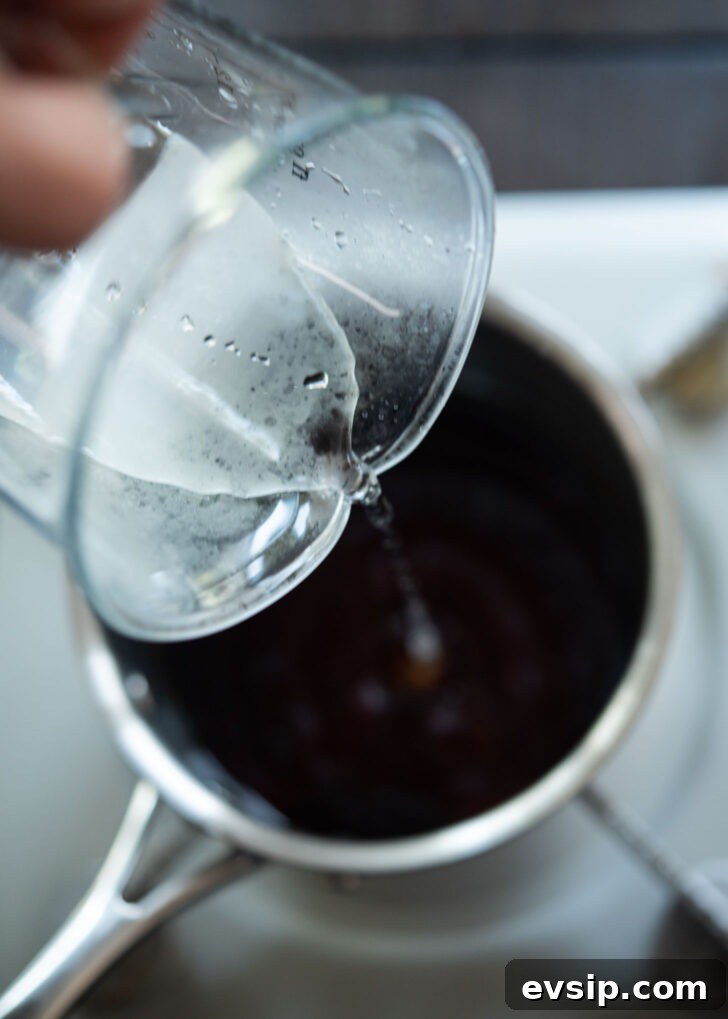
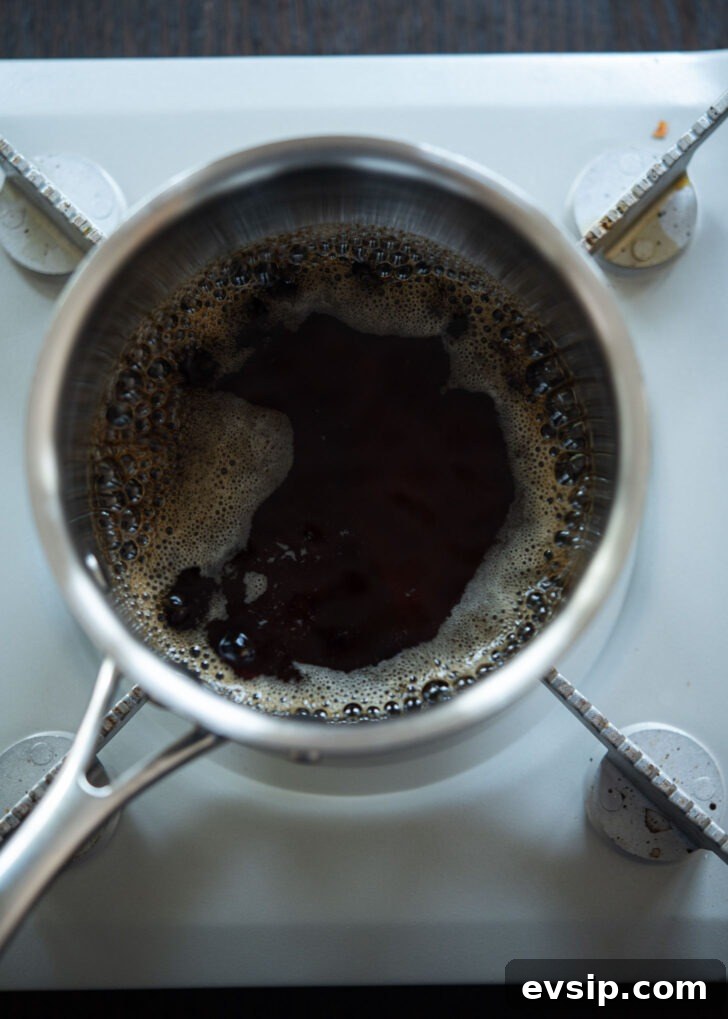
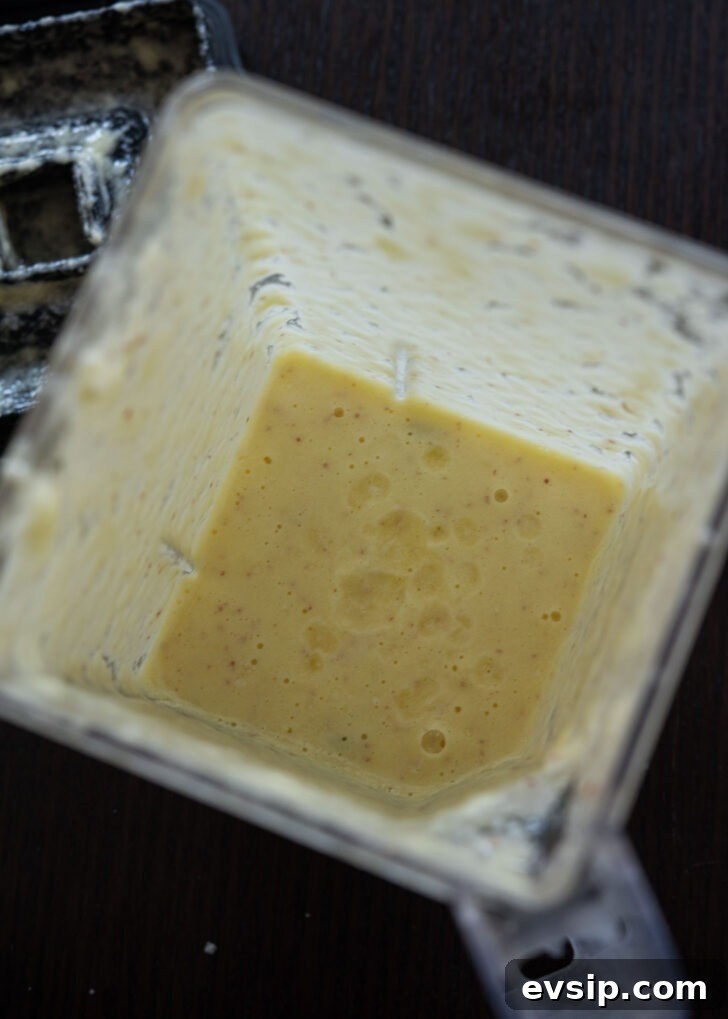
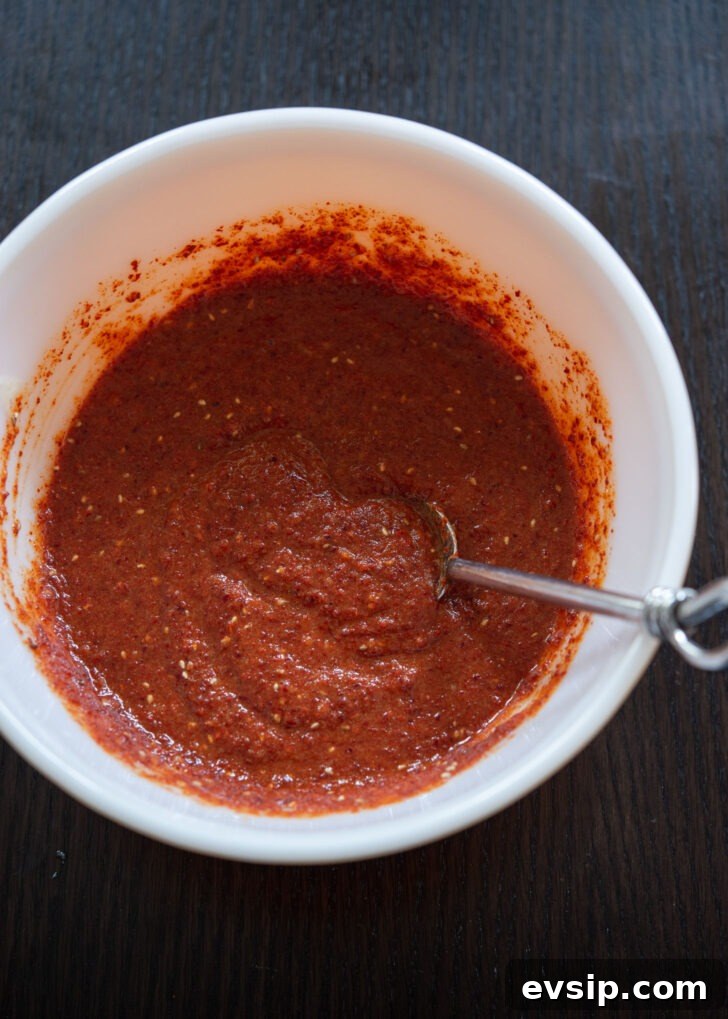
Boil soy sauce with water, then cool. Puree onion, garlic, apple, and pineapple with a bit of water, then combine the puree with the soy mixture, gochugaru, brown sugar, syrup or honey, ginger, mustard, sesame oil, and sesame seeds. Chill before using; the flavors meld and mellow as the sauce rests.
Radish Topping
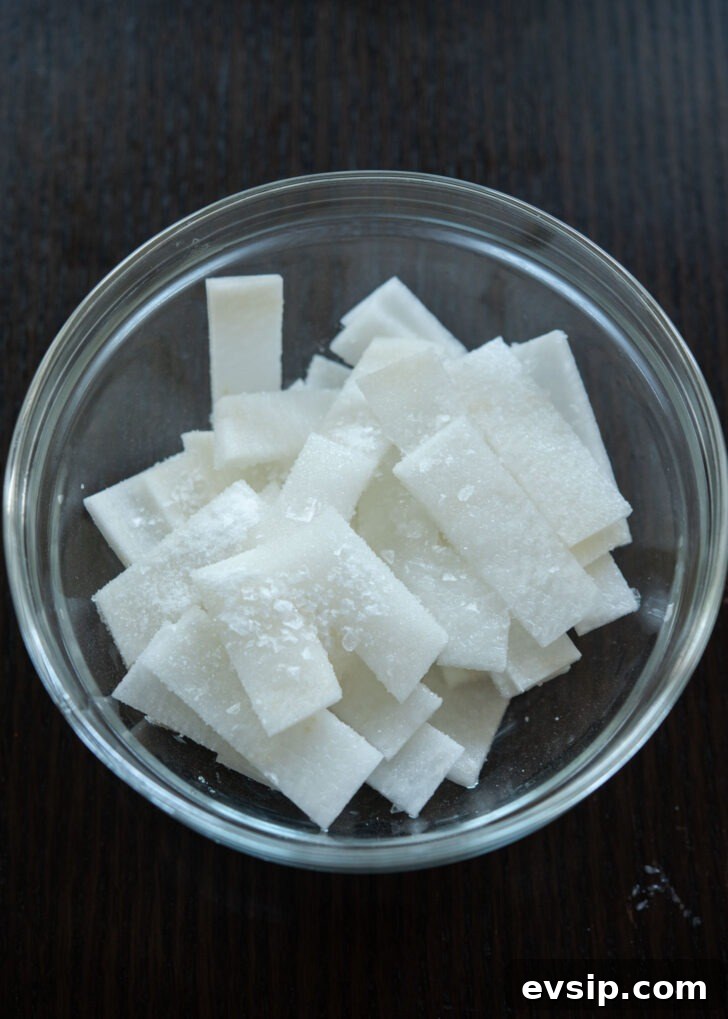
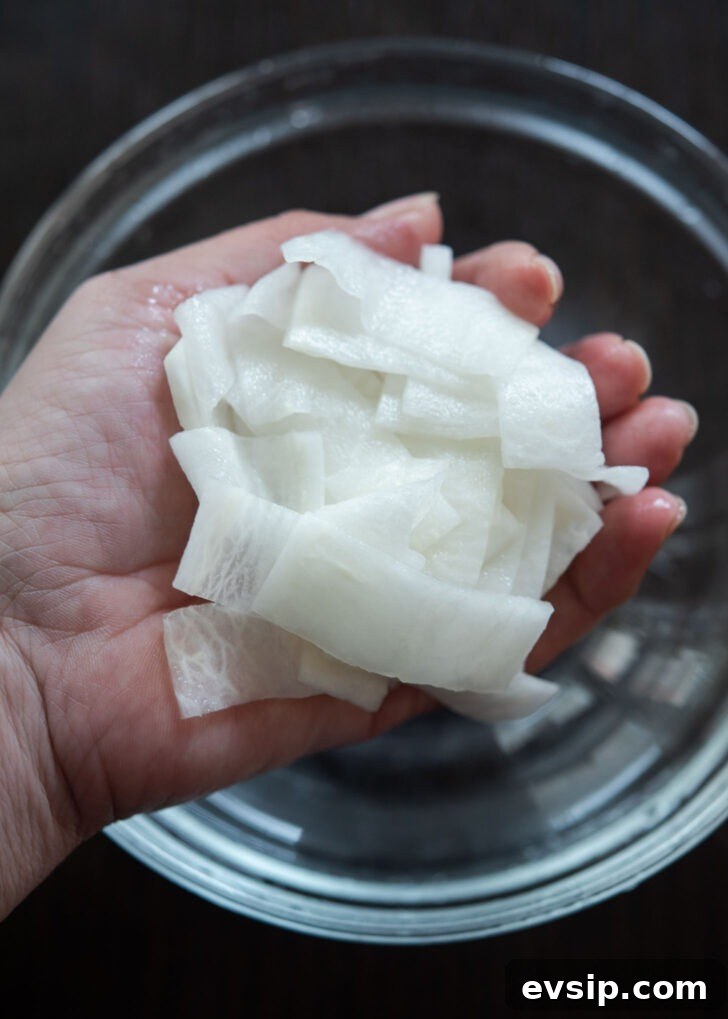
Quick-pickle thin radish strips with salt, sugar, and vinegar for about 20 minutes. Rinse and squeeze out excess water before using. The tangy crunch brightens the bowl and provides contrast to the spicy sauce.
Noodles
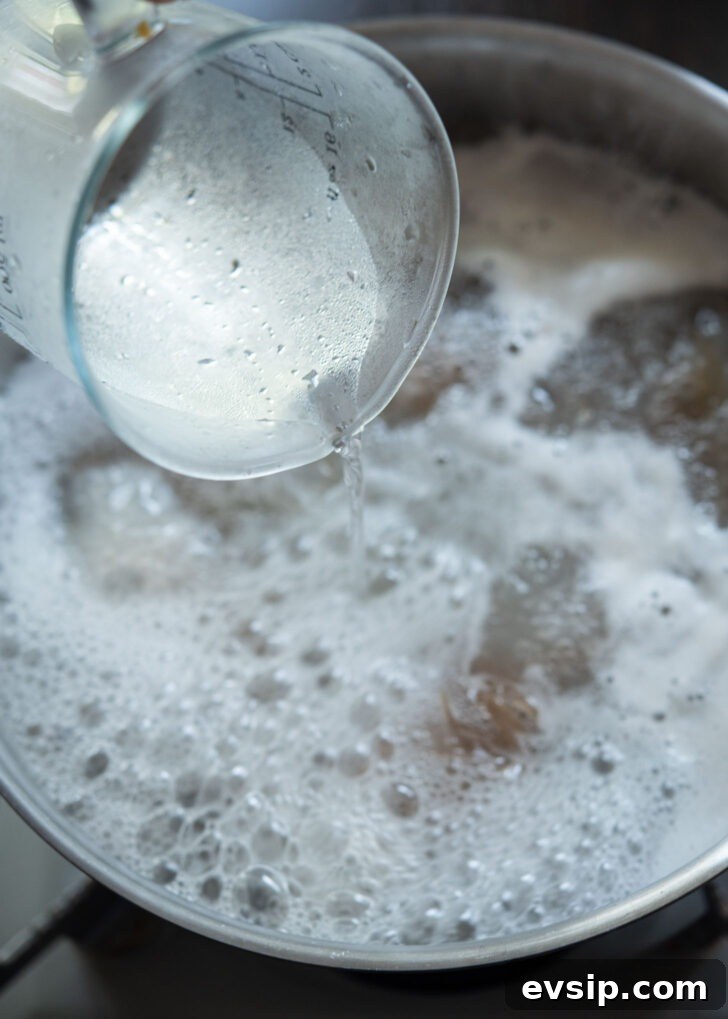
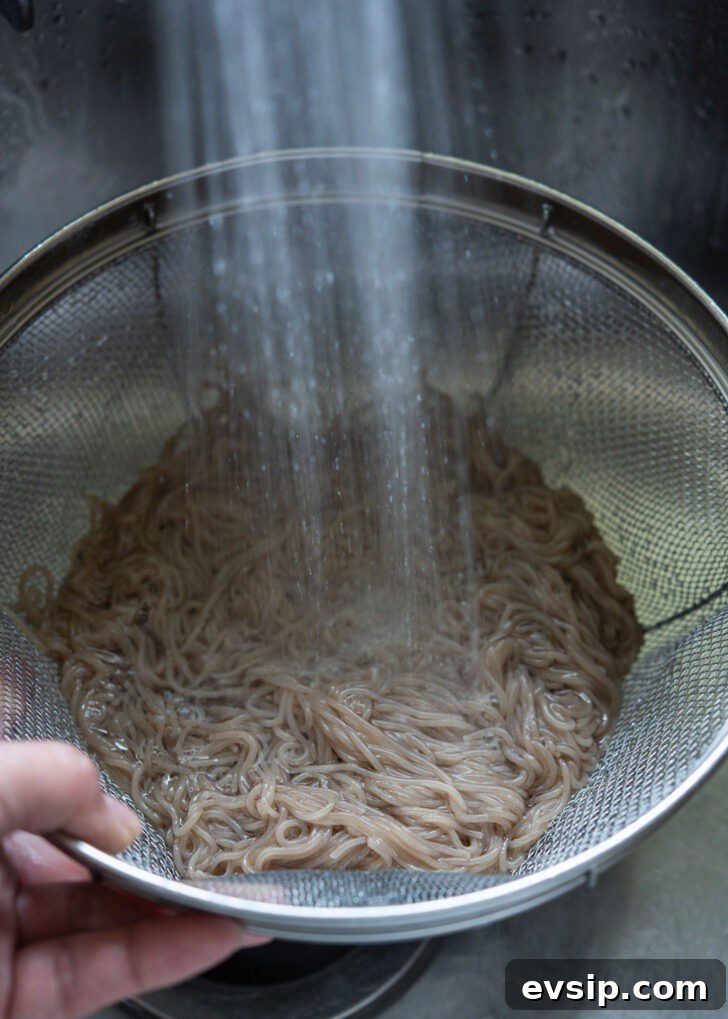
Cook the noodles according to the package. For extra chew, add a splash of cold water to the boiling pot once it returns to a boil; repeat 2–3 times. This temperature shock tightens the starch and creates the signature elastic texture. Rinse the cooked noodles thoroughly under cold water and drain well.
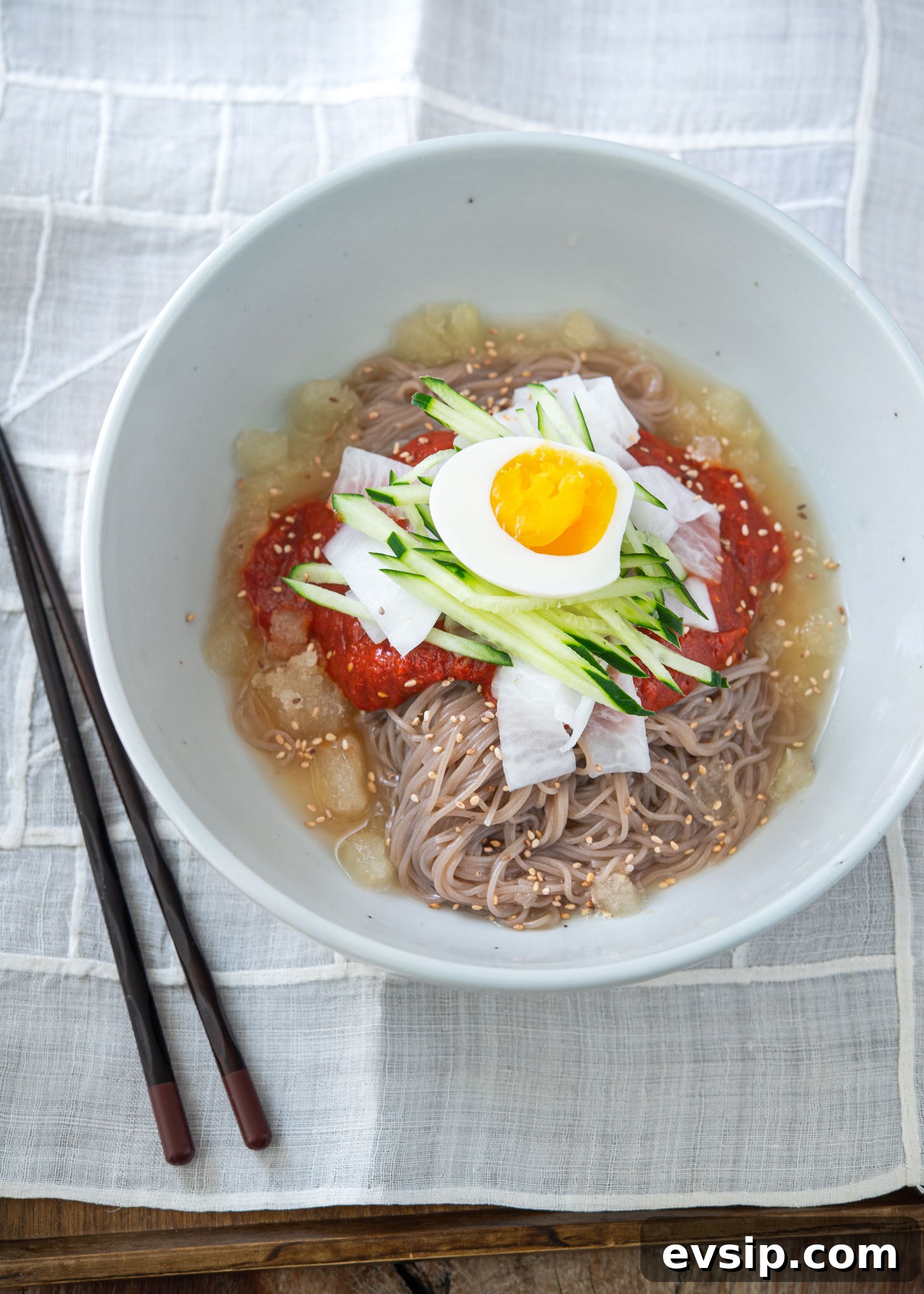
Assemble and Serve
Place a small amount of crushed icy broth in the bottom of the serving bowl if using. Add the drained noodles, then spoon 6–8 tablespoons of bibim sauce over the top (adjust to taste). Garnish with pickled radish, cucumber matchsticks, thinly sliced Korean pear (optional), and a halved boiled egg. Sprinkle toasted sesame seeds and finish with a little extra mustard or vinegar if you want more tang.
This dish is bright, spicy, and perfectly refreshing for warm weather. Adjust heat and sweetness to your preference, and enjoy a restaurant-style bowl at home.
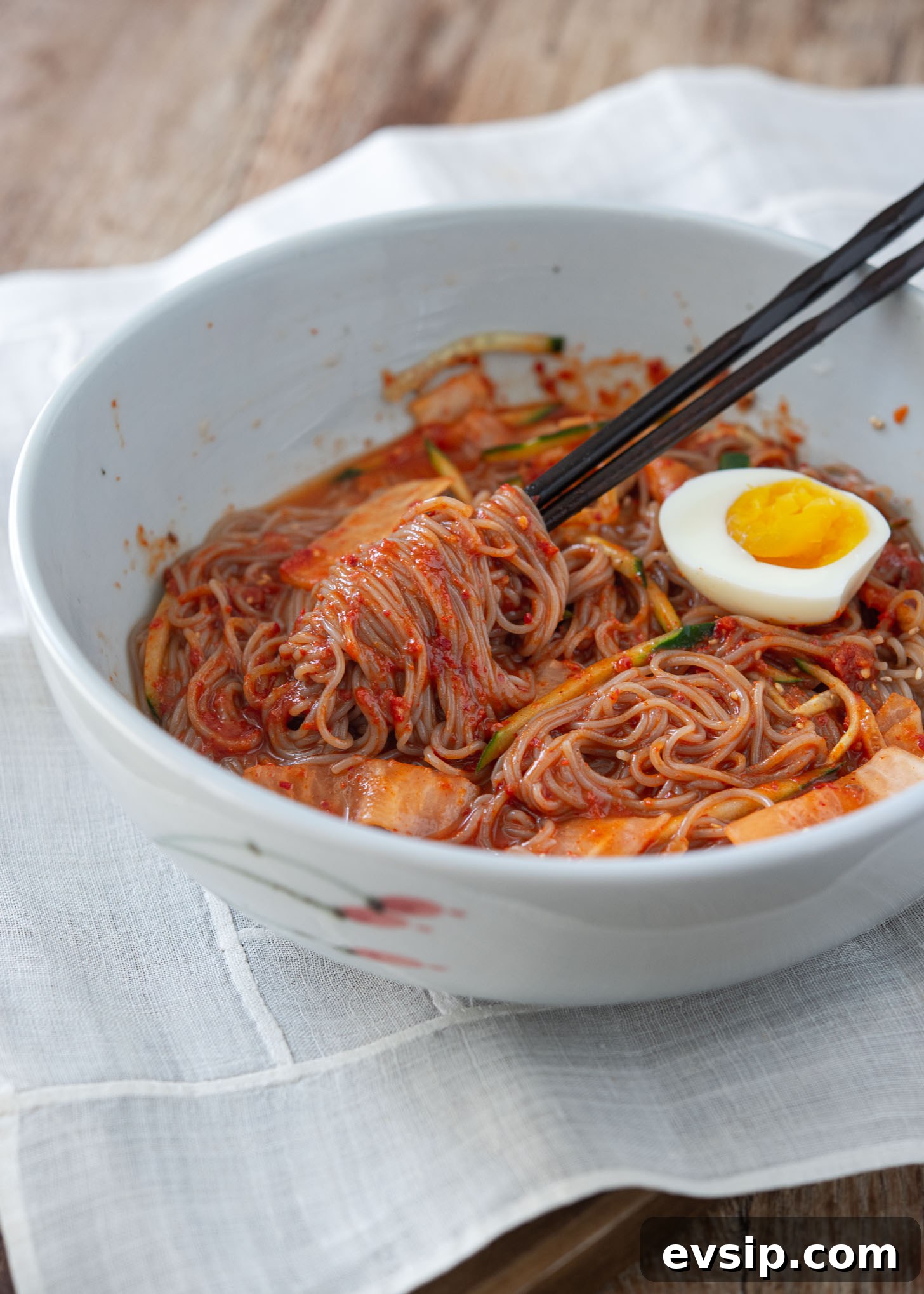
Love this recipe? Rate it and share your experience in the comments below. If you post on Instagram, tag @beyondkimchee to show your creation. For more recipes, subscribe to the newsletter.
Bibim Naengmyeon (Spicy Cold Buckwheat Noodles)
Ingredients
- 8 servings Korean naengmyeon noodles
- 1 Asian cucumber, sliced to thin matchsticks
- ½ Korean or Asian pear (optional), thinly sliced
- 4 hard-boiled eggs, halved
Optional beef broth
- 4 cup (960 ml) water
- 1 cup (240 ml) lemon-lime carbonated soda
- 2 tbsp (15 g) Korean beef bouillon powder
- 4 tsp (20 g) Korean mustard or 2 tbsp dijon
Quick radish topping
- ½ (about 300 g) Korean or daikon radish, cut into thin strips
- 1 tbsp (15 g) salt
- 2 tbsp (25 g) sugar
- 2 tbsp (30 ml) vinegar
Bibim naengmyeon sauce
- ¼ cup (60 ml) soy sauce
- ½ cup (120 ml) water
- ½ apple, peeled and diced
- ½ medium onion, peeled and diced
- 5 oz (150 g) pineapple, fresh or canned
- 1 clove garlic
- 3 tbsp (45 ml) water or pineapple juice
- 1 cup (80 g) gochugaru (Korean chili flakes)
- ¼ cup (60 ml) white vinegar, or more to taste
- ⅓ cup (70 g) brown sugar
- 4 tbsp Korean syrup or 3 tbsp honey
- 2 tbsp sesame oil
- 1½ tsp ginger puree or ½ tsp powdered ginger
- 1 tsp Korean mustard or 2 tsp dijon
- 1 tsp salt
- 1 tbsp toasted sesame seeds
Instructions
To make optional beef broth
- Whisk water, carbonated drink, beef bouillon powder, and mustard in a zip-top bag. Seal and lay flat in the freezer for 1–2 hours until partially frozen.
To make naengmyeon sauce
- Combine soy sauce and water in a small pot and bring to a full boil. Remove from heat and cool.
- In a blender, puree onion, garlic, apple, pineapple, and 3 tablespoons water until smooth.
- Mix the puree with the soy mixture, gochugaru, brown sugar, syrup or honey, ginger, mustard, sesame oil, and sesame seeds. Chill for at least 20 minutes or overnight.
To make radish topping
- Combine radish strips with salt, sugar, and vinegar and let sit 20 minutes. Rinse and squeeze out excess moisture.
To cook noodles
- Bring a pot of water to a boil, add noodles, and stir. When it returns to a boil, add a splash of cold water; repeat 2–3 times until noodles are soft and chewy. Drain and rinse under cold water.
To assemble bibim naengmyeon
- Crush the partially frozen broth into a slush and add about ½ cup to the serving bowl if using.
- Place the noodles in the bowl, spoon 6–8 tablespoons of bibim sauce over them, and garnish with pickled radish, cucumber, pear (optional), and a boiled egg. Sprinkle toasted sesame seeds and adjust seasoning to taste. Serve immediately.
Carbohydrates: 89 g
Protein: 17 g
Fat: 12 g