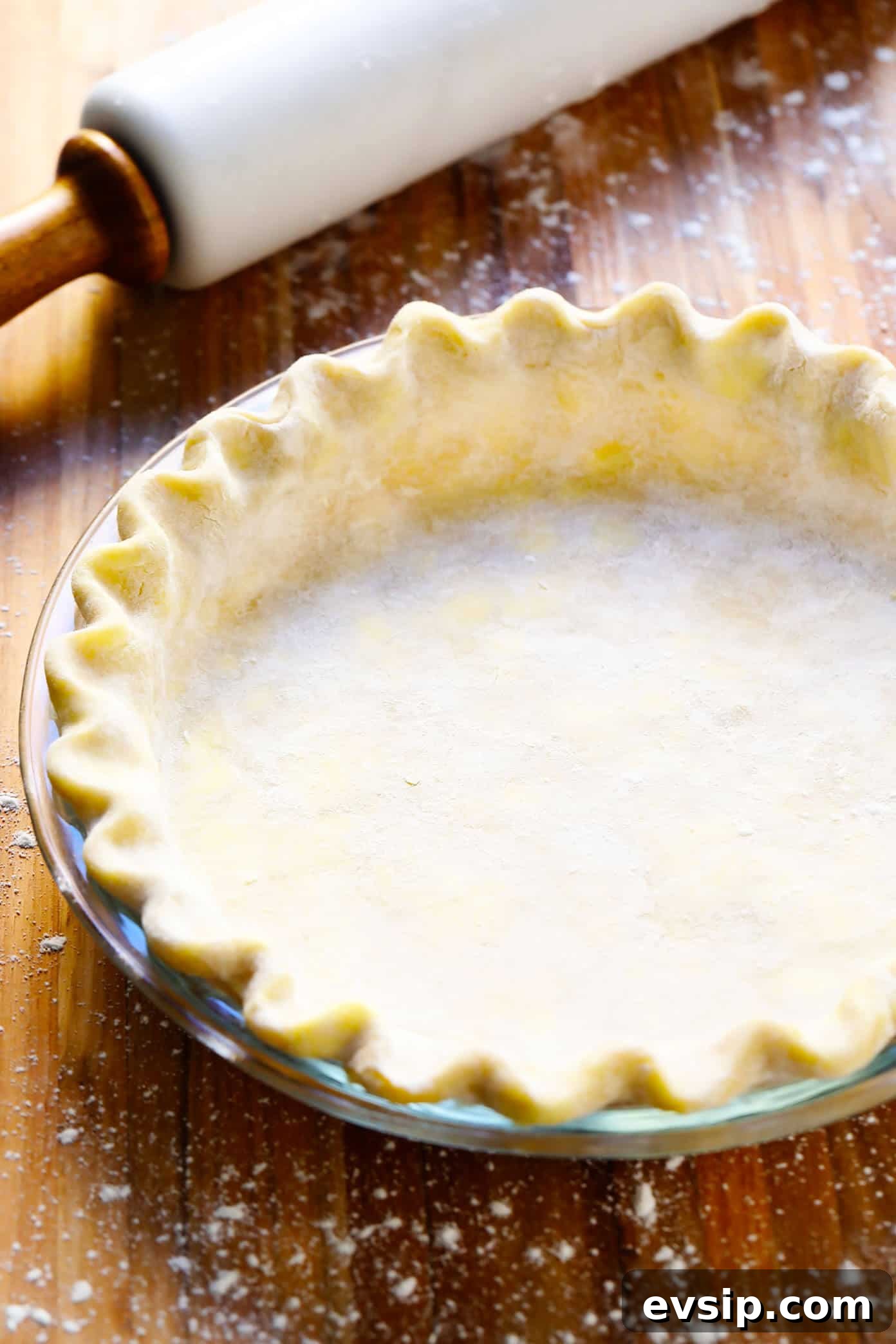
A clear, step-by-step photo guide to making a flaky all-butter pie crust—either completely by hand or with a food processor—plus my favorite easy homemade pie crust recipe.
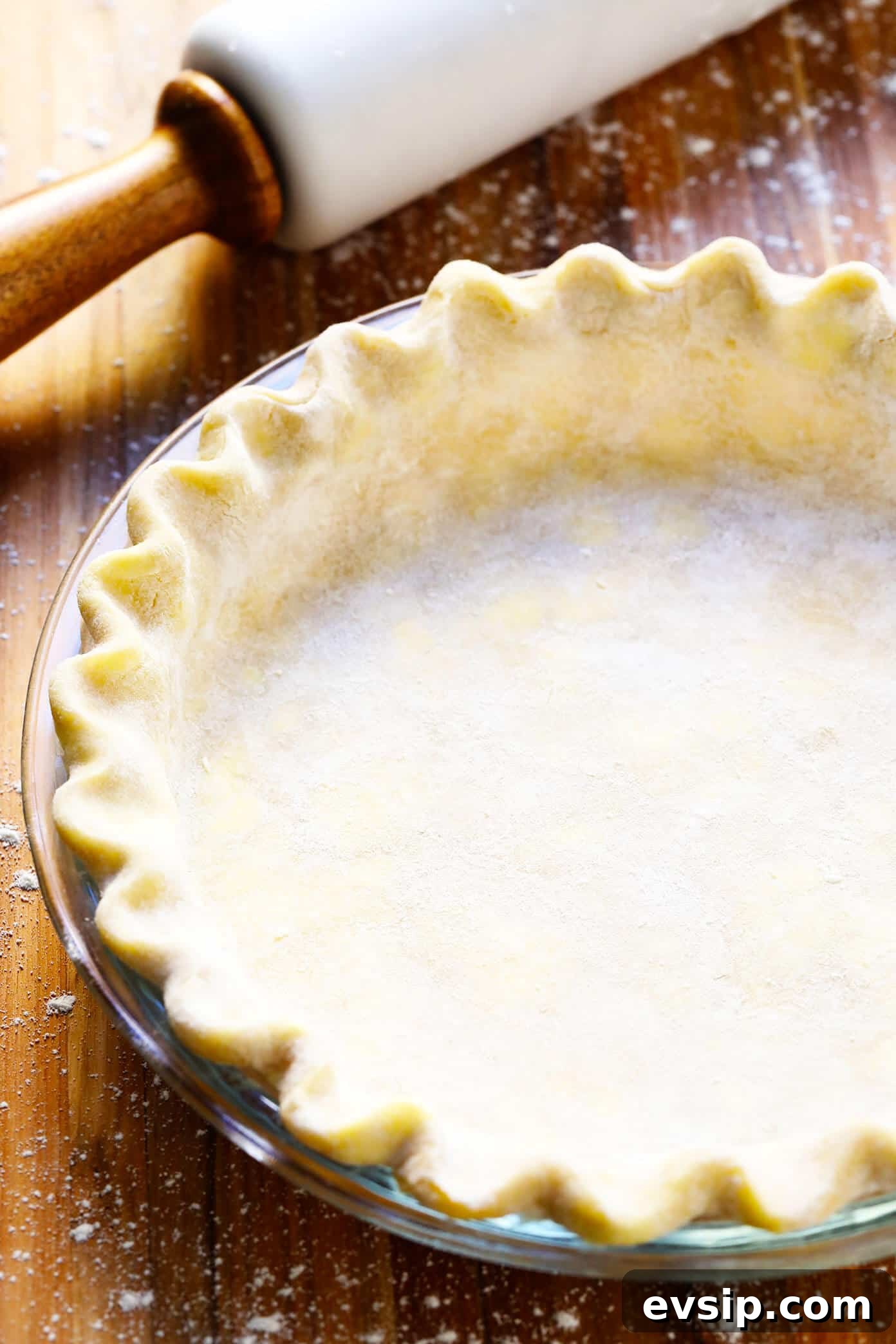
If you’re heading into the holiday baking season, now is a great time to refresh your pie crust skills. In this guide I’m sharing my go-to all-butter pie crust—simple, flaky, and easy to make either by hand or using a food processor.
Fear of making pie crust from scratch is common, but it’s much easier than it looks. You need just five ingredients—flour, butter, salt, optional sugar, and ice water—and about 15 minutes of active work if you make the dough by hand (or under 10 minutes with a food processor). Follow a few basic steps and you’ll have a golden, buttery, flaky crust ready to bake.
I first posted this recipe years ago and have refined it over dozens of pies. This updated version includes practical tips and new step-by-step photos to help whether this is your first crust or your fiftieth.
Ready? Grab a rolling pin and let’s get started.
Pie Crust Ingredients:
Here are the five simple ingredients you’ll need for this all-butter pie crust:
- All-purpose flour: Use regular all-purpose flour. If possible, weigh the flour on a kitchen scale for accuracy. If measuring by volume, spoon the flour into the cup and level it off rather than scooping directly from the bag to avoid packing too much flour.
- Sugar (optional): One tablespoon or so adds a hint of sweetness; omit it for a purely savory crust.
- Salt: Enhances the flavor of the dough.
- Cold unsalted butter: Dice into 1/4-inch cubes so it mixes evenly into the dry ingredients. Keep the butter chilled and add it to the flour right after dicing.
- Ice water: Use very cold water. I keep a cup of ice water at my station and strain the liquid into a measuring cup immediately before adding. Some bakers use a 50/50 mix of ice water and frozen vodka to keep the dough extra cold; I usually stick with plain ice water.
Pie Crust Equipment:
Useful tools for making this crust:
- Food processor (optional) or pastry cutter or two forks: A food processor speeds up the process, but a pastry cutter or two forks work perfectly by hand.
- Mixing bowl: A large bowl for combining the dough.
- Rolling pin: A standard 12-inch rolling pin or a flat rolling pin works well. A cool marble pin can help keep the dough chilled while rolling.
- Pie plate: Glass pie plates are great for even baking, though any pie plate will do.
- Pastry brush (optional): For applying an egg wash if you want a golden, glossy crust.
- Kitchen scale (optional): Helpful for precise measurements, especially for flour and butter.
- Pie crust shield or foil (optional): To protect edges from over-browning during longer bakes.
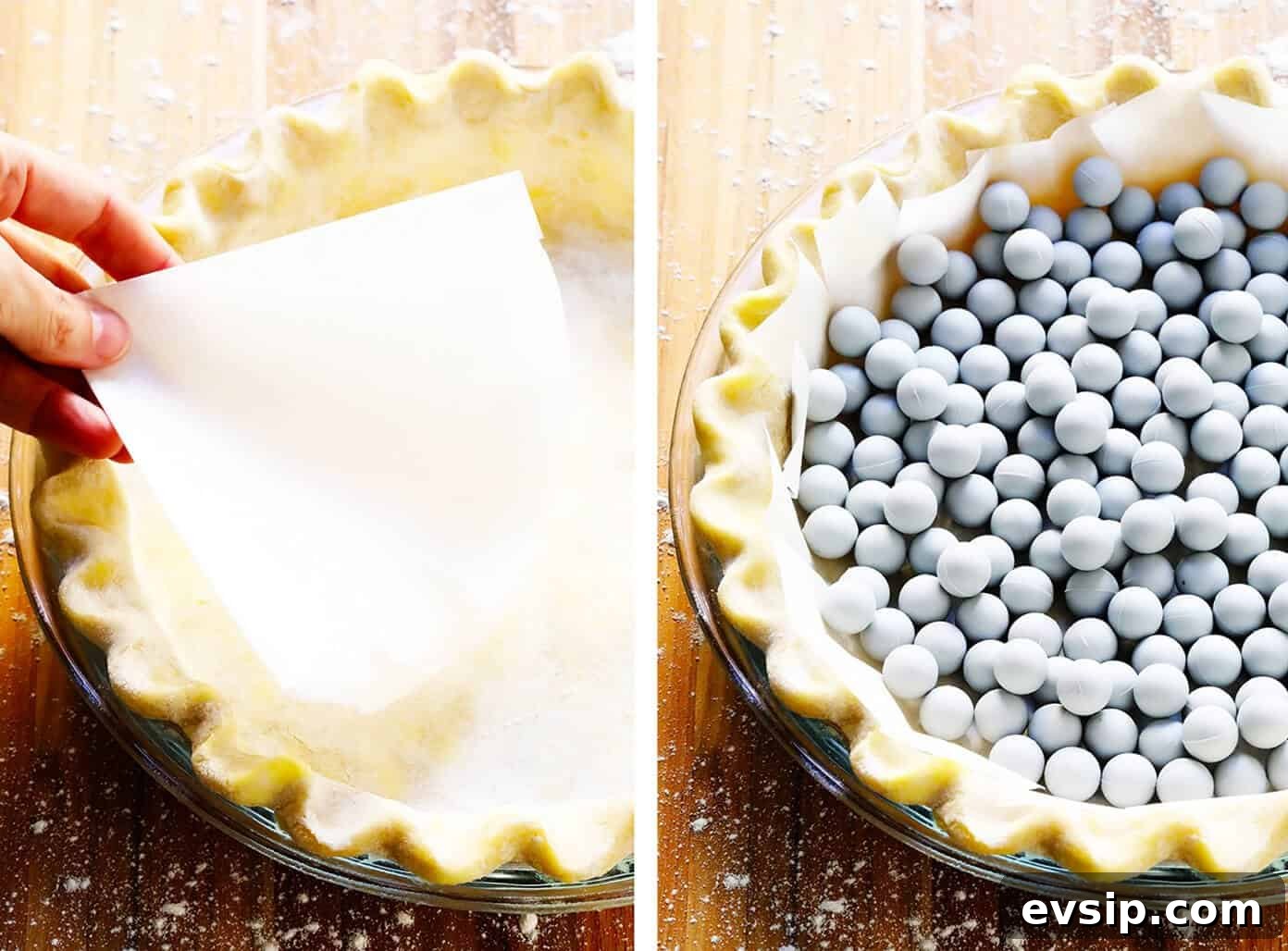
- Pie weights or dried beans (for blind baking): Use when a recipe calls for pre-baking the crust; place parchment or foil between the crust and the weights to prevent sticking.
How To Make Pie Crust:
The full, step-by-step instructions are in the recipe box below, but the basic process is:
- Mix the dry ingredients: Combine flour, salt, and sugar (if using) in a bowl or pulse briefly in a food processor.
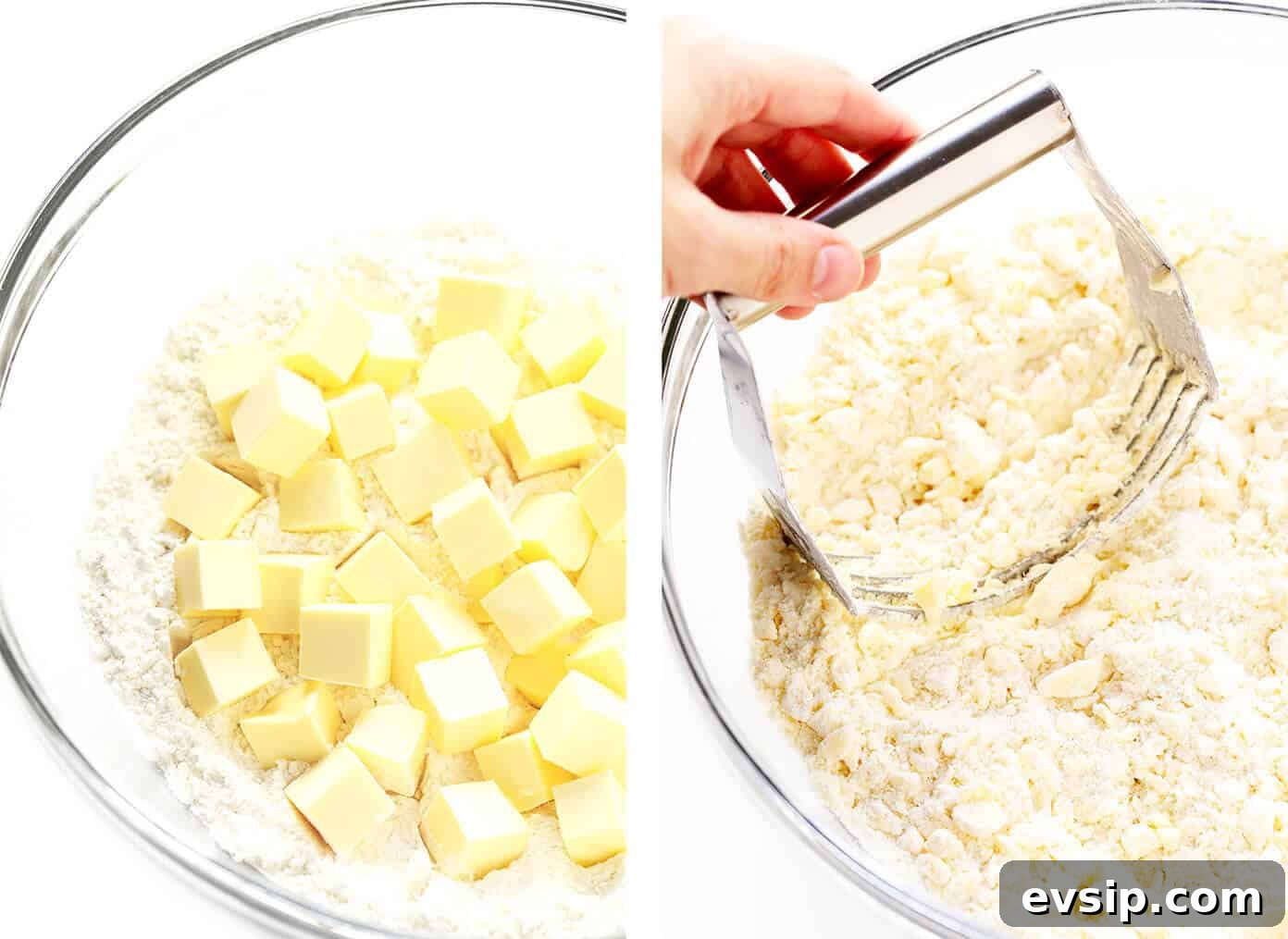
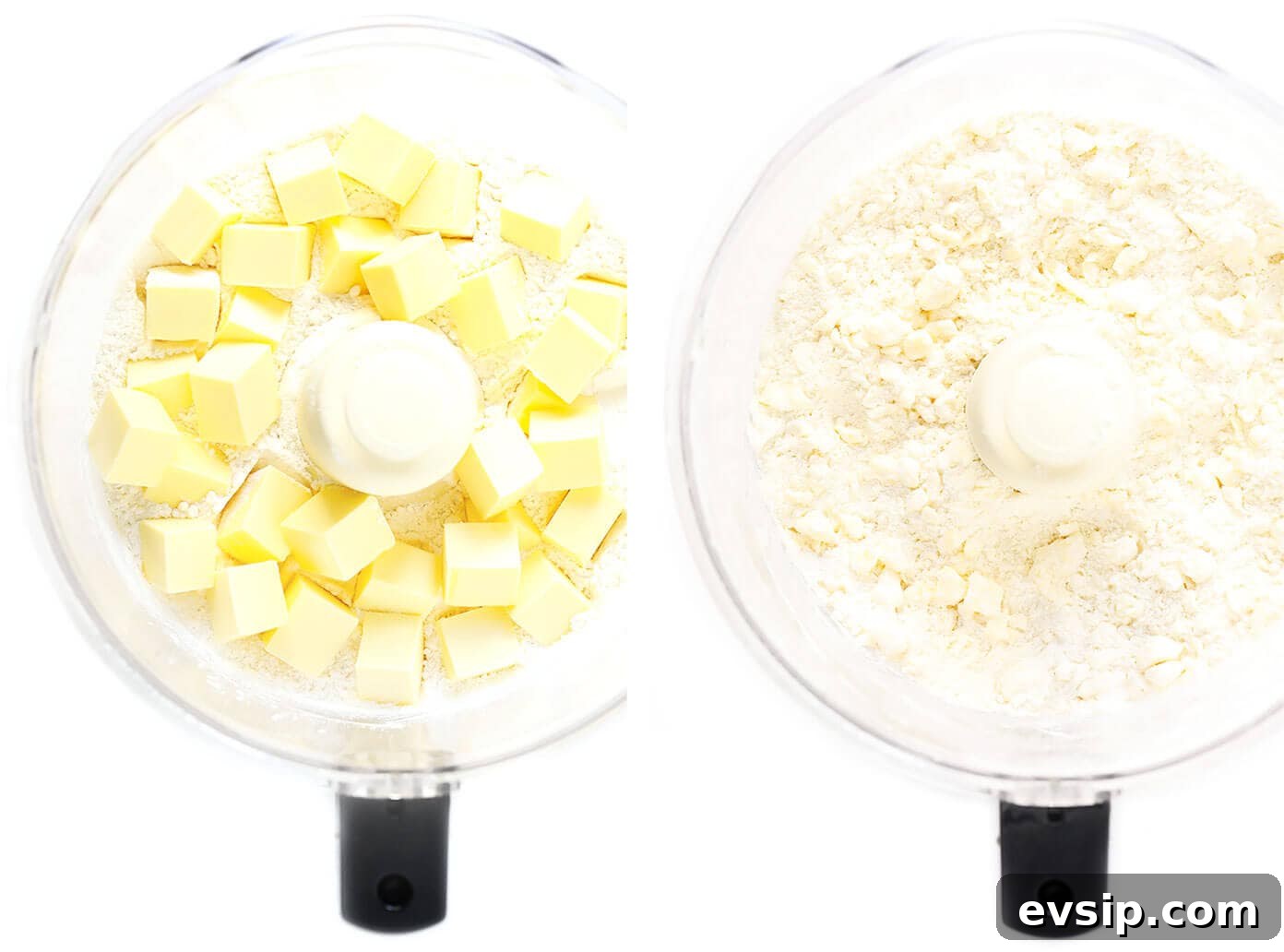
- Cut in the butter: Sprinkle diced butter over the dry mix. Use a pastry cutter or two forks to work the butter into the flour until the pieces are about pea-sized. If using a food processor, pulse 5–7 times until the butter is dispersed into similar-sized bits.
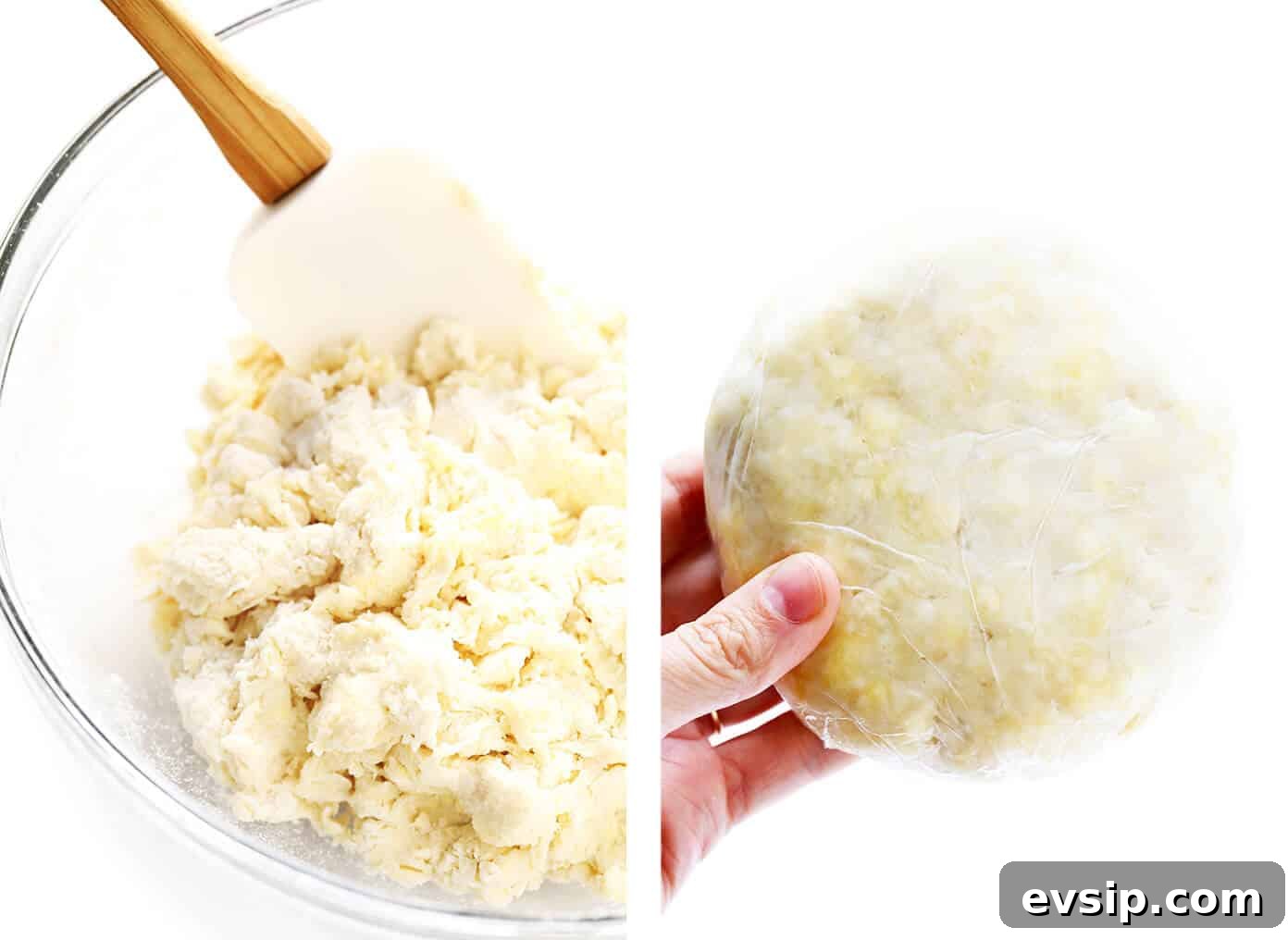
- Add ice water: Sprinkle ice water over the mixture and quickly mix with a spatula until the dough forms moist clumps. Add 1–2 tablespoons more water if it’s too dry. Avoid overmixing.
- Form and chill: Pack the dough into a ball, flatten it into a disk about 3/4-inch thick, wrap tightly, and chill for at least 1 hour (or up to 3 days).
Important Pie Crust Tips
- Keep everything cold: Use chilled butter and ice water, and try not to let the dough warm up while you work. Chilled ingredients yield a flakier crust and help prevent shrinking.
- Measure accurately: A kitchen scale is the most reliable way to measure flour and butter. If measuring by volume, avoid packing the flour.
- Don’t overwork the dough: Handle the dough as little as possible once water is added. Overworking develops gluten and leads to a tougher crust.
- Chill as instructed: Resting the dough is essential. The gluten needs to relax and the butter to firm up so the crust bakes without shrinking.
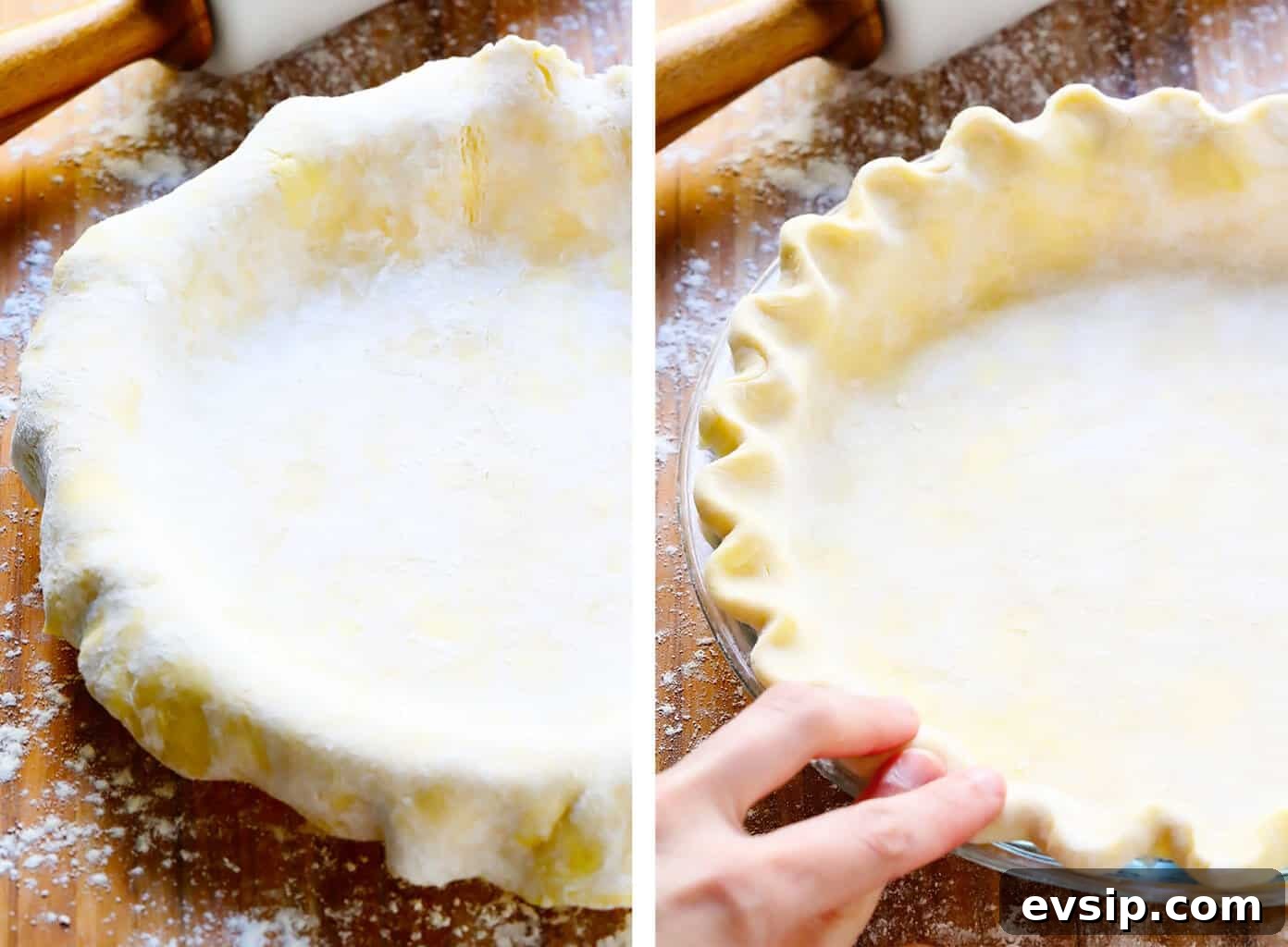
- Avoid stretching: When fitting the rolled dough into the pie plate, don’t pull or stretch it to fit. Trim and patch as needed rather than stretching the dough.
Favorite Pie Recipes:
I’ll be sharing two new (naturally sweetened) pie recipes soon. In the meantime, here are a few favorite pie recipes to try with this crust:
- The Best Pumpkin Pie
- French Silk Pie (Chocolate Pie)
- Lemon Meringue Pie
- Pecan Pie
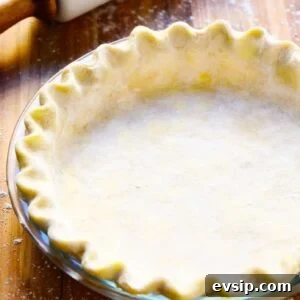
Homemade Pie Crust
Pin
Equipment
-
Rolling Pin
-
Pastry Cutter
-
Glass Pie Plate
Ingredients
- 1 1/4 cups (150 grams) all-purpose flour
- 2 teaspoons granulated sugar (optional)
- 1/2 teaspoon salt
- 1/2 cup (115 grams) cold unsalted butter, diced into 1/4-inch cubes
- 1/4 cup ice water
Instructions
-
Mix the dry ingredients: Combine the flour, sugar (if using), and salt in a large mixing bowl or food processor. Whisk or pulse briefly until blended.
-
Cut the butter into the dry ingredients: Sprinkle the diced butter evenly over the dry mixture. By hand, use a pastry cutter or two forks to cut the butter into the flour until the pieces are pea-sized or smaller. If using a food processor, pulse 5–7 times until the butter is evenly dispersed, then transfer to a large bowl.
-
Add water: Sprinkle the ice water evenly over the mixture. Use a spatula to quickly mix until moist clumps form. If the dough doesn’t hold together, add 1–2 tablespoons more water. Avoid overmixing.
-
Form a dough ball: Quickly pack the dough into a ball with your hands, then flatten into a 3/4-inch thick disk.
-
Wrap and chill: Wrap the disk tightly in plastic wrap and refrigerate at least 1 hour or up to 3 days before rolling out.
Notes
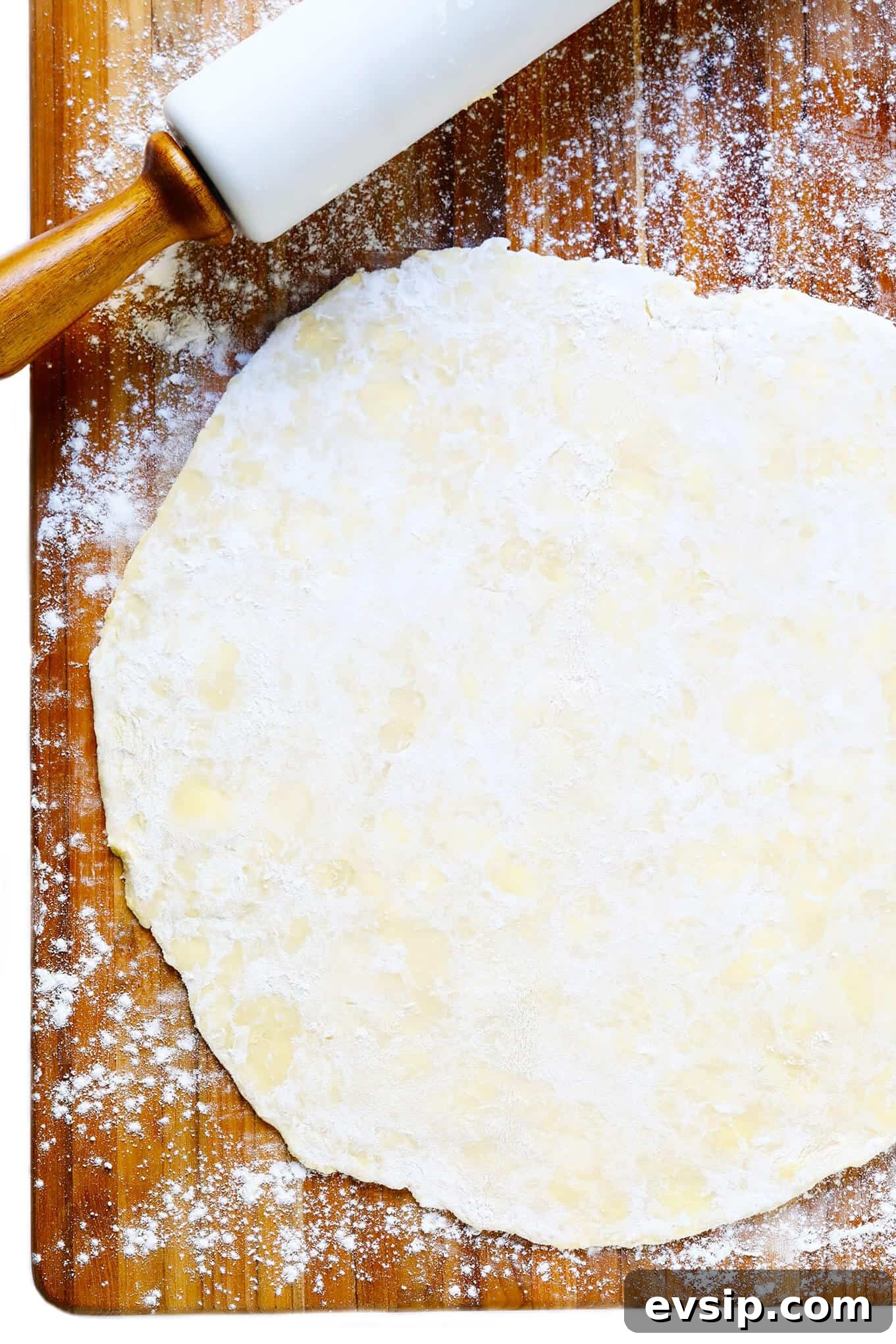
Rolling out the dough: After chilling at least an hour, let the dough rest 10–15 minutes on a floured surface. Lightly flour the top and rolling pin, and roll into a circle about 12 inches across and roughly 1/8 inch thick (good for a 9-inch pie plate). Transfer to the pie plate without stretching, trim to leave a 1-inch overhang, then fold under and crimp the edge. Chill the shaped crust at least 15 minutes before baking.
Blind-baking: For pre-baked crusts, dock the chilled crust with a fork, line with parchment or foil, and add pie weights or dried beans. Bake at 400°F for 15 minutes, remove weights and parchment, then return to the oven for 10–12 minutes for a partially baked shell or 15–17 minutes for a fully baked, deep golden crust.
Lattice crust: For a step-by-step guide to lattice tops, follow a separate lattice crust tutorial.
For an extra golden crust: Brush the surface with an egg wash (egg beaten with a splash of milk or water) and sprinkle a little sugar before baking.
Recipe update: Instructions were refined to include the by-hand method and to recommend adding ice water by hand rather than pulsing in the food processor to avoid overmixing.
Additional Info
 Did you make this?Tell me how it turned out in the comments below!
This post contains affiliate links.