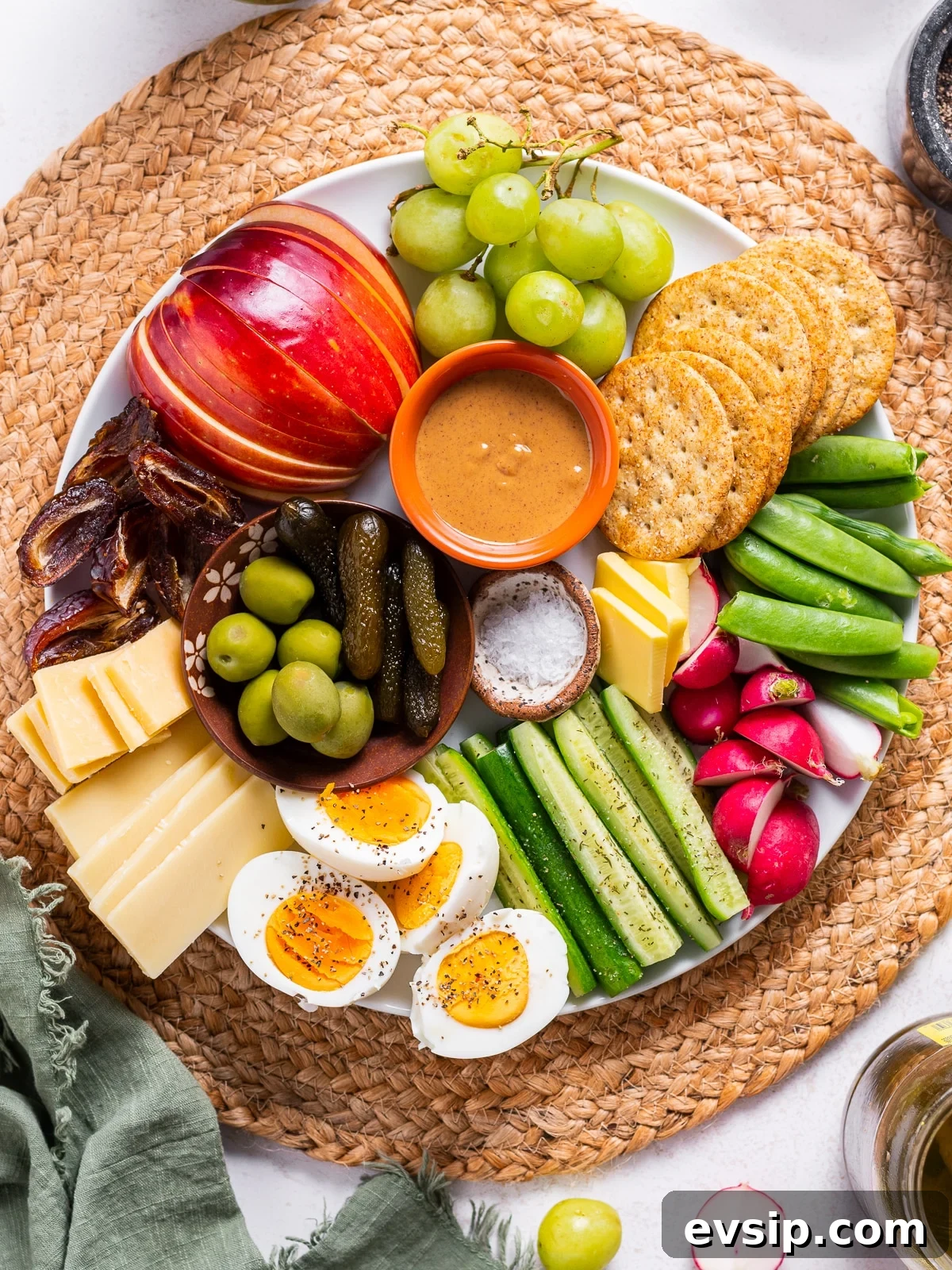
There’s something deeply satisfying about a thoughtfully assembled snack plate. It’s simple to put together, visually appealing, and delivers a balanced combination of flavors and textures — sweet, salty, crunchy, and creamy. As a registered dietitian and a busy parent, I rely on snack plates for quick lunches, effortless dinners during warm weather, and satisfying snacks between meals. I consider a well-composed snack plate a complete, legitimate meal.
This guide explains how to build a balanced snack plate that includes protein, fiber, healthy fats, and bold flavor. Whether you’re packing a kid-friendly tray, creating a “girl dinner” plate, or entertaining guests with a healthy snack board, the approach below will help you assemble a filling, nutritious plate in minutes.
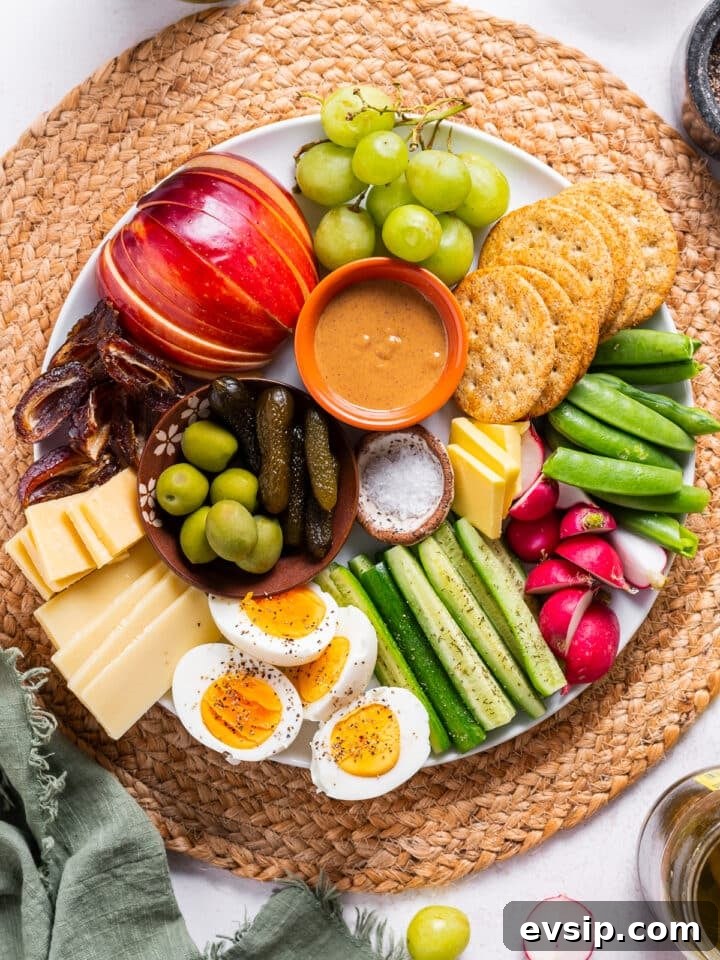
Erica’s Thoughts
Why pick just one snack when you can enjoy several favorites at once? Snack plates are an enjoyable, low-effort way to create a balanced meal in minutes. I appreciate them for their flexibility and how they let my kids choose from a variety of tasty, nutritious options. When they spot a snack plate, they often want the same — which is a win in my book.
Snacking sometimes gets labeled as unhealthy, but snacks don’t have to be junk food. Anything can be a snack when chosen thoughtfully. The trick is selecting quality ingredients: seasonal fruits and vegetables, natural nut butters, roasted nuts, and well-made cheeses and spreads. Those small upgrades make a big difference in taste and satisfaction.
This post is a practical guide for turning healthy snacks into a full, satisfying plate. If you prefer a printable visual reference, consider making a simple checklist from the categories and examples below to keep in your kitchen for quick use.
What You’ll Need to Build the Ultimate Snack Plate
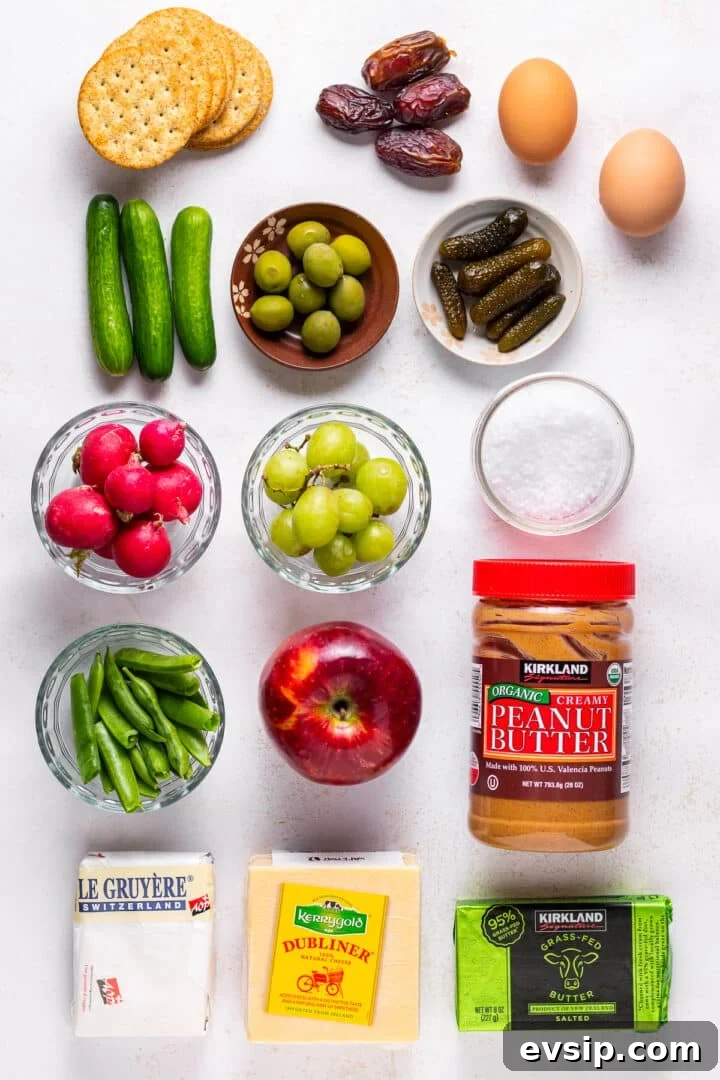
To make a snack plate that is both satisfying and nutritious, include at least one item from each of these seven categories. These building blocks ensure you cover protein, fiber, healthy fats, and plenty of flavor.
Veggies: Snap peas, broccoli florets, carrot sticks, cherry tomatoes, radishes, bell pepper strips, cucumber slices, cauliflower. Vegetables deliver crunch, fiber, and a wide range of vitamins and minerals.
Fruits: Apple slices, grapes, berries, medjool dates, orange segments, kiwi, peaches, or watermelon — choose what’s in season. Fresh fruit contributes fiber, natural sweetness, and phytonutrients.
Protein: Hard‑boiled eggs, sharp cheddar or other cheese slices, rolled deli meats, roasted chickpeas, plain Greek yogurt, a scoop of hummus, or crispy tofu cubes. Protein helps you feel fuller longer and supports muscle maintenance.
Briny Items: Dill pickles, Castelvetrano or Kalamata olives, pepperoncinis, or pickled red onions add bright, salty contrast and depth without a lot of calories.
Healthy Fat: Natural peanut butter, avocado slices, a small pat of butter, mixed nuts or seeds, or a drizzle of olive oil. Fat boosts flavor and satiety; just be mindful of portion size since fats are calorie‑dense.
Seasonings: Flaky sea salt, Tajín, black pepper, chili lime seasoning, smoked paprika, everything bagel seasoning, or a light drizzle of honey. A little seasoning elevates simple ingredients.
Carbohydrate Foods: Crackers, pita chips, rice cakes, pretzel thins, Triscuits, mini naan, popcorn, potato chips, or a slice of baguette. Carbohydrates provide practical energy and balance the plate.
How to Make a Snack Plate Come to Life
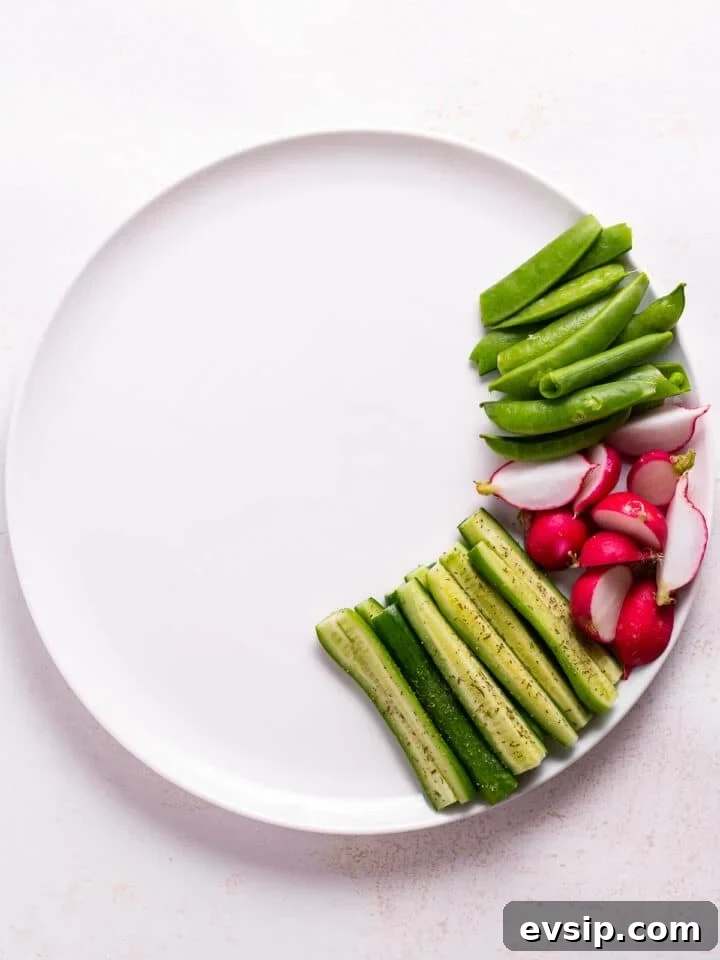
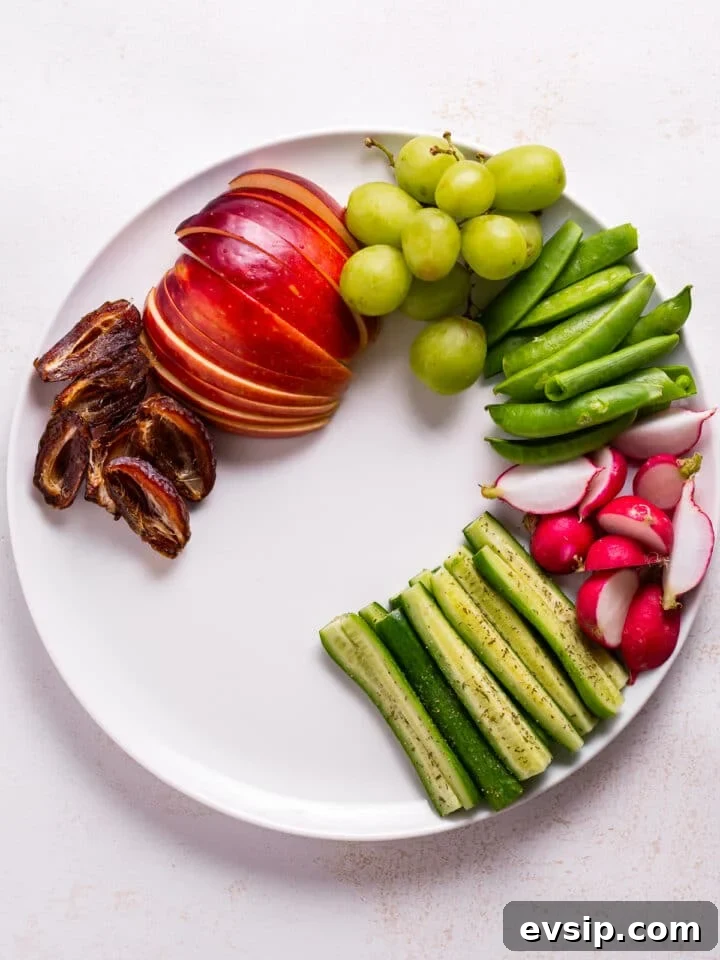
1. Fill at least half the plate with a mix of fresh vegetables and fruits to provide volume, fiber, and color.
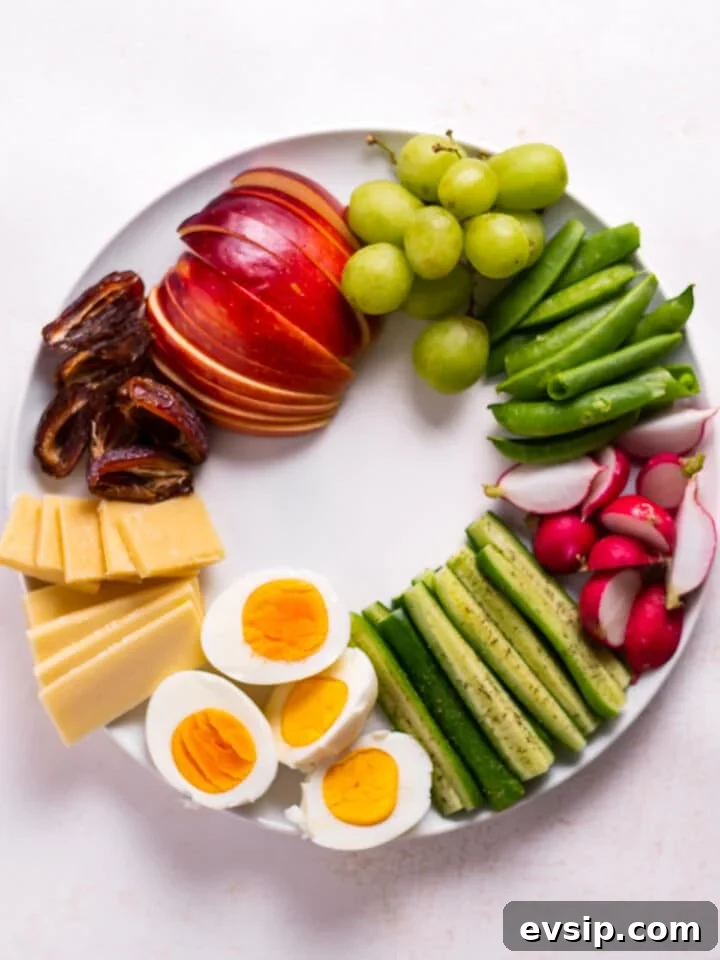
2. Choose a protein portion roughly the size of your palm, or about 25% of the plate.
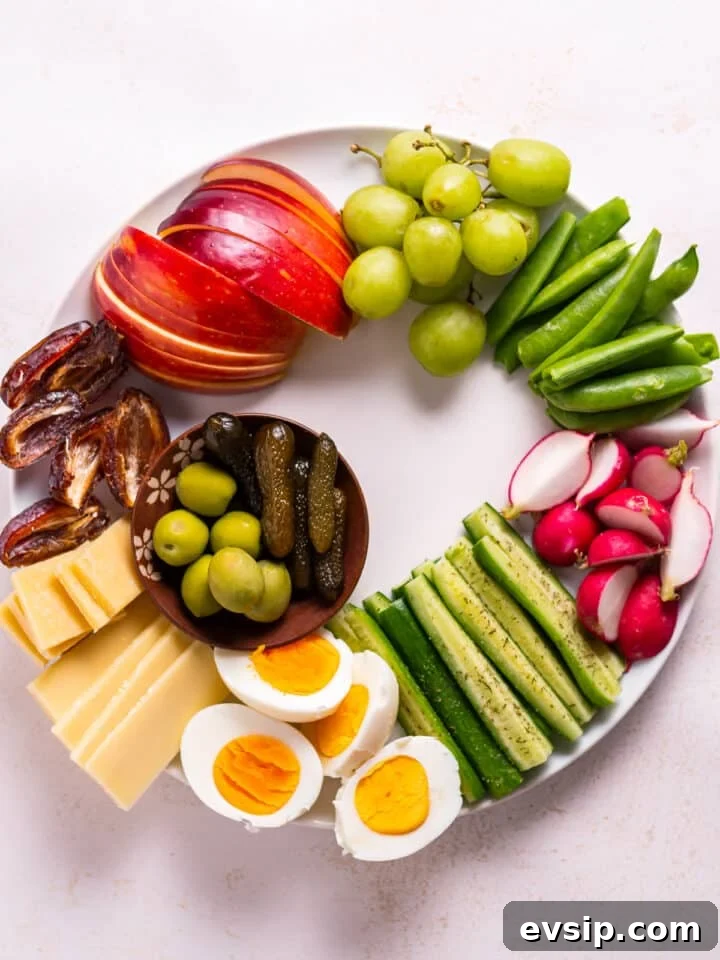
3. Add a briny element — a few olives, pickles, or pickled veggies add interest and help balance richer components.
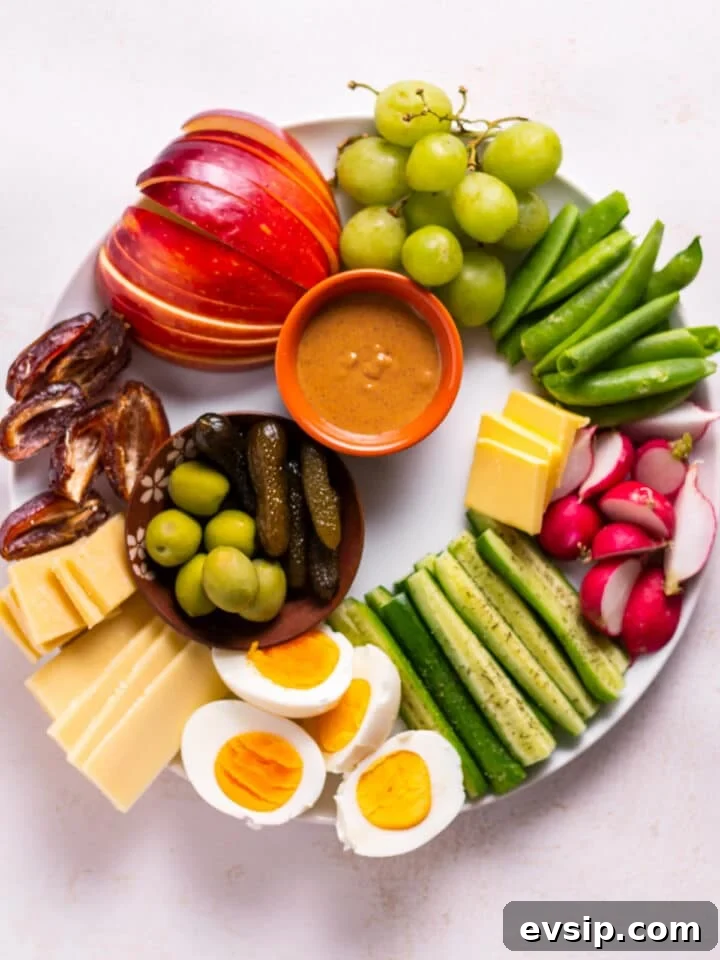
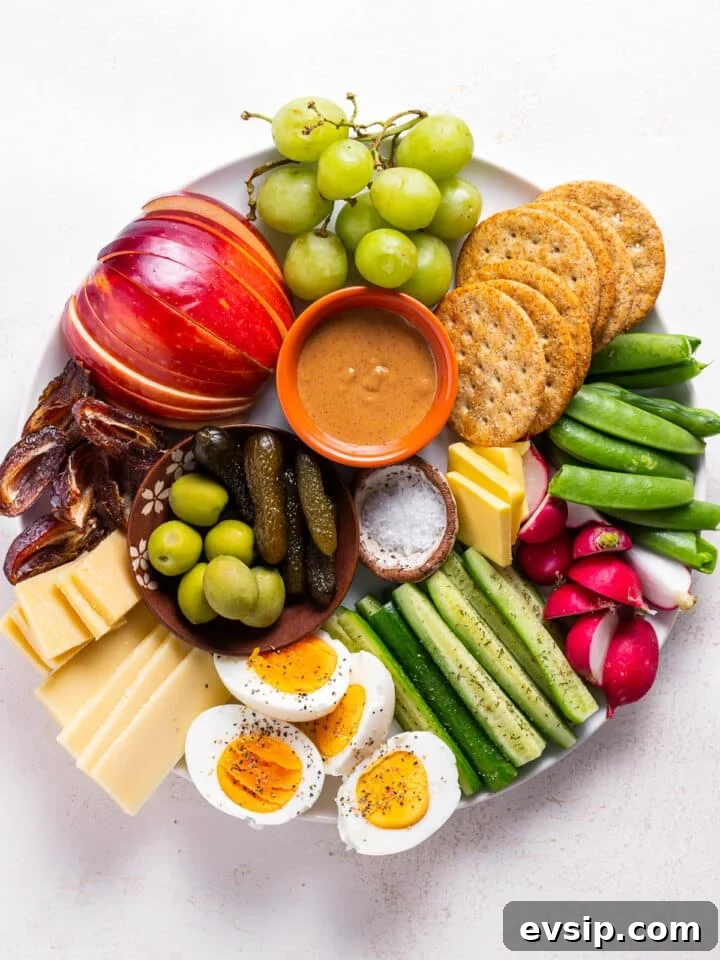
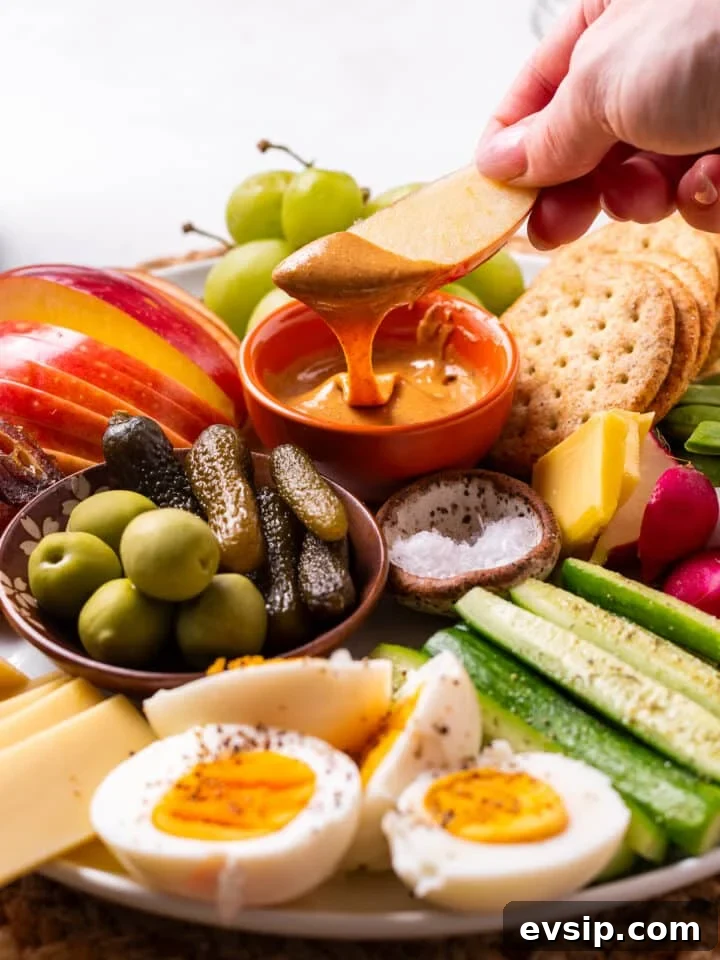
4. Include a 1–2 tablespoon portion of healthy fat such as nut butter, avocado, or a few nuts.
5. Season vegetables, eggs, cheese, or yogurt to taste with your favorite spices or a sprinkle of flaky salt.
6. Add a carbohydrate portion to the remaining area of the plate — aim for about 25% of the plate or the size of your fist.
7. Add something sweet if you like: a square of dark chocolate, a few chocolate chips, or a couple of dates make a nice finish.
Real Life Snack Plate Ideas
Kid-friendly snack plate: Snap peas, grapes, string cheese, sliced pepperoni, mini pickles, and goldfish crackers.
Mediterranean plate: Grape tomatoes, fresh or dried figs, feta, hummus, Kalamata olives, a drizzle of olive oil, a pinch of dried oregano, and pita chips.
Charcuterie-style plate: Cucumber slices, dates, sharp cheddar, Boursin or another spreadable cheese, salami, Castelvetrano olives, fig jam, and crostini.
Farmer’s market special: A mix of seasonal vegetables and fruits, hard‑boiled eggs, a vegetable dip, green goddess seasoning, and slices of sourdough baguette.
High‑protein plate: Celery and carrots, shelled edamame, cottage cheese, turkey roll‑ups, a sprinkle of ranch seasoning, and Triscuits.
Breakfast snack plate: Fresh berries, plain Greek yogurt, a drizzle of nut butter, hard‑boiled eggs, roasted red peppers, and oven‑roasted potatoes.
Sweet and salty vibes: Carrots, apple slices, dates, peanut butter, cinnamon, cheddar, pretzels, and dark chocolate chips.
These examples are just a starting point. Scale portions up to make a more substantial meal or scale down for a light snack.
FAQs
Yes. When a plate includes protein, healthy fat, fiber, and carbohydrates, it covers the main macronutrients and can serve as a balanced meal. Adding a variety of fruits and vegetables also supplies important micronutrients.
Use a divided lunch container or bento box and store dips separately. Keep crackers or chips in a separate bag until you’re ready to eat to preserve crispness.
Choose two or three cheeses with different textures and flavors, add specialty crackers, and include interesting extras like pickled red onions, fig jam, spicy olives, pickled jalapeños, or grainy mustard. Garnish with fresh herbs or a light drizzle of olive oil or honey.
They can be. A well-balanced snack plate that includes a variety of food groups, fiber, protein, and healthy fats supports fullness and nutrient intake.
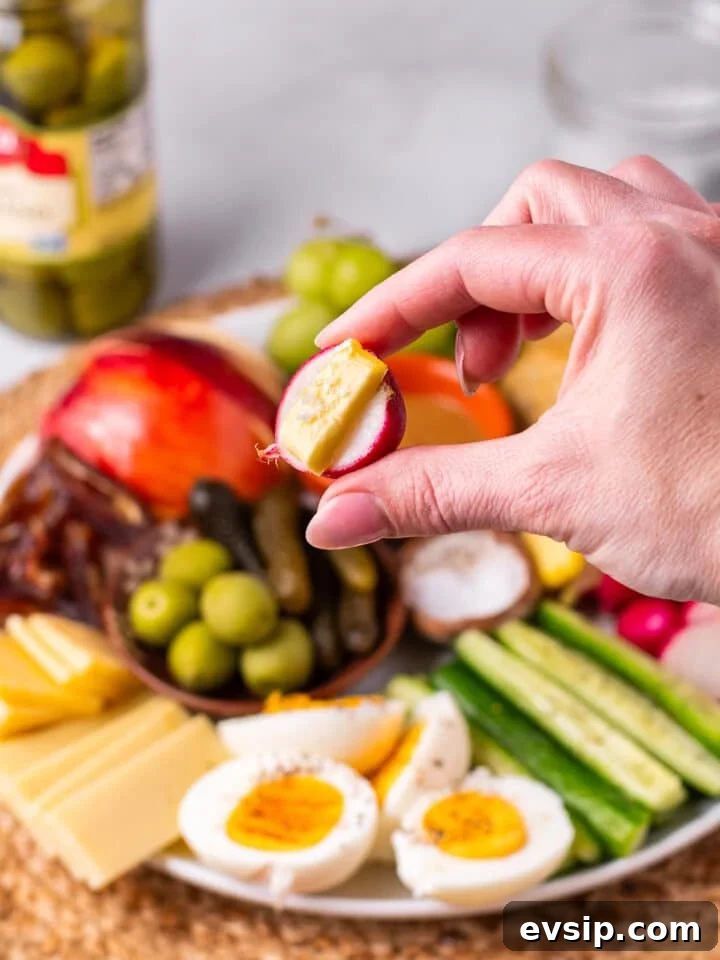
I’m craving all the small bites now — time to assemble a snack plate. If you want a quick reminder, jot down the seven categories and a few favorite items from each so you can build a balanced plate without thinking twice.
Description
A well-made snack plate offers high reward for low effort. They’re versatile, customizable, and excellent for a no‑cook lunch, an easy summer dinner, or a fresh afternoon pick‑me‑up. Save this guide for ideas when you need something fast, nourishing, and delicious.
Ingredients
On my snack plate:
- radishes
- snap peas
- cucumbers
- apple slices
- medjool dates
- natural creamy peanut butter
- cornichon pickles
- Castelvetrano olives
- hard‑boiled eggs
- sharp cheese (such as extra sharp cheddar)
- mild cheese (such as muenster)
- grass‑fed salted butter
- flaky sea salt
- green goddess seasoning
- whole grain crackers
- dark chocolate chips
Instructions
Method:
- Fill at least half of your plate with a variety of fresh vegetables and fruits.
- Choose a protein portion about the size of your palm, roughly 25% of the plate.
- Add a briny element such as a few olives or pickles.
- Include 1–2 tablespoons of a healthy fat and place it on the plate.
- Season vegetables, eggs, cheese, or yogurt to taste.
- Place a carbohydrate portion on the remaining area of the plate — about 25% or the size of your fist.
- Optionally, add something sweet like a square of dark chocolate or a few chocolate chips.
The combinations I enjoyed:
- apple + peanut butter
- apple + cheese
- radish + butter + flaky sea salt
- veggies + green goddess seasoning
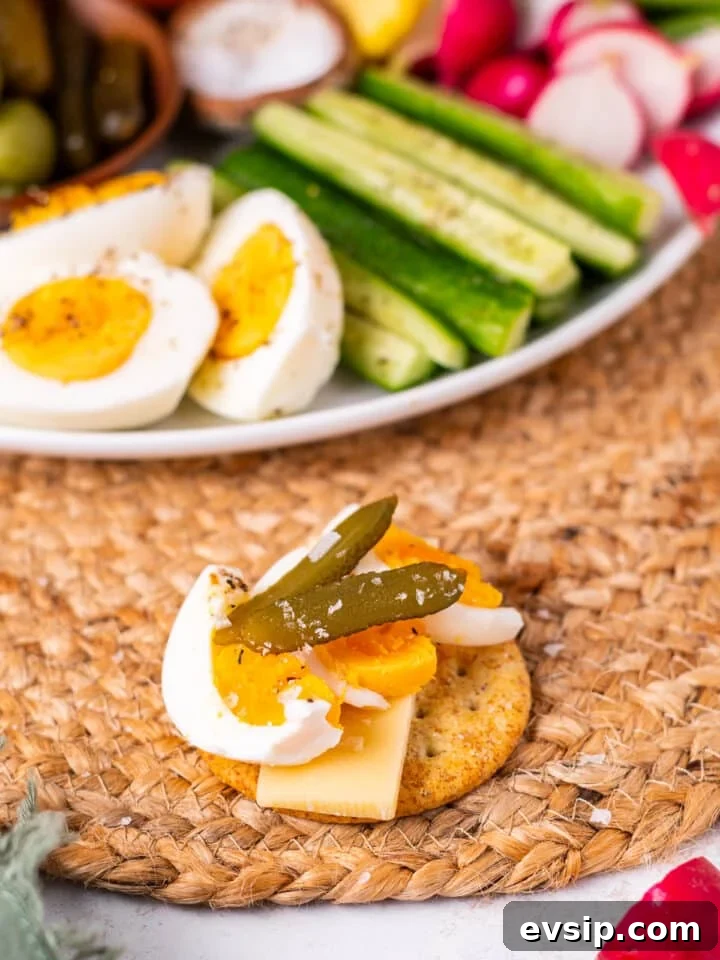
- cracker + cheese + pickle
- cucumber + hard‑boiled egg + pickle
- cracker + butter + hard‑boiled egg
- Castelvetrano olive + cheese
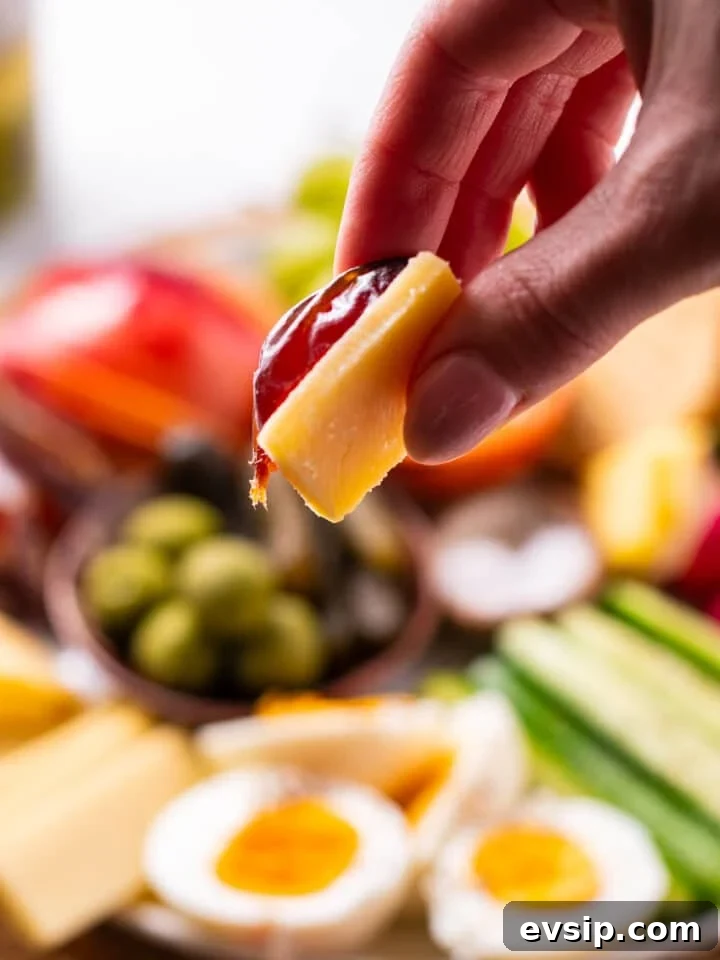
- date + cheese
- date + butter + flaky sea salt
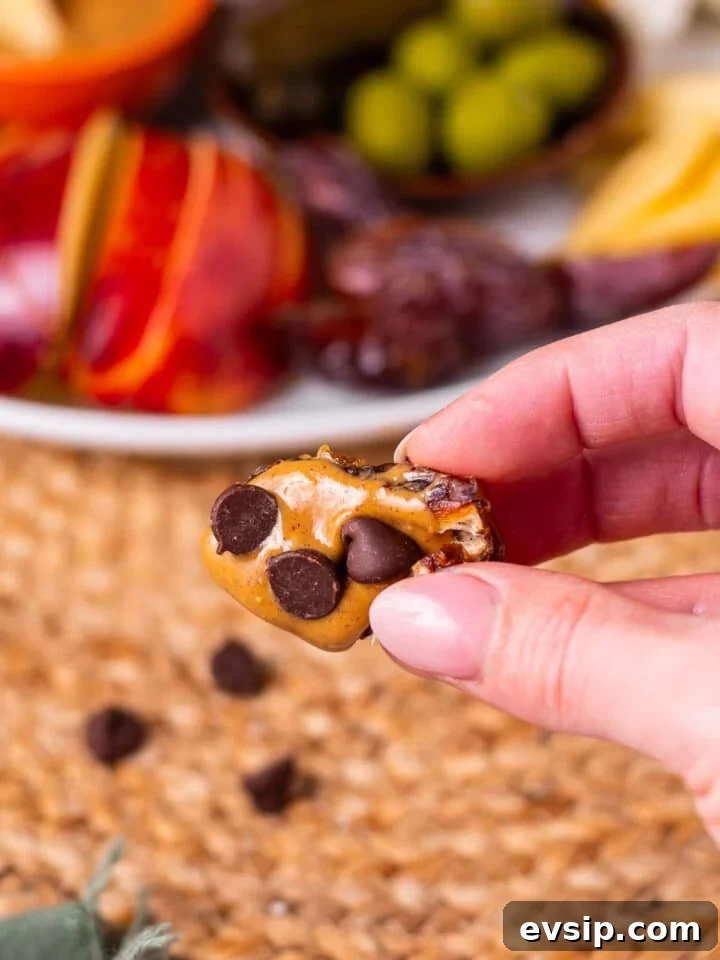
- date + peanut butter + chocolate chips
All of these pairings offer contrasts in texture and flavor that make the plate more interesting and satisfying.
Notes
A neighborhood grocery or specialty store is a great place to pick up an assortment of snack plate items without spending a lot. If you include cheese, choose one sharp, hard option and one softer, milder option for variety.
Nutrition information will vary depending on the specific items and amounts you use, so tailor portions to your appetite and dietary needs.
Nutrition
- Serving Size: 1 plate (example calculation uses 1 tablespoon peanut butter, 3 dates, 1 tablespoon butter, 1 oz cheese, 4 large crackers, and 2 eggs)
- Calories: 710 (example)
- Sugar: 48.6 g (example)
- Sodium: 904 mg (approximate)
- Fat: 37.9 g (example)
- Carbohydrates: 73.6 g (example)
- Fiber: 9.1 g (example)
- Protein: 26.4 g (example)
- Cholesterol: 415.3 mg (example)
If you try and enjoy this guide, please consider leaving a comment and a star rating on the original post. For more ideas and behind‑the‑scenes content, follow the creator on social platforms.
More Snack Ideas You’ll Love
Snickers‑style dates
Cottage cheese bowls two ways
Caramel apple trail mix
Easy raspberry parfaits
BLT chicken salad