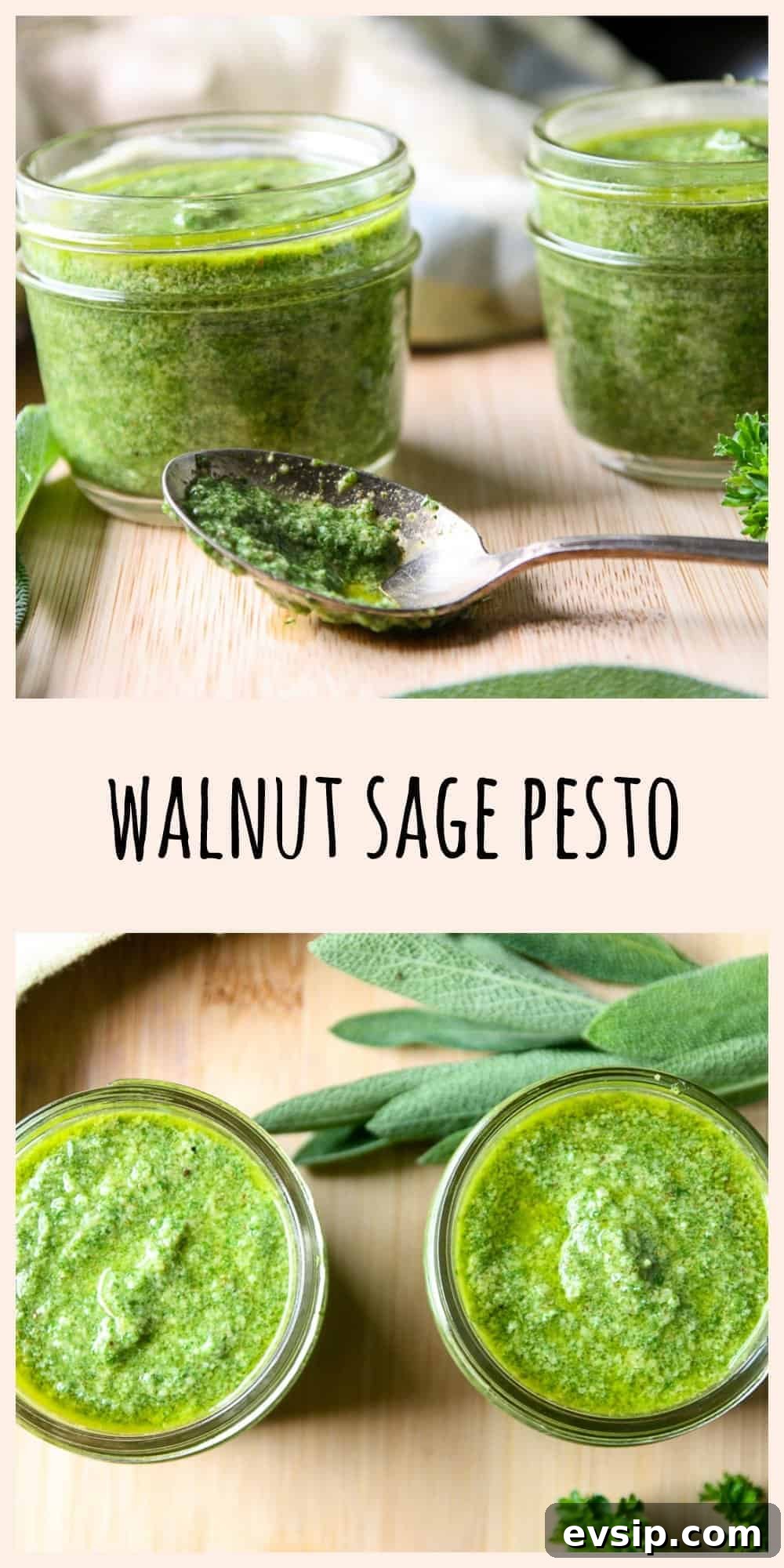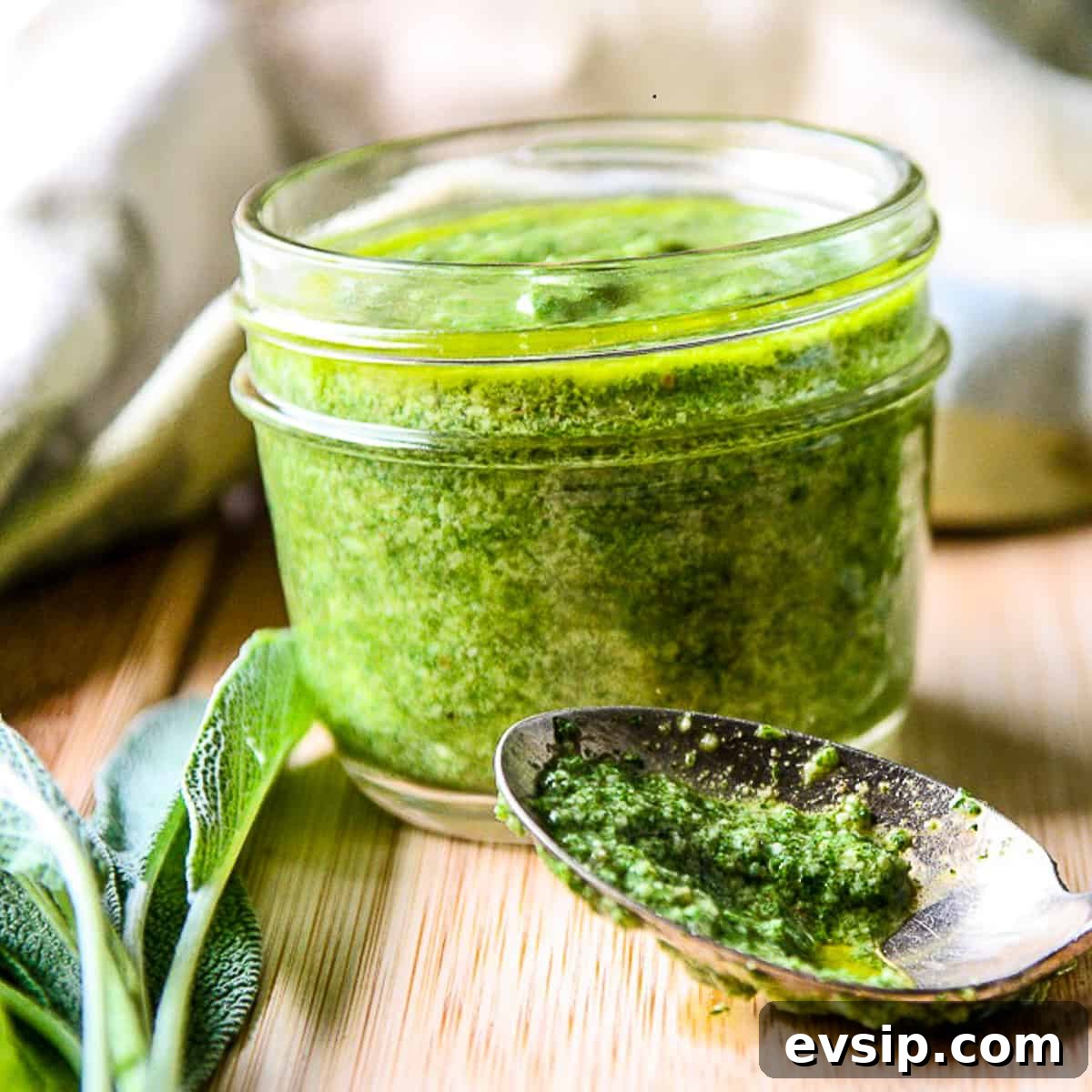
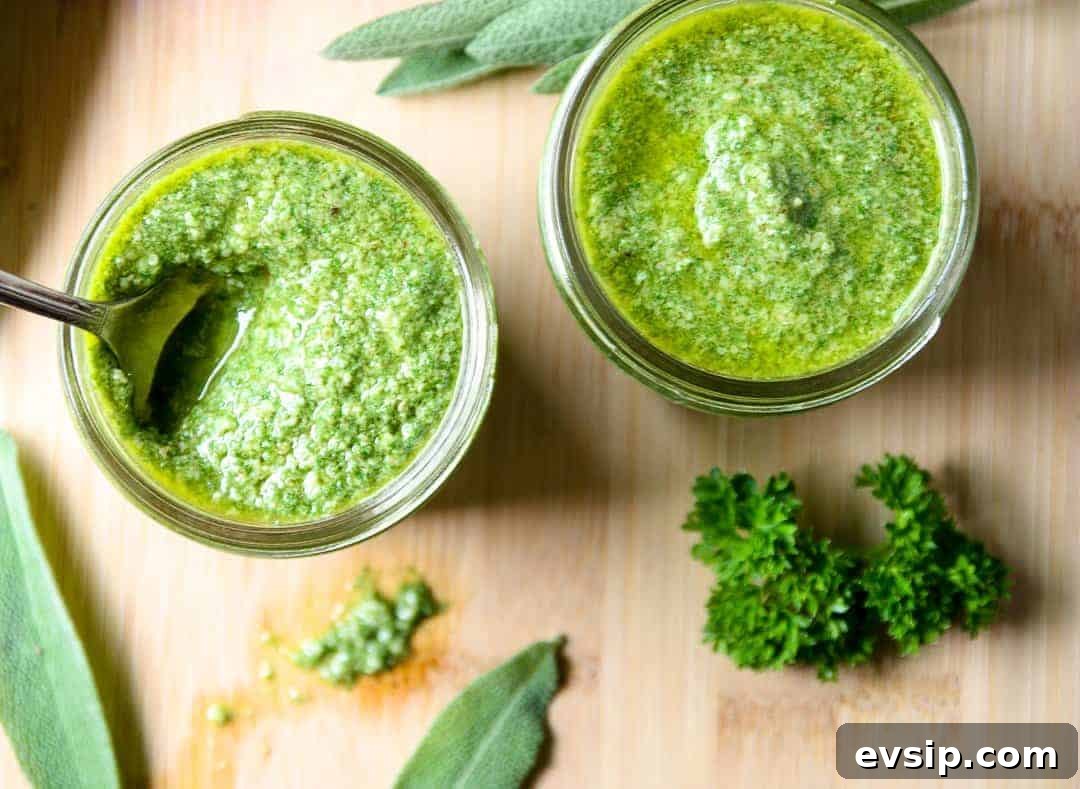
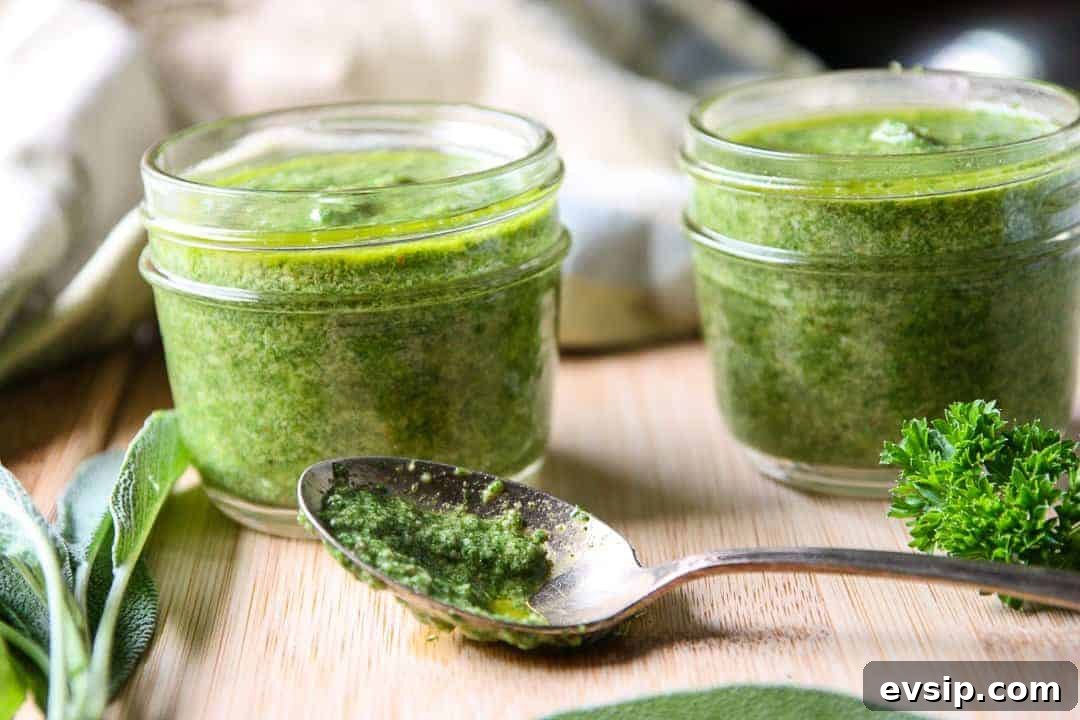
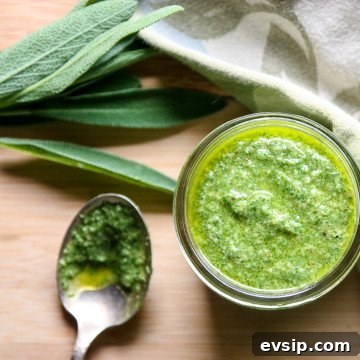
Walnut Sage Pesto is the tasty reward of a sage-filled garden. Sage thrives in our climate, and an unusually hot, dry summer this year produced an abundant harvest—perfect for making pesto.
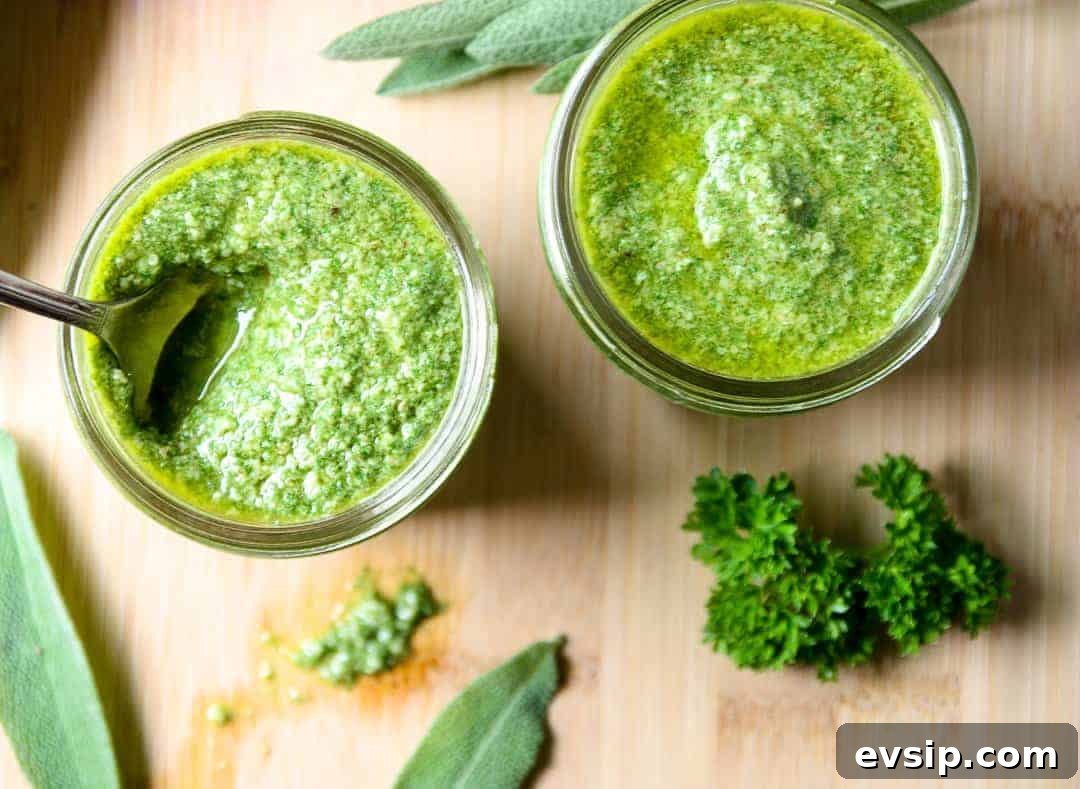
Pesto Is Magical
I hate to waste garden herbs, so I experiment with new ways to use them. When you have an abundance of fresh herbs and a food processor, homemade pesto is one of the simplest, most rewarding things to make. The process is deceptively easy: combine fresh green herbs with garlic, olive oil, nuts and Parmesan, and the result is a bright, flavorful sauce that feels almost magical.
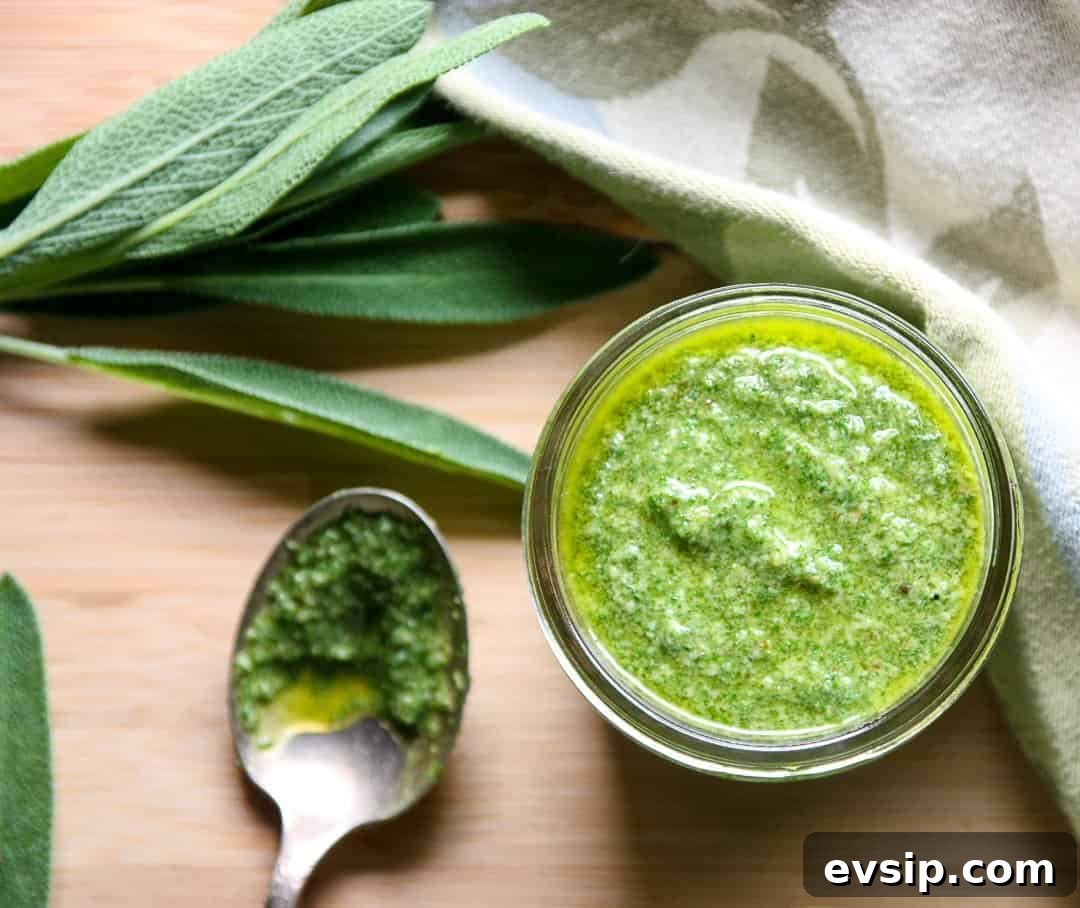
Walnuts and Sage Are Delicious In Pesto
Traditional pesto uses pine nuts, but I prefer walnuts for this version. Walnuts are available locally and their slightly bitter, toasty flavor pairs wonderfully with sage. Toasting the walnuts first deepens their flavor and complements the herb’s earthiness—together they create a distinct taste that evokes autumn. I also use toasted walnuts in other herb pestos for the extra depth they bring.
About Sage
Sage is a potent herb, so a little goes a long way. If your plant is prolific, select the small, new leaves for a milder flavor. Fresh sage is easy to find when it’s in season, and its bittersweet, pungent character adds remarkable depth to walnut sage pesto.
How To Use This Pesto
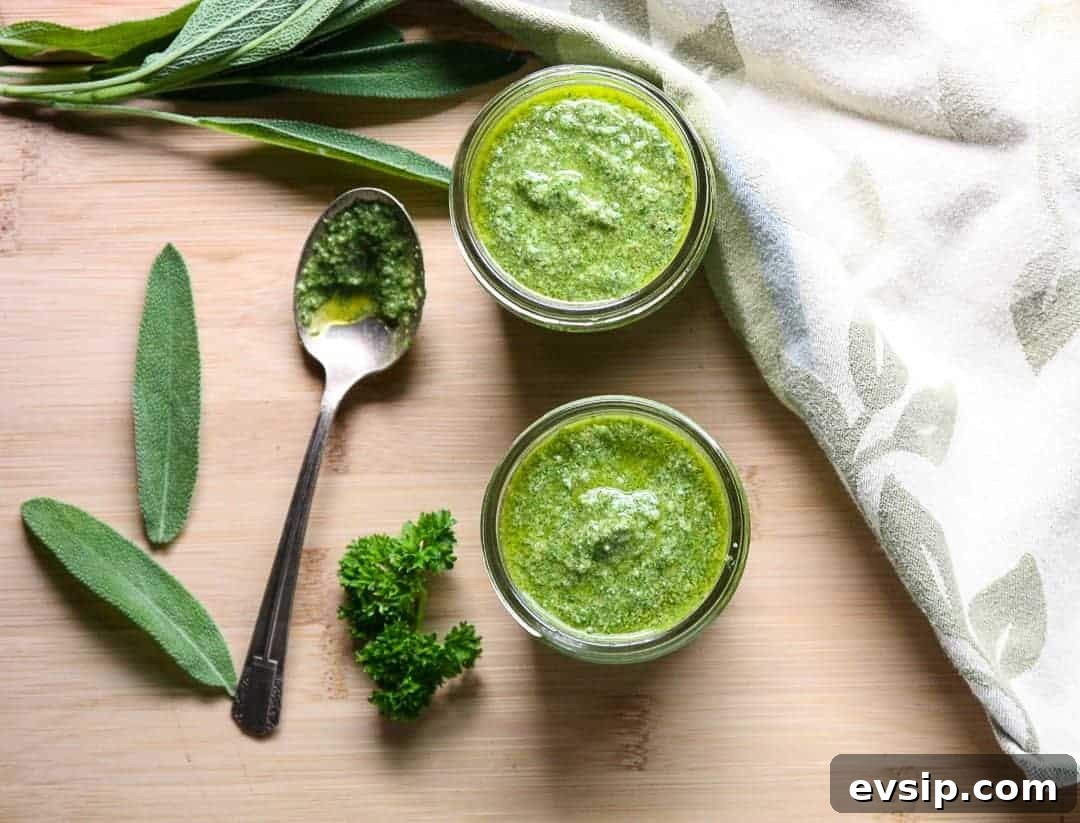
Because of its bold flavor, walnut sage pesto holds up well to heat—stir it into warm pasta, use it as a pizza base, or warm it slightly before serving. It’s also delicious uncooked: use it as a dip for crisp apples or pears for a memorable fall appetizer. Try it as a topping for grilled chicken or seafood, or toss it with roasted or grilled vegetables. It’s especially lovely on roasted butternut or spaghetti squash.
Try Some More Sage, Too
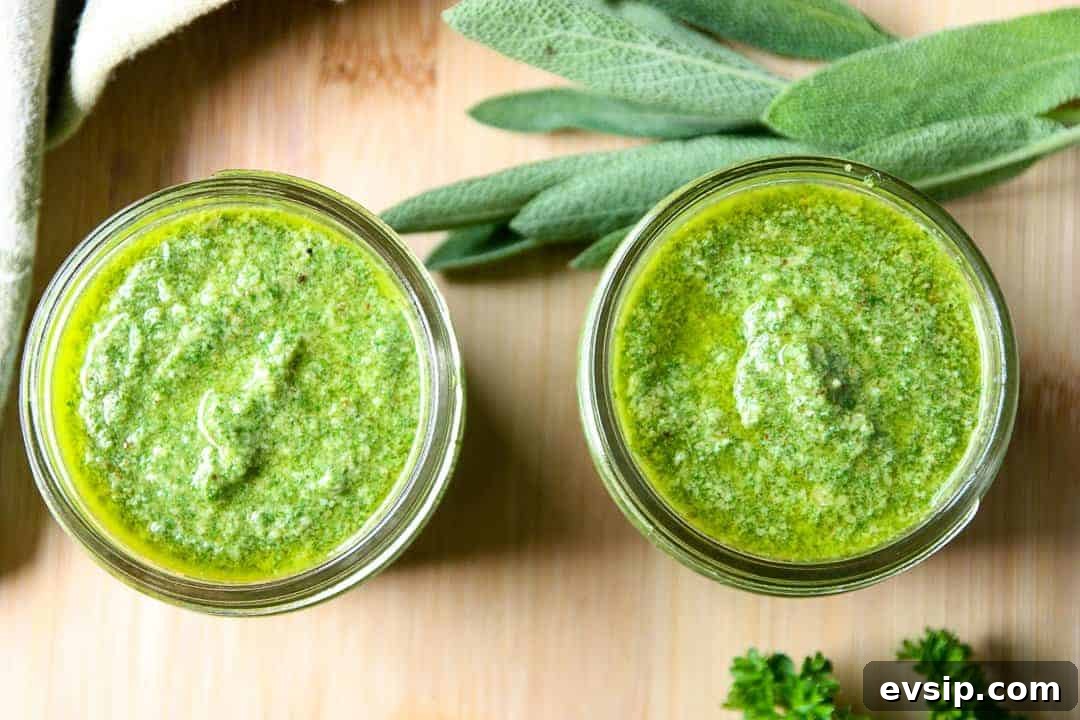
Sage works with many dishes—try it with herb-grilled chicken or add it to a seasonal stuffing. If you want to preserve herbs for winter, pesto freezes very well and is an excellent way to keep summer flavors all year.
Can You Freeze Pesto?
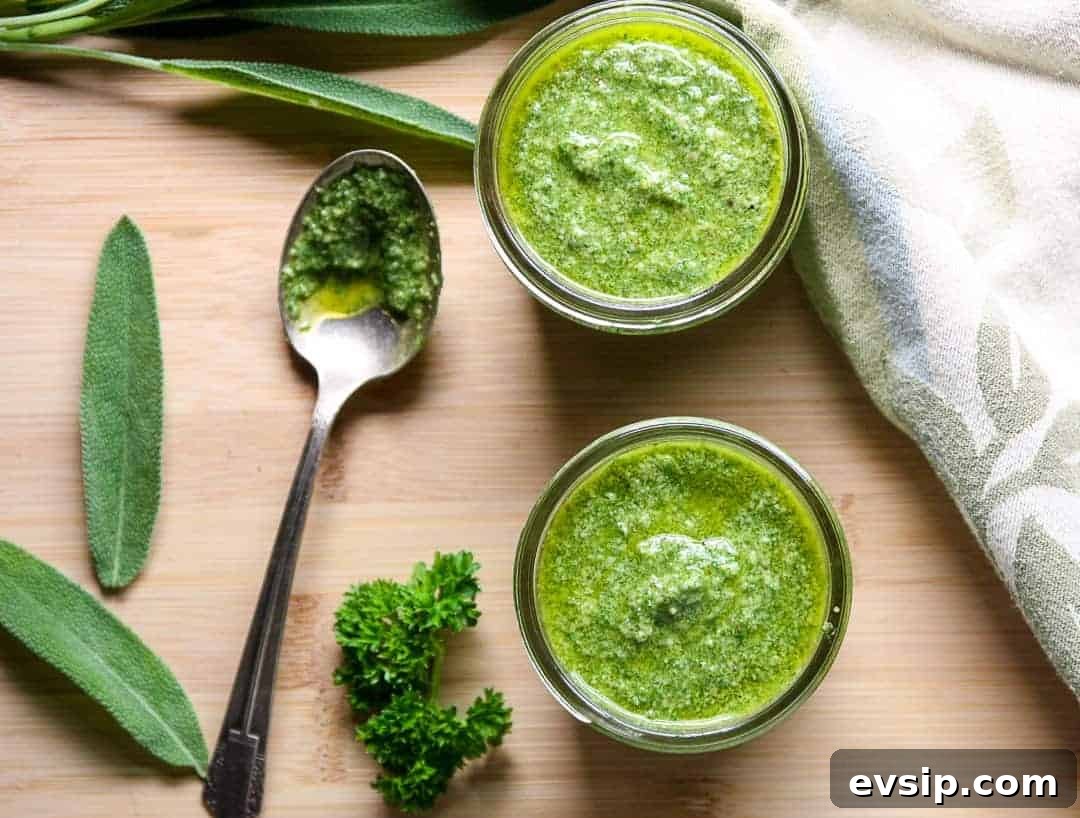
Yes. Pesto freezes beautifully and is a practical way to use a surplus of herbs. Freeze in ice cube trays for convenient single-use portions, or use any preferred freezing method to preserve texture and flavor for later use.
Recipe
Walnut Sage Pesto
Print
Pin
Rate
Save Recipe
Ingredients
- 1 cup fresh sage leaves
- 1 cup fresh parsley
- 3-4 cloves garlic
- ½ cup toasted walnuts
- 2 tablespoon fresh lemon juice
- zest of one lemon
- ½ teaspoon sea salt or kosher salt
- ½ teaspoon freshly ground pepper
- ⅓ cup extra virgin olive oil
- ½ cup freshly grated Parmesan cheese
Instructions
-
In a food processor, pulse sage and parsley leaves, garlic, walnuts, lemon juice and zest, salt and pepper until smooth.
-
With the motor running, slowly pour in the olive oil until incorporated.
-
Turn off the motor and stir in the Parmesan cheese.
-
Store in the refrigerator for up to one week.
Notes
Nutrition