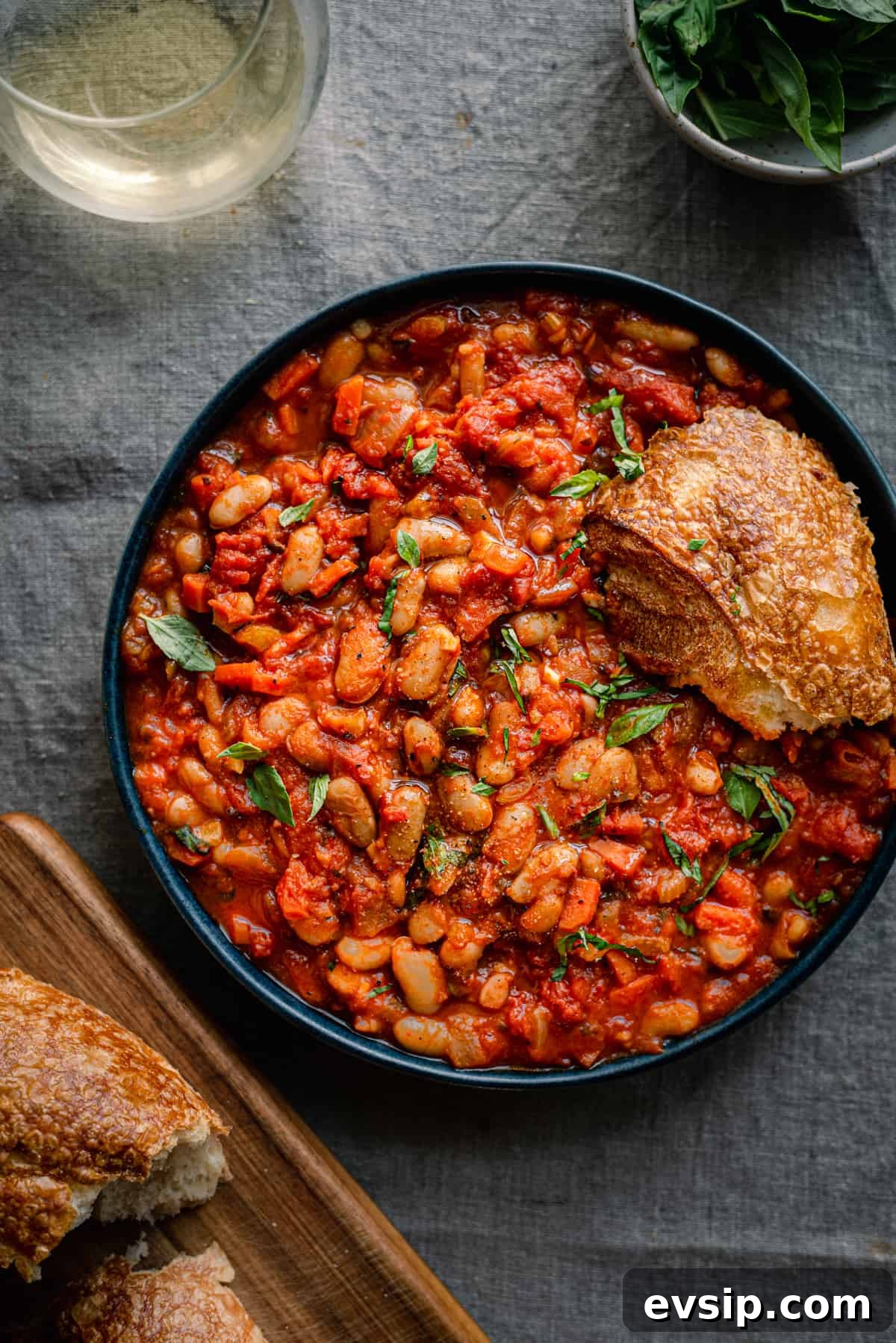
One of my favorite cuisines is rustic Italian cooking, and these Tuscan Stewed Beans are my newest go-to.
With a handful of simple, budget-friendly pantry staples—onion, carrot, celery, garlic, fresh herbs, tomato paste, and canned tomatoes—this dish simmers down into a sweet, jammy base. Cannellini beans are added and stewed until the mixture becomes rich, almost creamy, and deeply flavorful.
This recipe fills your kitchen with the aroma of a trattoria and is destined to become a cold-weather favorite.
Table of Contents
1. What are Tuscan Stewed Beans?
2. Why you’ll love this recipe
3. Ingredient notes
4. Step-by-step instructions
5. Tips for making this recipe
6. Frequently Asked Questions
7. Recipe card with notes
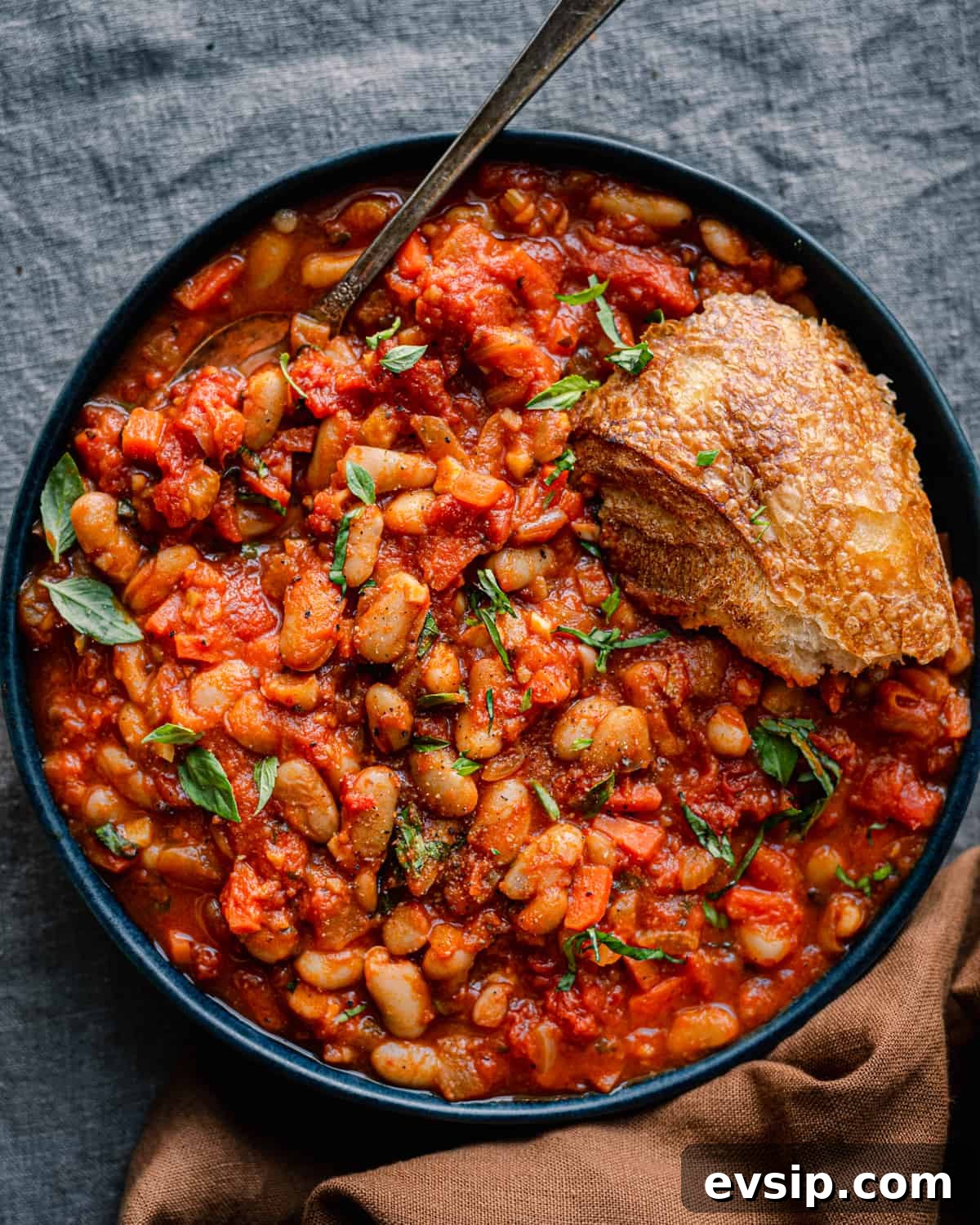
What are Tuscan Stewed Beans?
This is my plant-based take on a rustic Tuscan tomato stew inspired by the flavors of Livorno. The dish is rooted in classic Italian technique—starting with a soffritto of onion, carrot, and celery—and builds layers of savory depth with garlic, tomato paste, and herbs. Instead of seafood (as in the original inspiration), tender cannellini beans become the star, stewed until the texture is velvety and satisfying.
Why you’ll love this recipe
A Wholesome Hug in a Bowl
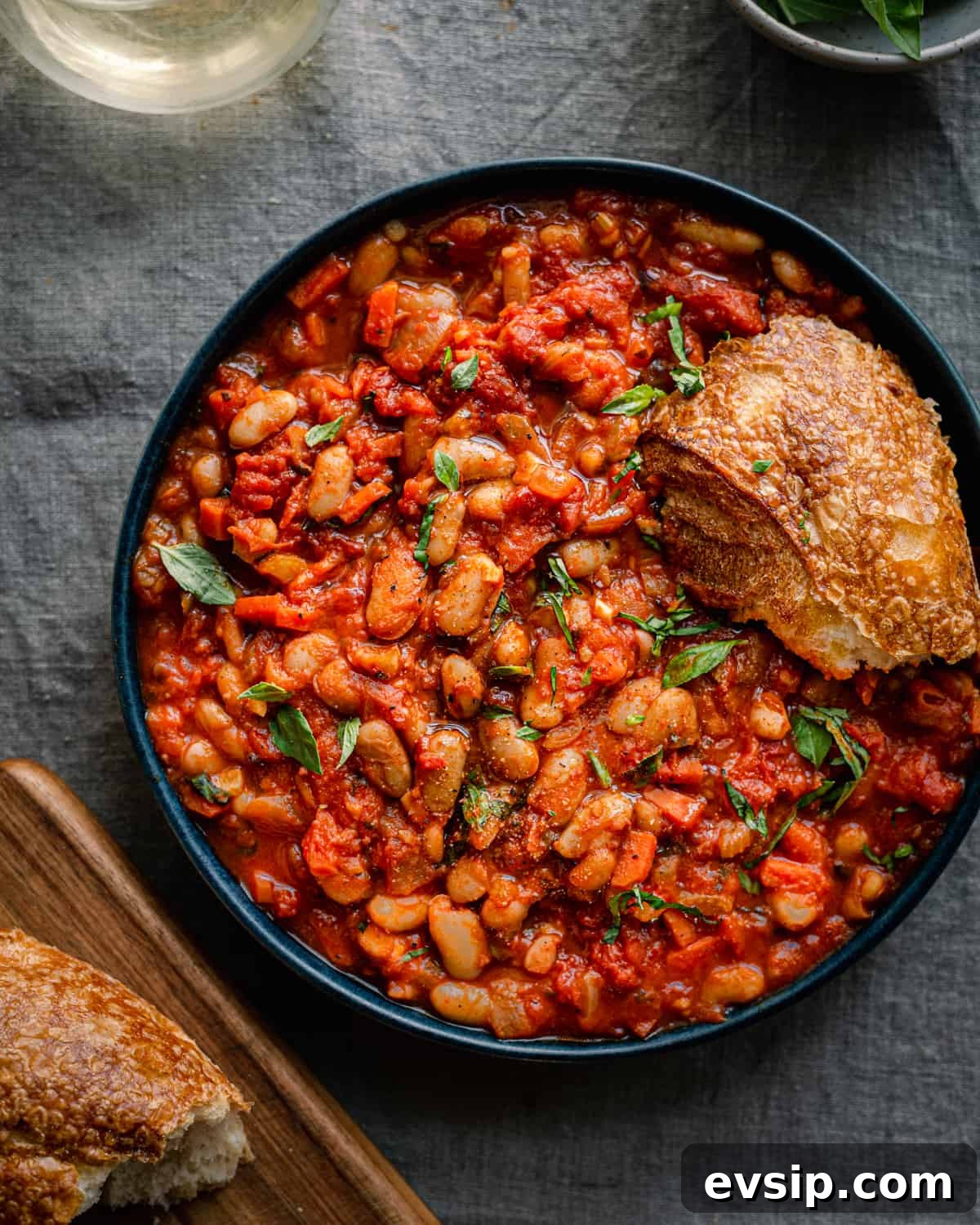
This is cozy winter food that feels indulgent while remaining wholesome—beans, aromatics, olive oil, tomatoes, herbs, and a splash of white wine. The final texture is jammy and rich, perfect with crusty bread or polenta.
Rich Italian Flavor
Caramelized onions lay a savory foundation, then carrots, celery, garlic, and chili flakes add body and brightness. Fresh sage gives a woodsy aroma and tomato paste contributes concentrated umami. A slow simmer melds everything into the familiar sweet-tangy, herb-forward profile of home-style Italian cooking.
Allergen-, Meal-Prep-, and Freezer-Friendly
The recipe is vegan, gluten-free, nut-free, and soy-free. It stores well for meal prep and freezes beautifully, making it a practical, comforting dish for busy weeks.

Ingredient notes
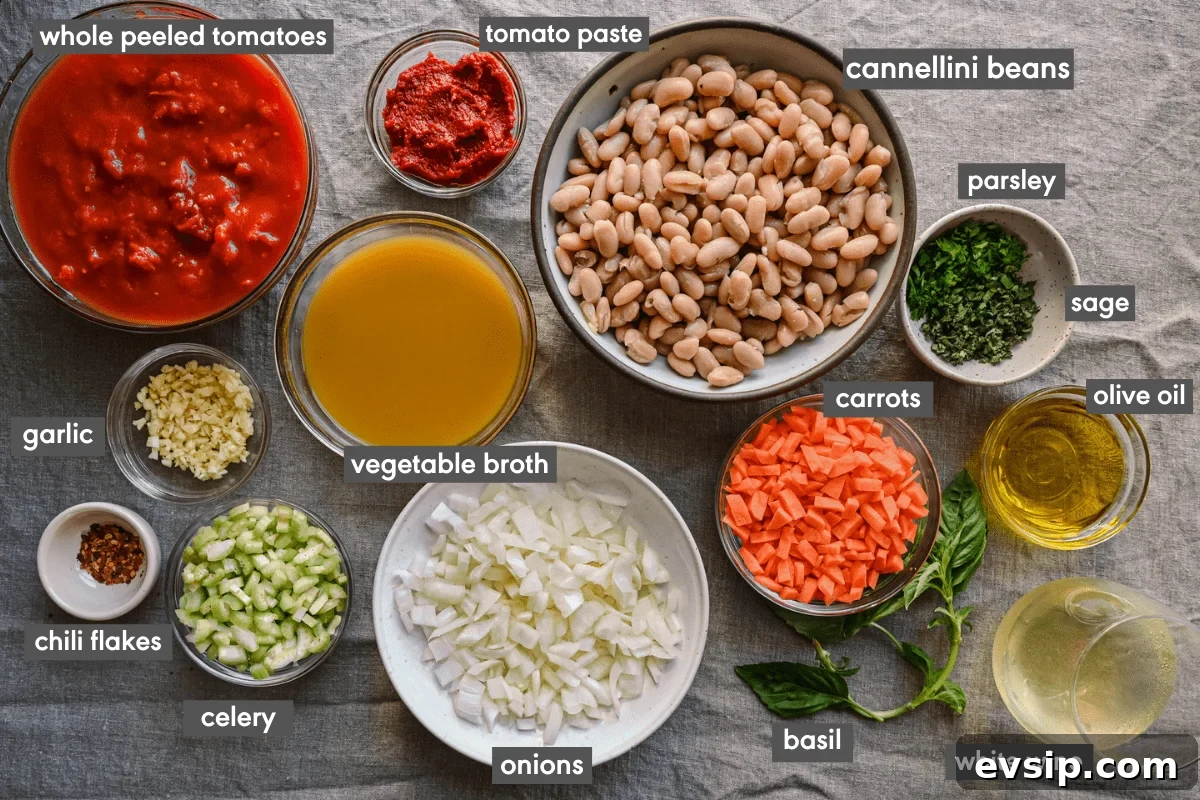
Soffritto. The classic Italian base of onion, carrot, and celery sautéed gently in olive oil. It provides the aromatic backbone for many soups, stews, and sauces.
Garlic and fresh herbs. Garlic plus fresh parsley and sage (or rosemary if sage isn’t available) add bright, savory notes. Fresh herbs make a noticeable difference; dried herbs lose potency and should be used only if necessary.
Cannellini beans. Creamy white beans are ideal here; they contribute body and a silky mouthfeel. If you can’t find cannellini, another white bean such as great northern or navy will work.
Dry white wine. A dry white helps lift flavors from the aromatics and tomatoes. Use a crisp option like Pinot Grigio, Sauvignon Blanc, or Pinot Gris. If you avoid alcohol, see the FAQ for substitutes.
Tomato paste. Tube tomato paste is preferred for its brighter tomato flavor and lack of metallic tin taste. If you only have canned paste, it will work—taste and adjust if needed.
Whole peeled canned tomatoes. Whole tomatoes offer pure tomato flavor and better texture than pre-diced varieties. Crush them by hand when adding them to the pot.
Step-by-step instructions
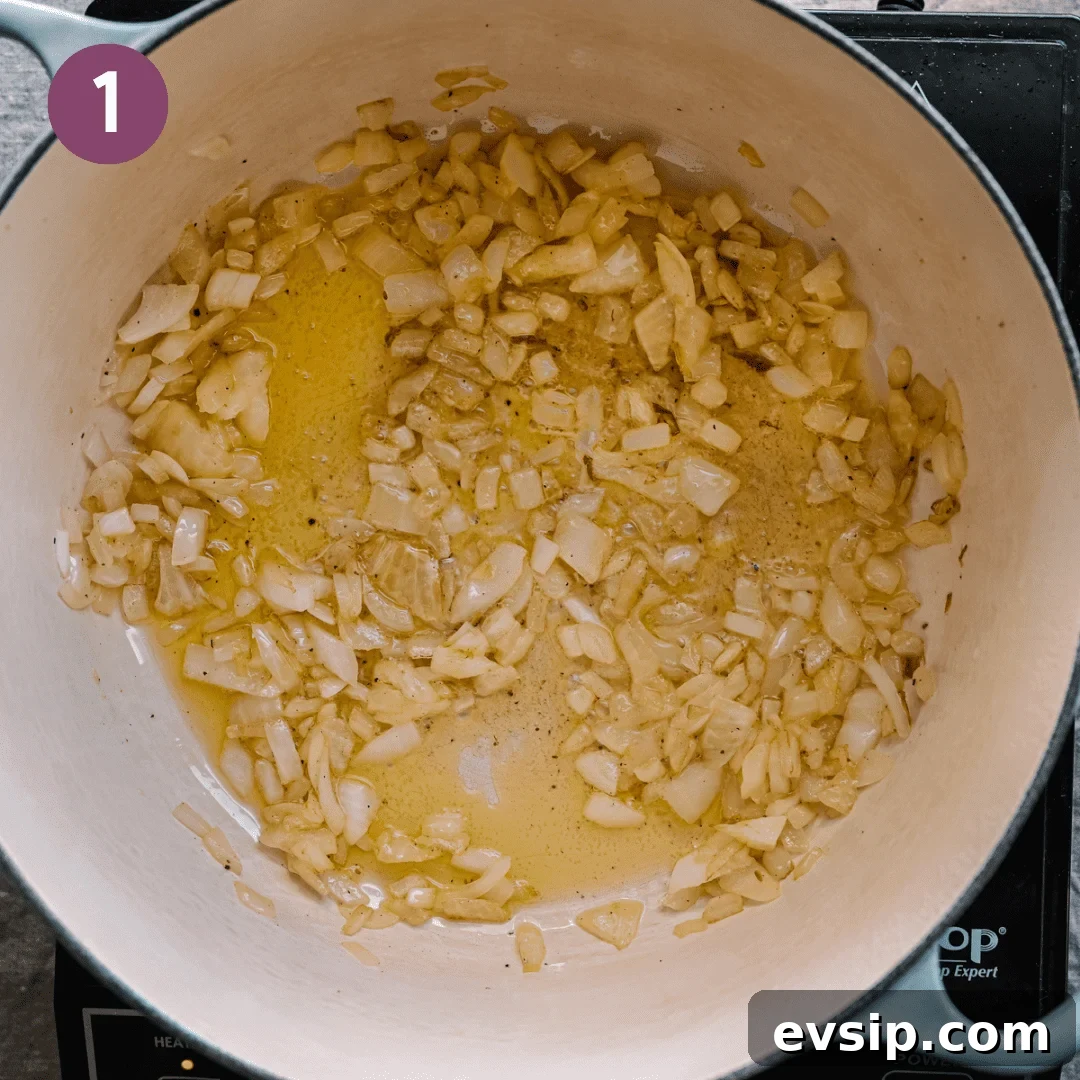
Heat 1/4 cup extra virgin olive oil in a Dutch oven over medium heat. Add a chopped medium yellow onion with a pinch of salt and cook 7–8 minutes until golden.
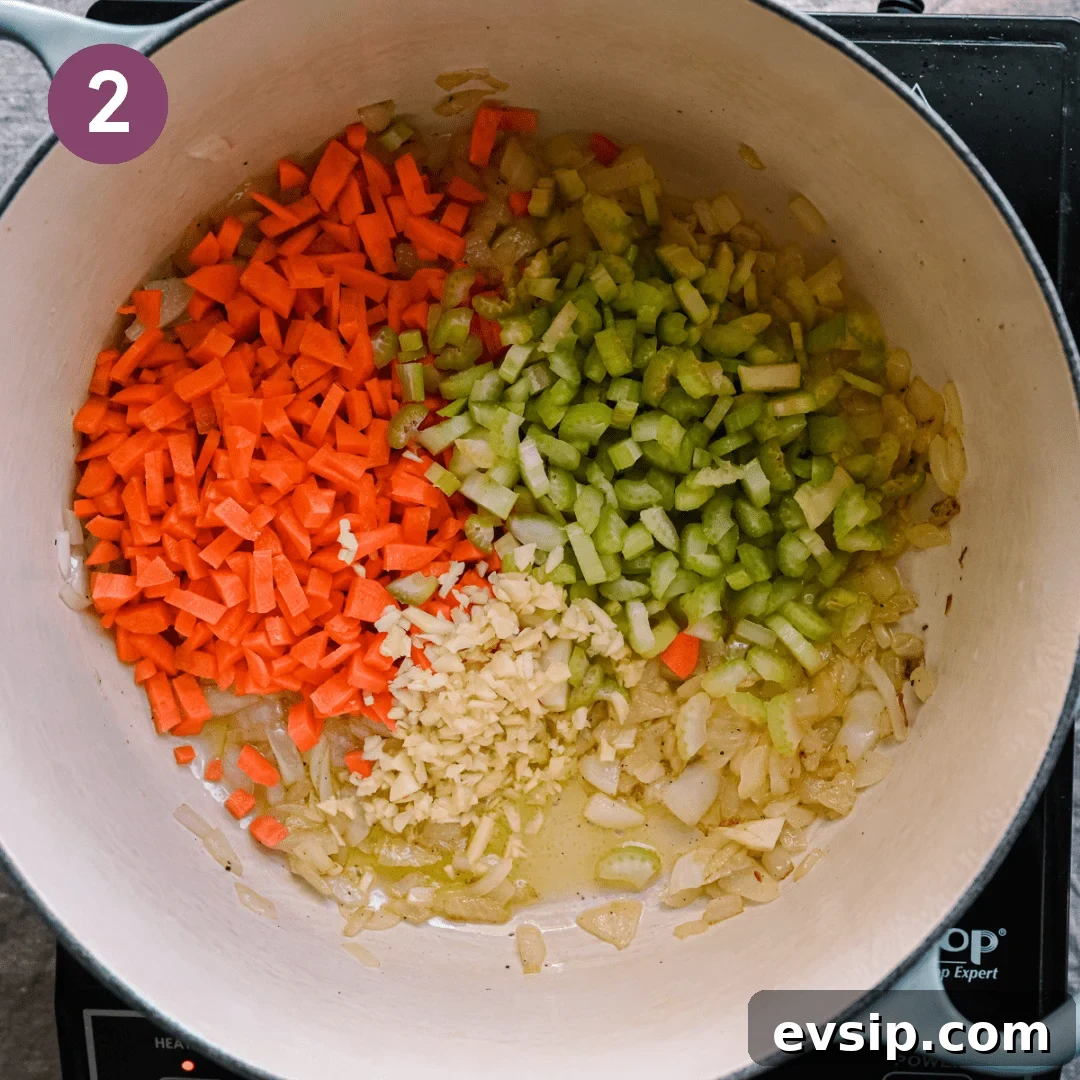
Add 2 chopped carrots, 2 diced celery ribs, and 4 finely chopped garlic cloves. Cook 3–4 minutes. Stir in 1/2 teaspoon red pepper flakes, 1/4 cup minced parsley, and 1 tablespoon minced sage and cook about 1 minute until fragrant.
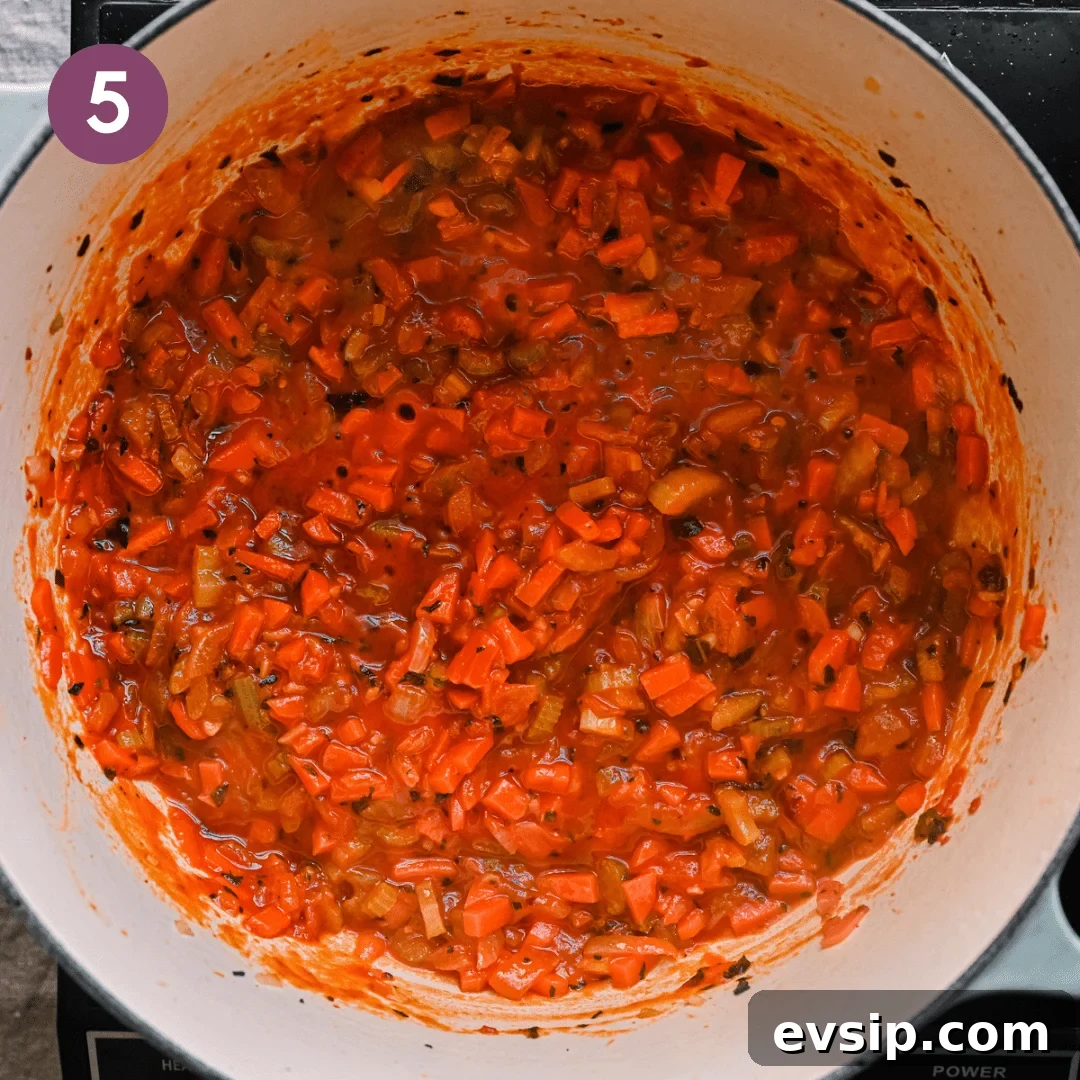
Squeeze in 4 1/2 tablespoons tomato paste and cook, stirring almost constantly, for 1–2 minutes until the paste darkens slightly.
Pour in 3/4 cup dry white wine and deglaze the pot, scraping up any browned bits. Let the wine reduce until the alcohol aroma dissipates, about 3 minutes.
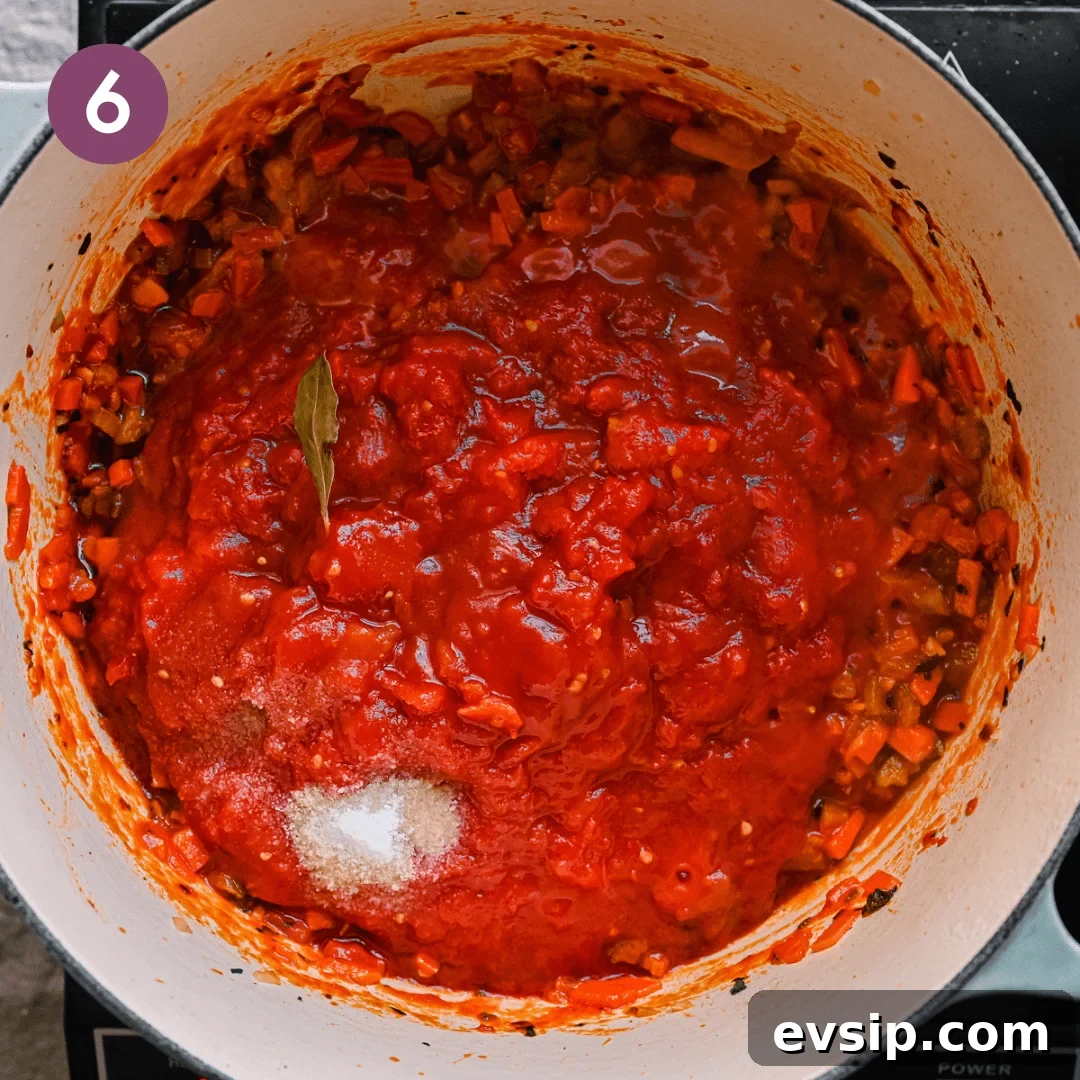
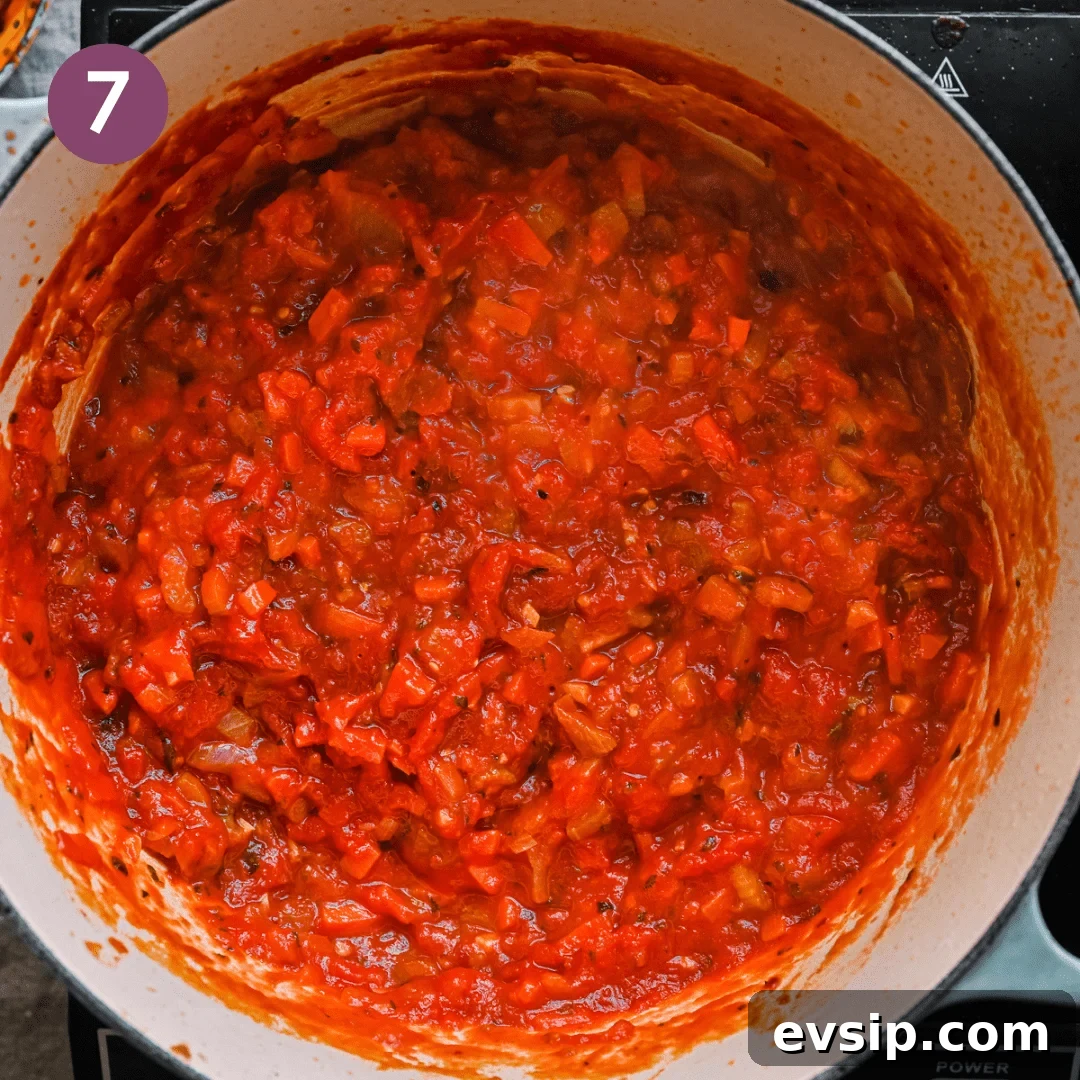
Add one 28-ounce can of whole peeled tomatoes (crushed by hand) with their juices, 1 bay leaf, 1 teaspoon kosher salt, and several grinds of black pepper. Simmer rapidly, stirring occasionally, until the tomato liquid mostly evaporates, about 12–13 minutes.
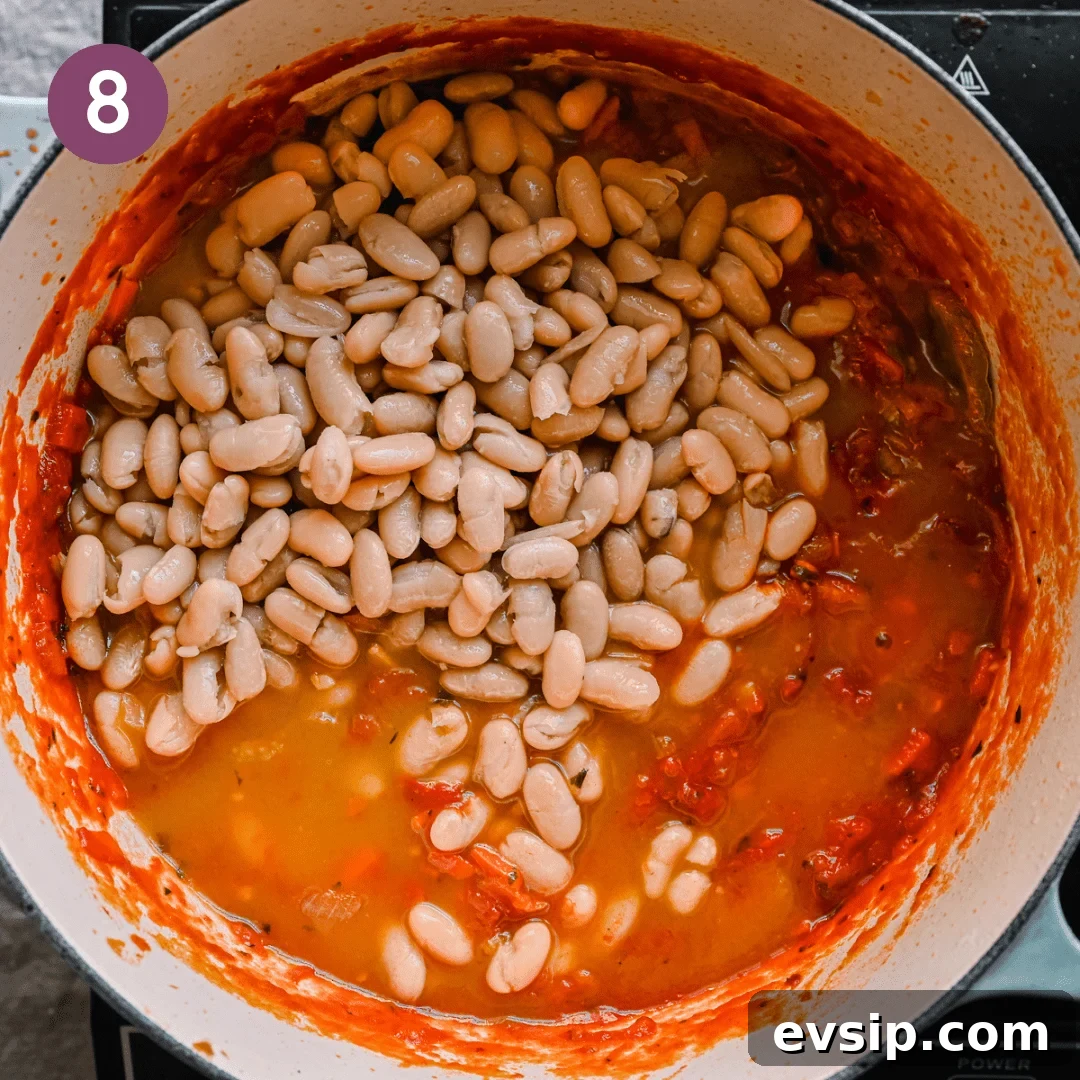
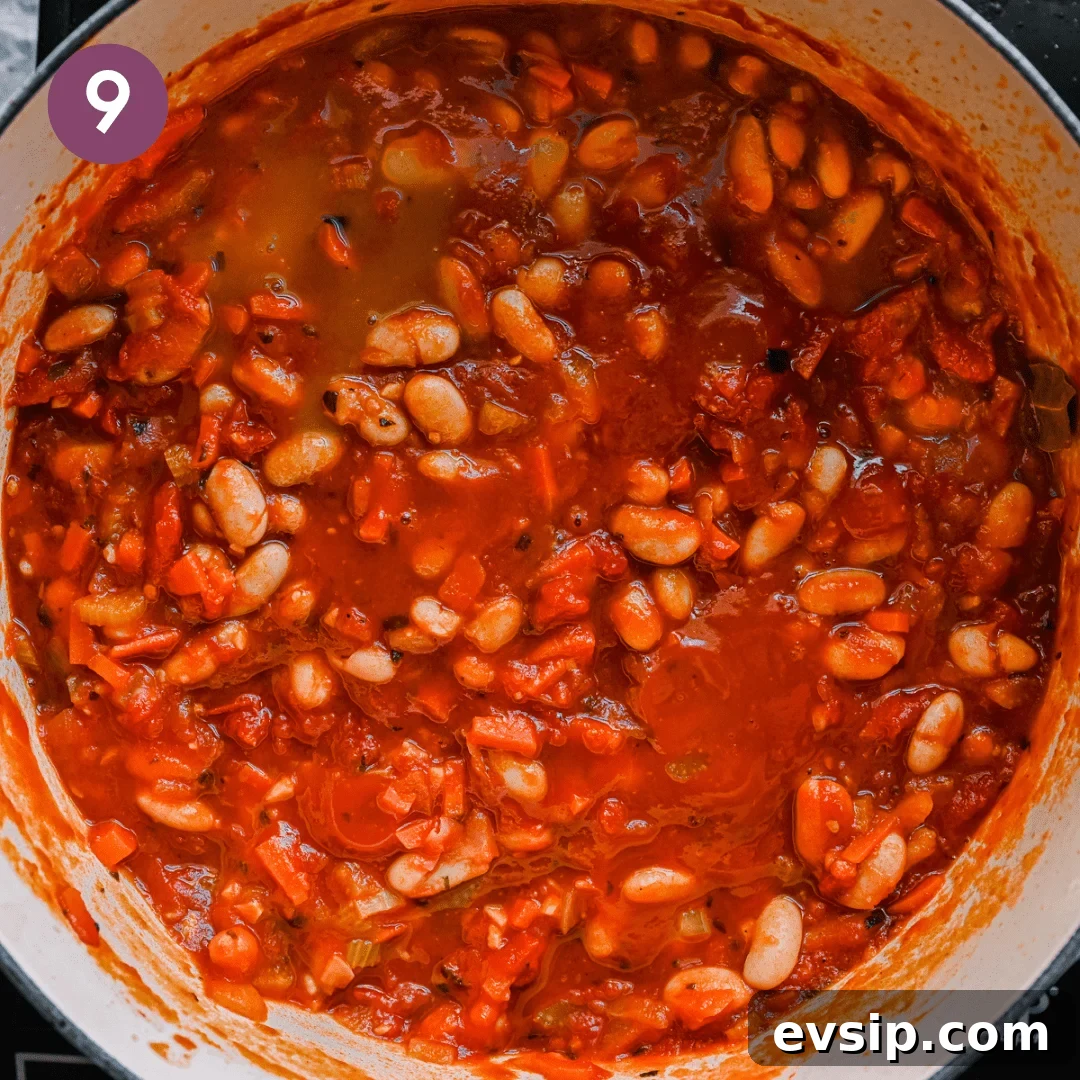
Add 1 1/2 cups vegetable broth and two drained, rinsed 15-ounce cans of cannellini beans. Reduce heat to low, cover, and simmer gently for 30 minutes, stirring occasionally. If you prefer a thicker texture, mash a portion of the beans against the side of the pot near the end of cooking.
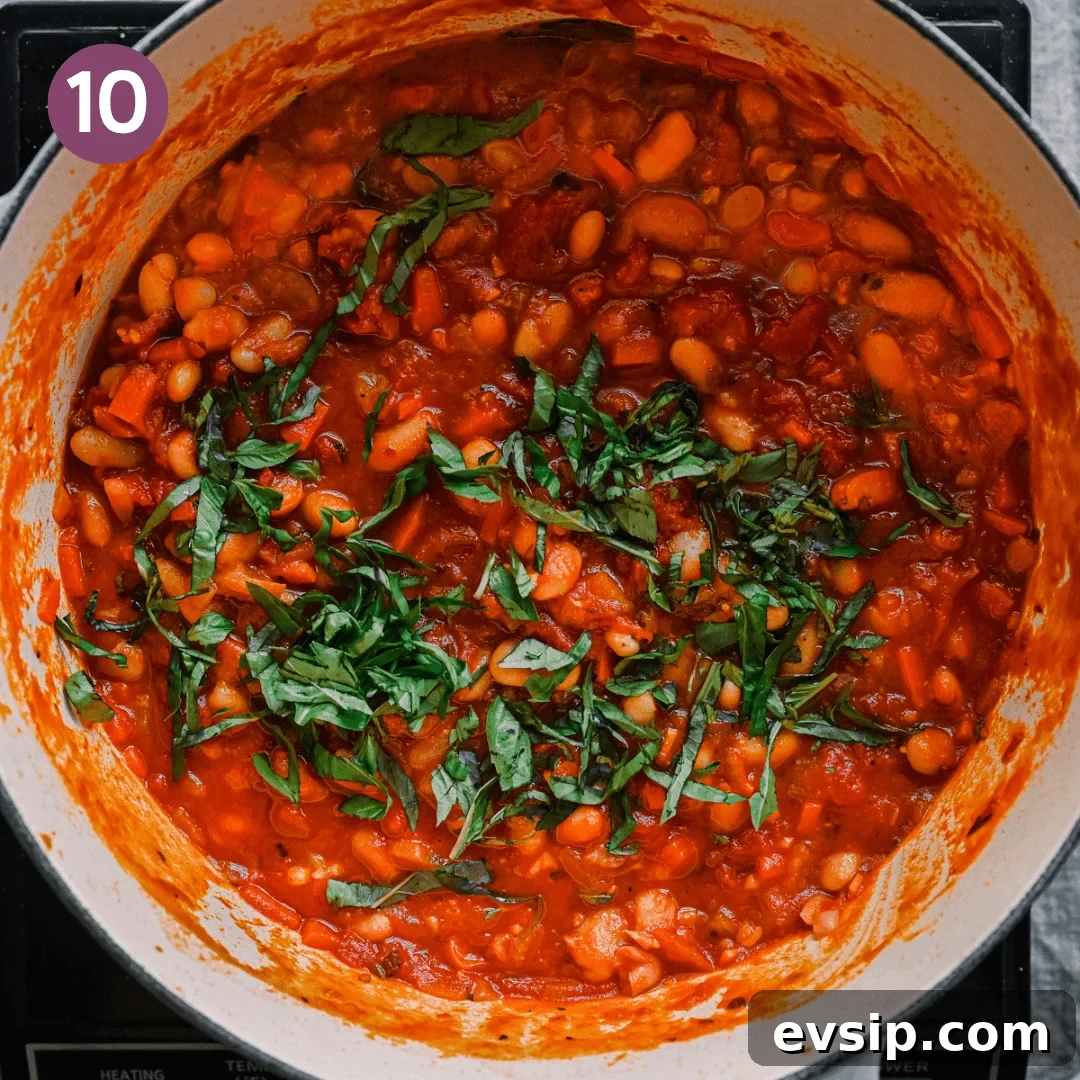
Finish by stirring in 1/2 cup slivered fresh basil, taste and adjust seasoning, and remove the bay leaf. Serve warm with bread, polenta, or over pasta.
Tips for making this recipe
Use the best tomato products you can find
Whole peeled tomatoes and tube tomato paste yield the cleanest, brightest tomato flavor. When a recipe relies on a few simple ingredients, quality makes a clear difference. If your tomatoes taste very acidic, finish with a pinch of sugar to balance the acidity.
Don’t skimp on the olive oil
Extra virgin olive oil helps the soffritto soften without burning, contributes sweetness and umami from caramelized onions, and gives the stew a luxurious mouthfeel.
Adjust the texture
For a looser stew, add 1/2 to 1 cup extra vegetable broth or water. For a thicker, creamier finish, mash a few beans into the pot near the end of cooking.
Frequently Asked Questions
Use half the amount of unsweetened white grape juice, or combine 1/2 cup (120 mL) vegetable broth with 2 tablespoons white wine vinegar. These options approximate the acidity and brightness of wine though they won’t add the same depth as a dry white.
Yes. Finely chopped Tuscan (lacinato) kale stirred in during the last 5 minutes is a great addition—cook until wilted.
Store in an airtight container for 5–6 days. Reheat gently on the stovetop over medium heat or warm in the microwave.
Yes. Once cooled, portion into containers and freeze for up to 4 months. Thaw in the fridge or reheat directly from frozen on the stove until warmed through.
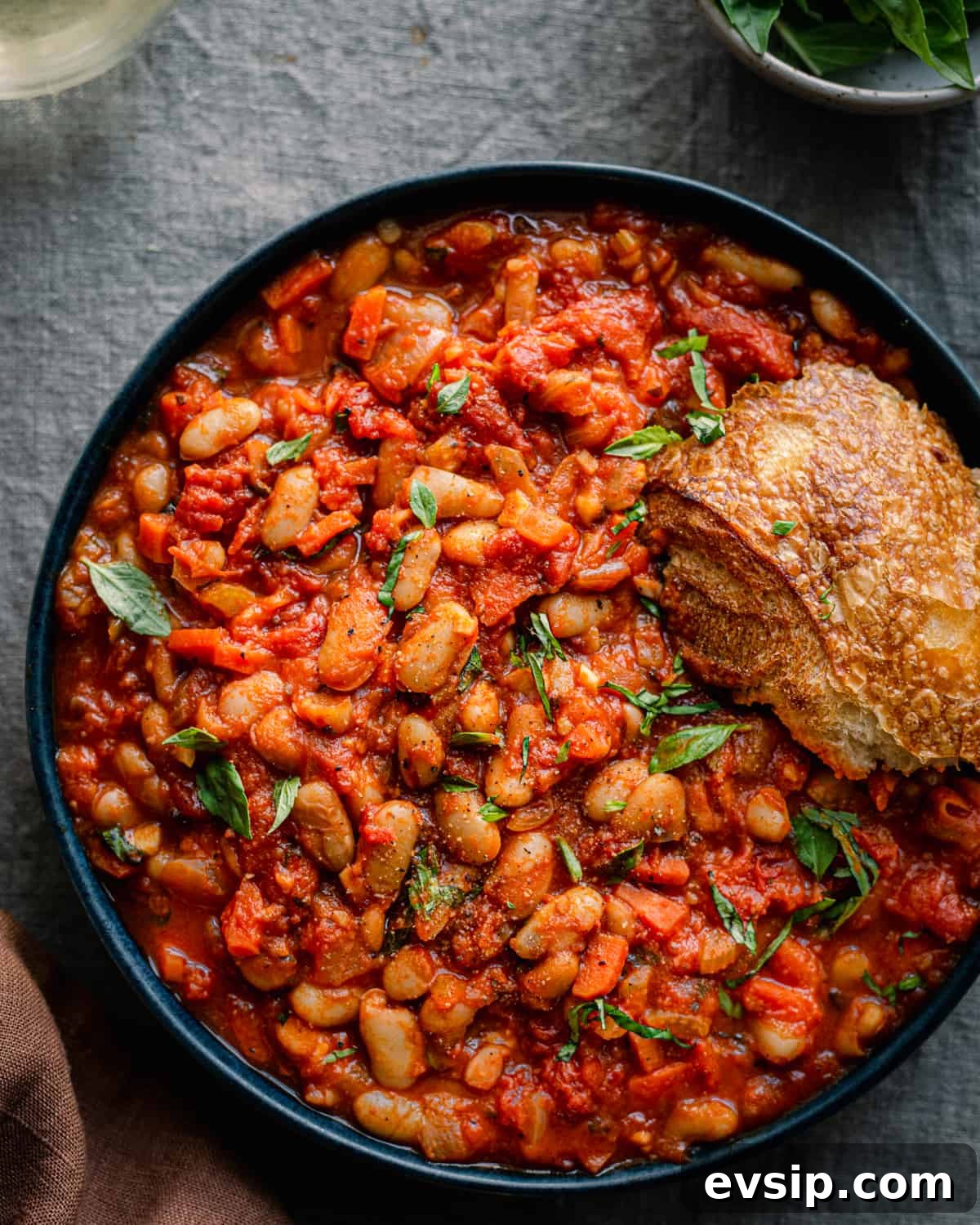
Tuscan Stewed Beans
Made it? Click the stars to leave a review!

Review
Ingredients
- 1/4 cup (56 mL) extra virgin olive oil
- 1 medium yellow onion, chopped
- 2 medium or large carrots, peeled and finely chopped
- 2 celery ribs, diced
- 4 garlic cloves, finely chopped
- 1/2 tsp red pepper flakes
- 1/4 cup (4g) flat-leaf parsley leaves and tender stems, minced
- 1 tablespoon minced fresh sage
- 4 1/2 tablespoons (67g) tomato paste (in a tube, not a can)*
- 3/4 cup (180 mL) dry white wine**
- 1 28-ounce (800g) can whole peeled tomatoes, crushed by hand
- 1 teaspoon kosher salt, plus more to taste
- Freshly cracked black pepper
- 1 bay leaf
- 1 1/2 cups (360 mL) vegetable broth, plus more as desired
- 2 (15-ounce/425g) cans cannellini beans, drained and rinsed
- 1/2 cup (8g) fresh basil, slivered***
Instructions
-
Heat the olive oil in a Dutch oven over medium heat. Add the chopped onion with a pinch of salt and pepper and cook 7–8 minutes until golden, stirring occasionally. Add the carrot, celery, and garlic with another pinch of salt and cook 3–4 minutes. Stir in red pepper flakes, parsley, and sage and cook 1 minute until fragrant.
-
Add the tomato paste and cook, stirring almost continuously, for 1–2 minutes until it darkens slightly.
-
Pour in the white wine and deglaze the pot, scraping up browned bits. Let the wine simmer rapidly for about 3 minutes, until it mostly evaporates and the alcohol smell is gone.
-
Add the crushed tomatoes, bay leaf, 1 teaspoon kosher salt, and black pepper. Simmer vigorously until the tomatoes break down and most liquid evaporates, 12–13 minutes.
-
Stir in the vegetable broth and drained beans. Reduce heat to low, cover, and simmer for 30 minutes, stirring occasionally. For a thicker stew, mash a small portion of the beans toward the end of cooking.
-
Taste and add a pinch of sugar if the tomatoes are too acidic. Remove the bay leaf, stir in the basil, and season to taste with salt and pepper before serving.
Video
Notes
** Choose a dry, crisp white wine such as Pinot Grigio, Sauvignon Blanc, or Pinot Gris.
*** If basil isn’t available, substitute flat-leaf parsley.
Nutrition
Nutrition information is automatically calculated and should be used as an approximation.
 Love this? Leave a rating below!