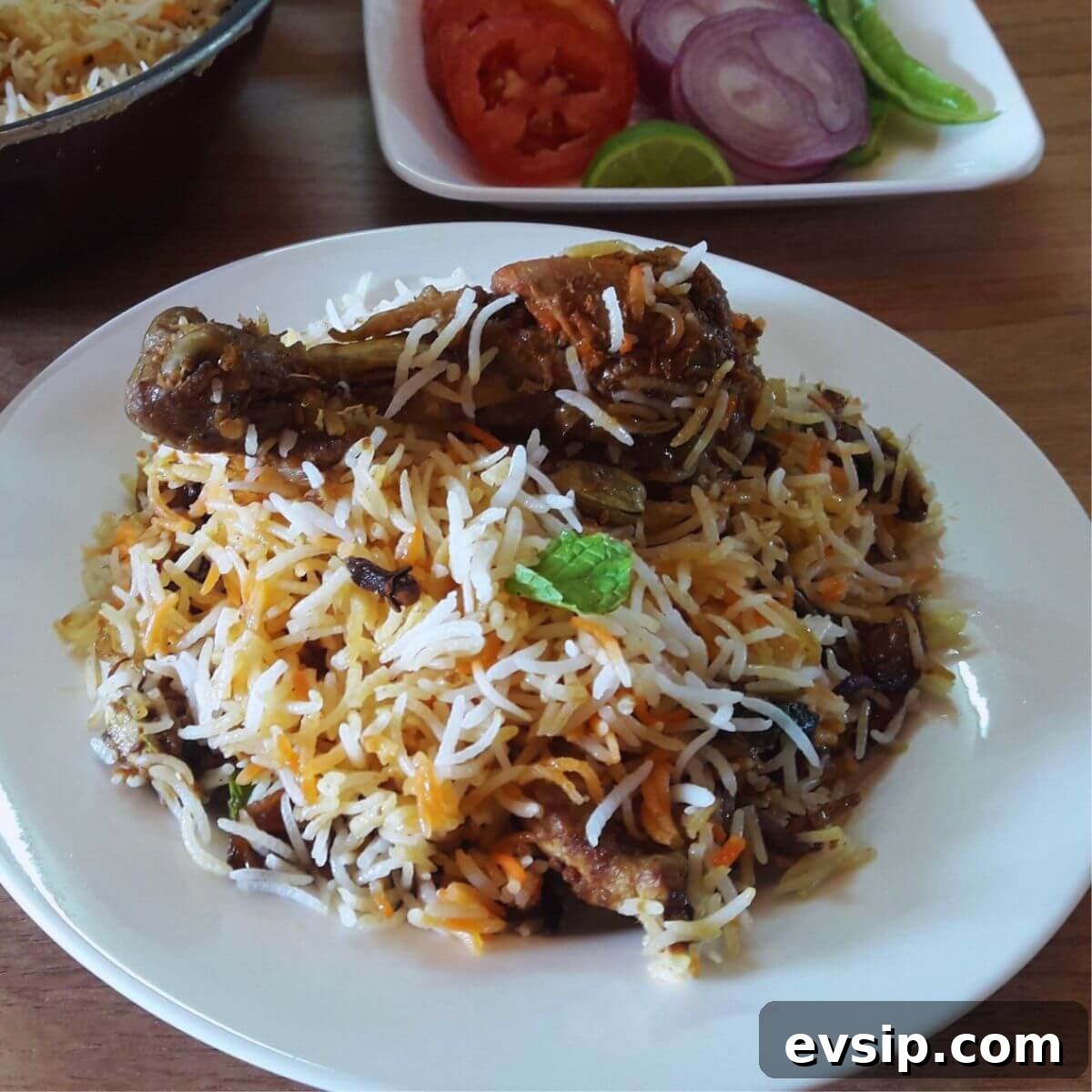
Awadhi Chicken Biryani with step-by-step photos and a video. Also called Lucknowi Chicken Biryani, this recipe uses long-grain basmati rice, bone-in chicken, and mild, aromatic spices. The result is a delicately flavored, fragrant biryani typical of Awadhi cuisine, the traditional food of Lucknow — the historic city of Nawabs in Uttar Pradesh.
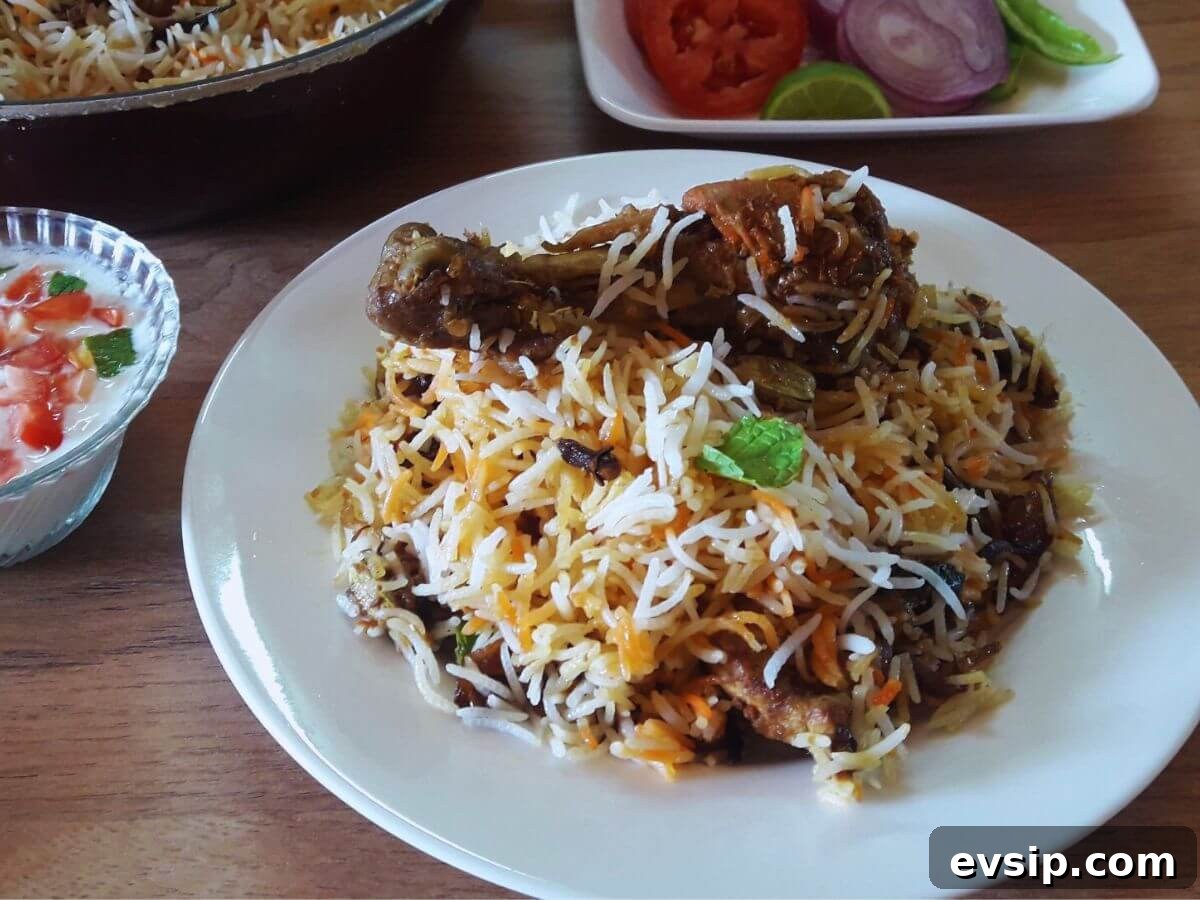
Awadhi cuisine developed in and around Lucknow and reflects Nawabi and Mughlai influences. Its non-vegetarian specialties include Kakori, Tunde and Shami kebabs, rich kormas, and dum-style biryanis. The Awadhi biryani is traditionally cooked on dum (slow, sealed cooking), which allows the rice, meat and subtle aromatics to meld into a moist, flavorful dish with a gentle, sweet aroma.
About this recipe
This post shows how to make Awadhi-style Murgh Biryani (Lucknowi Chicken Biryani). “Murgh” means chicken; this biryani is mildly spiced with tender, fully cooked meat and perfectly textured rice. It highlights Awadhi flavors: mild whole spices, kewra or rose water, and a hint of mace and cardamom.
Lucknowi biryani is usually served with a cooling raita and a simple salad. In this version I’ve omitted meetha attar and yellow chili powder for accessibility, substituting ingredients where needed while preserving the characteristic aroma and taste.
Ingredients and Substitutions
- Chicken – Bone-in pieces (thighs or legs preferred) keep the biryani moist and flavorful.
- Basmati rice – Use aged, long-grain basmati for best texture and aroma.
- Onions – Red or brown onions, sliced and fried to make birista (fried onions).
- Yogurt – Fresh, slightly sweet yogurt or homemade curd; avoid overly sour curd.
- Green chilies – Optional; omit if you prefer less heat.
- Ghee – Essential for authentic flavor; reduce slightly if necessary but avoid substituting with oil.
- Whole spices – Bay leaf, cumin, cinnamon, cardamom and cloves for the base aroma.
- Flavorings – Ginger-garlic paste, salt, cardamom powder and mace powder (freshly ground if possible).
- Red chili powder – Used as a substitute for yellow chili powder; adjust to taste. Avoid Kashmiri chili if you don’t want a bright red hue — Lucknowi biryani should look golden.
- Saffron – Optional, but adds color and fragrance.
- Kewra & rose water – Small amounts give the biryani its signature floral aroma.
- Meetha attar – Traditional in Lucknowi biryani; you may use rose essence as a substitute or skip it.
See the recipe card below for exact measurements and the full ingredient list.
Step by step instructions with photos
Preparations
- Rinse and soak basmati rice for 30 minutes, then drain before boiling.
- Prepare birista: fry sliced onions in hot oil until golden-brown, stirring so they brown evenly. Drain onto paper towels. Use store-bought fried onions if preferred.
Making the chicken gravy
- Heat 1 tbsp ghee and 2 tbsp oil over medium heat in a deep pan.
- Add whole spices and sauté briefly until fragrant.
- Add sliced onions and cook until golden.
- Add chicken pieces and cook until they turn from pink to white.
- Add ginger-garlic paste and salt; cook 2 minutes until raw aroma disappears.
- Stir in yogurt and bring to a simmer.
- Cover and cook on low-medium heat until oil separates at the edges (about 10–15 minutes), stirring occasionally.
- Add red chili powder, cardamom powder, mace powder and green chilies. Cover and cook until oil separates again.
- Add 1 cup water, reduce heat and simmer for 15–20 minutes or until the chicken is tender and cooked through.
Cooking the biryani rice
- Bring 5 cups water to a boil in a large pot. Add 1 tbsp ghee, kewra water, rose water, whole spices and salt.
- Add drained basmati rice and stir gently.
- Boil until grains are about 90% cooked — they should be soft but still split slightly when pressed between fingers.
- Drain the rice in a colander and set aside.
Layering the chicken and rice
- Ensure the chicken is fully cooked. Remove from heat.
- If you used the same pot, remove chicken pieces and reserve some of the flavorful oil from the base.
- Make sure there is a thin layer of oil/ghee at the bottom of the pot before layering.
- Layer half the cooked rice, then spread the cooked chicken evenly over it.
- Sprinkle fried onions, mace and cardamom powder, a few drops of kewra and rose essence, and a little ghee.
- Top with the remaining rice and spread evenly.
- Finish with a final sprinkle of cardamom and mace powder, reserved oil, saffron milk, fried onions, a few drops of kewra/rose water, and mint leaves if desired.
Cooking the Awadhi chicken biryani on Dum
- Seal the lid with wheat flour dough or cover tightly with aluminum foil.
- Place a heavy iron tawa or griddle on the burner and set the biryani pot on top to avoid direct heat.
- Cook on medium-high for 5 minutes to build heat, then reduce to the lowest flame and cook for 10 minutes.
- Turn off the heat and let the pot rest for 10 minutes before opening the seal.
- Carefully remove the seal and gently fluff the biryani. Serve hot with raita, salad and lemon wedges.
Tips to make the Best Awadhi Chicken biryani
- Use a heavy-bottomed pot to prevent burning during dum.
- Rinse rice thoroughly to remove excess starch and soak for 30 minutes to shorten cooking time.
- Cook chicken gently on low heat and ensure it is fully cooked before layering.
- Parboil rice to about 90% doneness; the remaining cooking happens on dum.
- When trying concentrated essences (kewra/rose), dilute a drop or two in water first to avoid overpowering the dish.
- Do not drastically reduce ghee — it contributes key flavor.
- Mace and cardamom powders are important for authentic Awadhi aroma; avoid skipping them.
- Follow the dum timings for best results; seal the pot well for even steam cooking.
FAQs
No. Lucknowi biryani is milder and more aromatic than many other biryanis. Its gentle heat is balanced by floral notes from kewra, rose water and warm spices like mace and cardamom.
Hyderabadi biryani tends to be spicier and uses more mint and coriander. Lucknowi biryani is subtler, with floral essences (meetha attar or rose), mace and yellow chili traditionally used for its characteristic aroma and color.
Serve with burani raita or simple onion-tomato raita and a fresh salad or lemon wedges.
Yes. “Awadhi Biryani” and “Lucknowi Biryani” refer to the same regional style of biryani from the Awadh region, centered on Lucknow, blending Mughlai and Nawabi culinary traditions.
If you try this Awadhi biryani, leave a comment and a starred review in the recipe card below.
Recipe Card
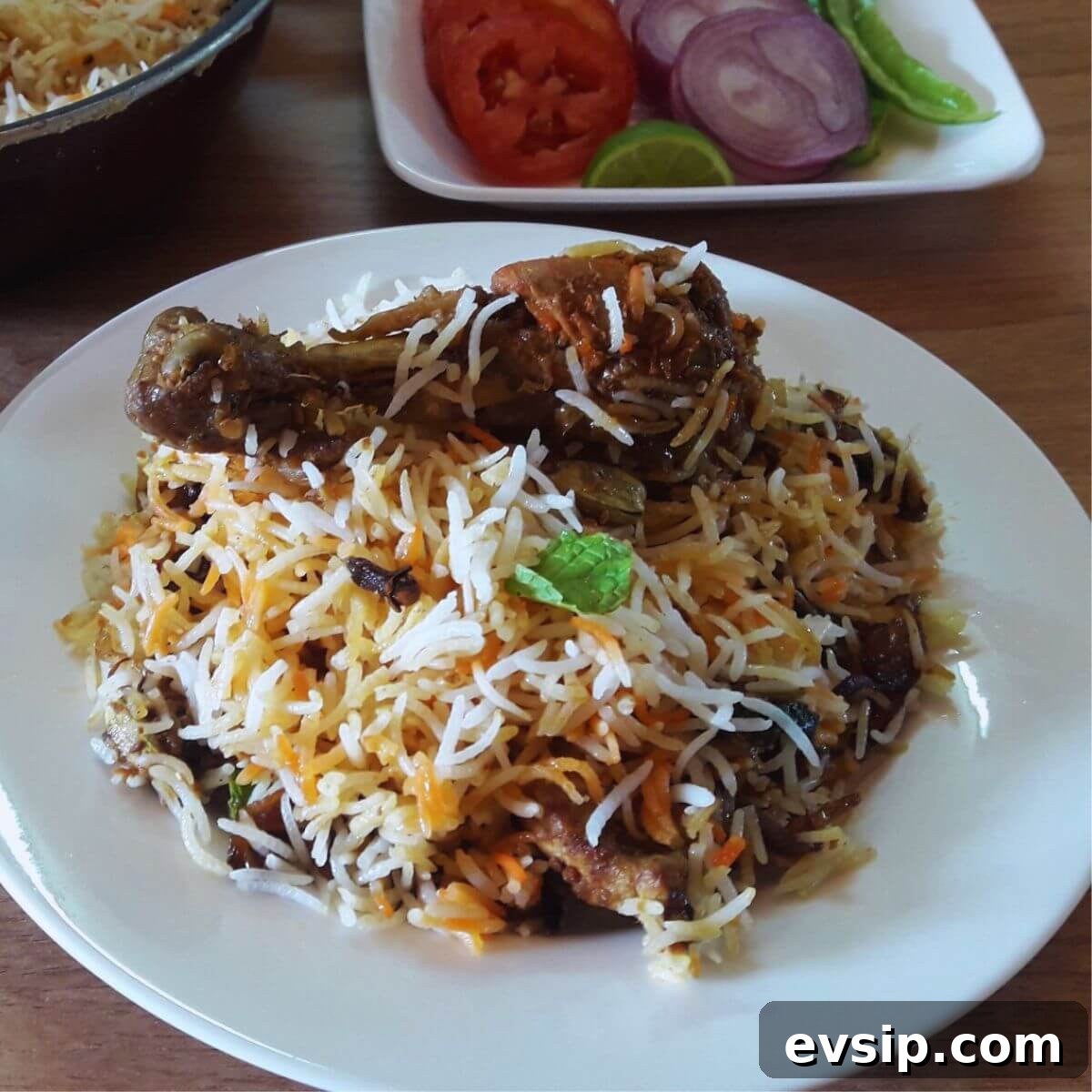
Awadhi Chicken Biryani recipe (Lucknowi Chicken Biryani)
Video
Equipment
-
Heavy bottom pot or wok
Ingredients
- 2 cups basmati rice (aged, long-grain)
- 2 onions, sliced (for birista)
For the chicken gravy
- 500 g chicken, cut into pieces
- 3 onions, sliced
- 2 tbsp ginger-garlic paste
- Salt to taste
- ¾ cup thick yogurt
- 1 tsp red chili powder (adjust to taste)
- ¼ tsp cardamom powder
- ¼ tsp mace powder
- 2 green chilies (optional)
- 1 tbsp ghee + 2 tbsp refined oil
Whole spices for the chicken
- 1 bay leaf
- 1 tsp cumin
- 1-inch cinnamon
- 4 green cardamoms
- 5 cloves
To cook biryani rice
- 1 tbsp ghee
- ½ tsp kewra water
- ½ tsp rose water
- Salt to taste
Whole spices for rice
- 1 bay leaf
- 1-inch cinnamon
- 5 cloves
- 3 green cardamoms
For layering
- Saffron milk (pinch saffron in ½ cup warm milk)
- 1 tsp mace powder
- 1 tsp cardamom powder
- 2–3 drops kewra water
- 2–3 drops rose essence
- 2 tsp ghee
- Handful of mint leaves (optional)
Instructions
Preparations
- Soak basmati rice for 30 minutes and drain.
- Make birista by frying sliced onions until golden and crisp; drain on paper towels.
Making the chicken gravy
- Heat ghee and oil, add whole spices and sauté briefly.
- Add onions and cook until golden.
- Add chicken and cook until color changes.
- Add ginger-garlic paste and salt; cook 2 minutes.
- Stir in yogurt and simmer; cook until oil separates.
- Add powdered spices and green chilies; simmer until oil separates.
- Add 1 cup water and cook on low until chicken is tender (15–20 minutes).
Cooking the biryani rice
- Boil water with ghee, kewra, rose water, whole spices and salt.
- Add drained rice and cook until about 90% done.
- Drain the rice and set aside.
Layering and dum
- Ensure chicken is fully cooked; reserve some flavored oil from the pot.
- Layer half the rice, then the chicken, sprinkle birista, spices, kewra/rose drops and ghee; top with remaining rice.
- Finish with saffron milk, reserved oil, fried onions and optional mint.
- Seal the pot and place it on a tawa over the burner. Cook 5 minutes on medium-high, then 10 minutes on the lowest heat.
- Rest 10 minutes, open carefully and serve hot with raita and salad.
Notes
- Always soak basmati rice for 30 minutes before cooking.
- Make sure chicken is fully cooked before layering.
- Rice should be about 90% cooked before dum so it finishes perfectly.
- Use a heavy-bottomed pot and keep dum heat very low to avoid burning.
- If you prefer, seal with foil instead of dough; a heavy-fitting lid also works.
- Mint is optional in Lucknowi biryani; traditionally it’s not prominent, but you may add it for personal preference.
Nutrition
Nutrition information is an approximation and should be used as a guideline.