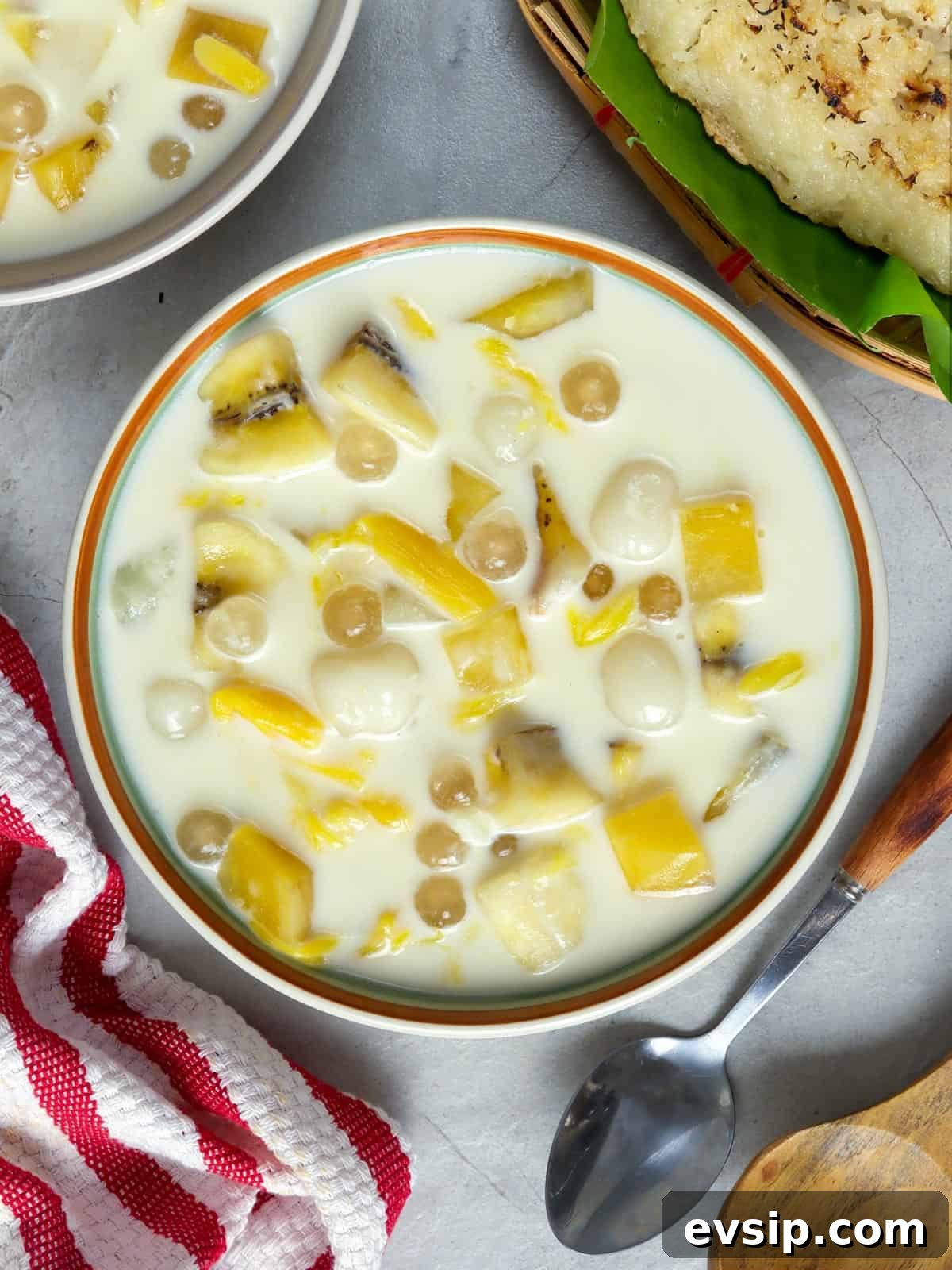
Ginataang halo-halo is a creamy, comforting Filipino sweet stew infused with coconut flavor. It combines tender glutinous rice balls, sago pearls, tropical fruits and starchy tubers to create a filling snack, dessert, or breakfast.
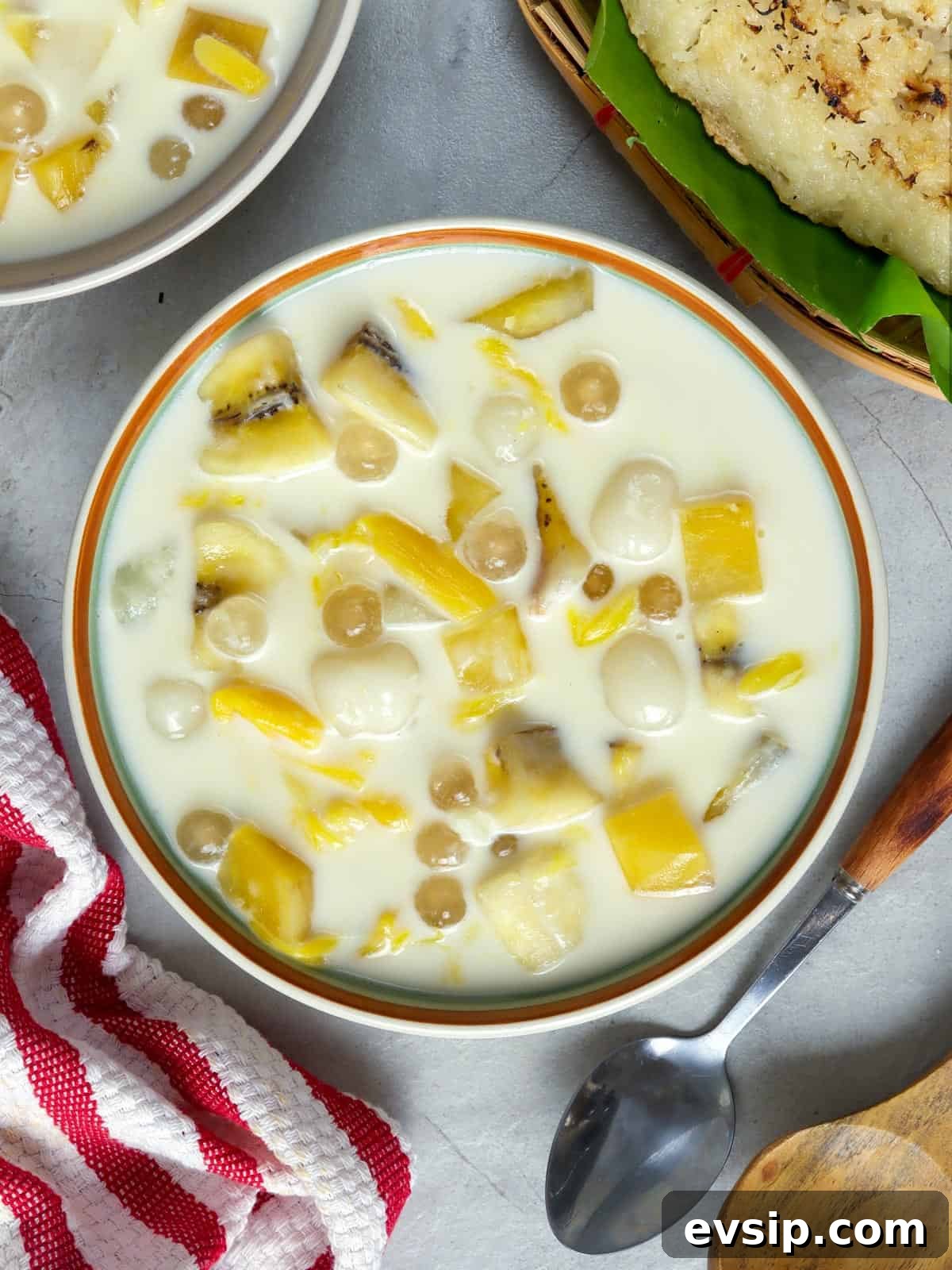
What is Ginataang Halo-Halo
Ginataang halo-halo is a beloved Filipino dish made by simmering sticky rice balls and a mix of fruits and root vegetables in coconut milk. The name literally means “mixed in coconut,” and it refers to the variety of ingredients that are combined in a single pot. It is often served as a warm comfort dessert or a hearty breakfast and is particularly common during the Lenten season when meatless dishes are preferred.
Regional names and small variations are common across the Philippines. Some areas call it binignit, sampelot, ginataang bilo-bilo, kinutil, or other local names. Each version highlights local produce and household preferences, but they all share the same basic idea: chewy rice balls and assorted produce simmered in coconut milk and sweetened to taste.
What you’ll need
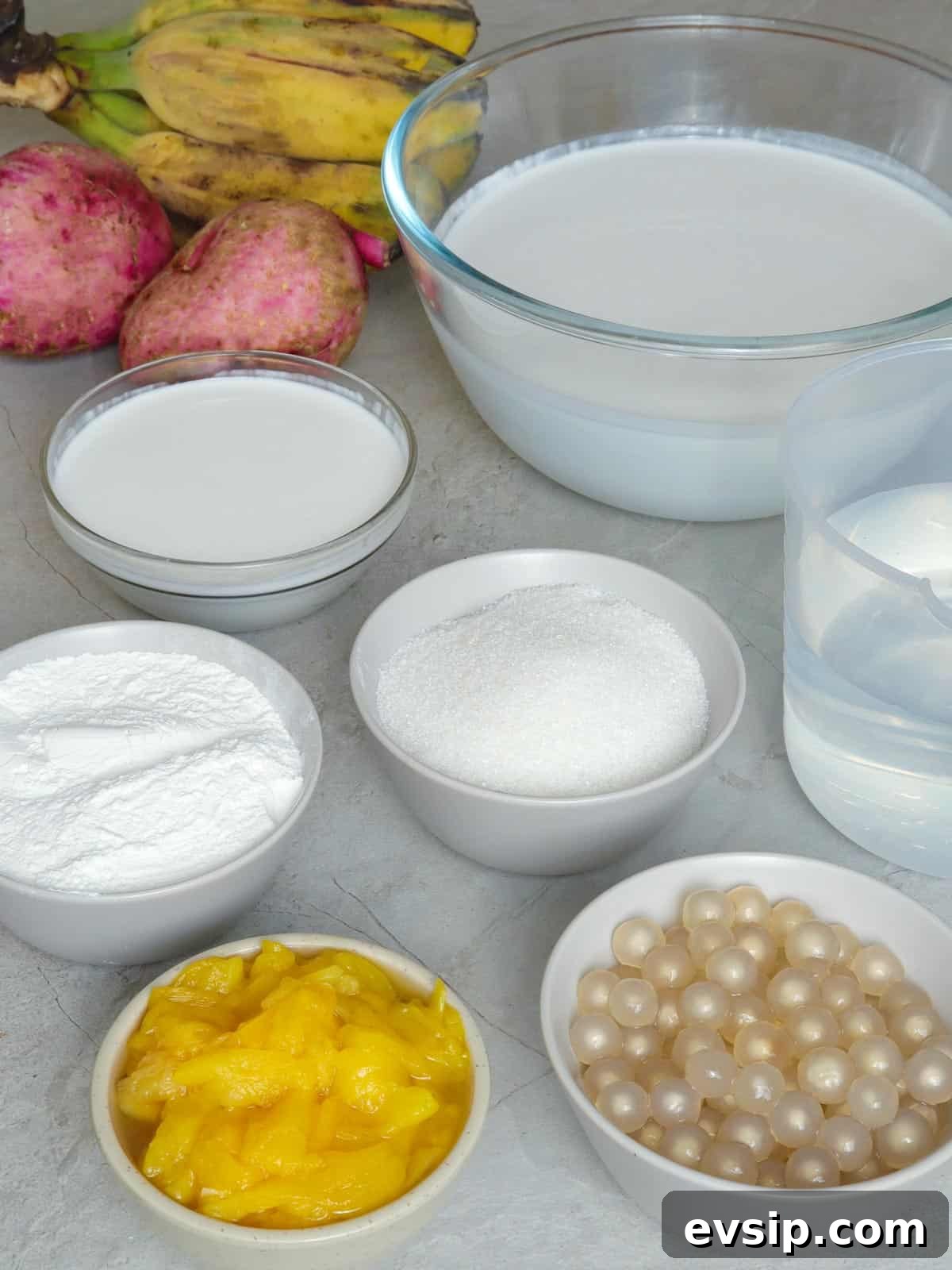
This ginataang is a true “halo-halo” of ingredients. The base is coconut milk and glutinous rice balls called bilo-bilo. Common add-ins are cooked sago pearls, ripe jackfruit strips, saba bananas, and cubed root vegetables such as sweet potato (kamote), taro (gabi), or purple yam (ube). You can adjust quantities and ingredients to taste—use what’s fresh and available.
Making the sticky rice balls
- In a bowl, combine glutinous rice flour and a small amount of water to form a pliable dough. Start with less water and add more as needed. If the dough becomes too sticky, incorporate a bit more flour until it can be handled comfortably.
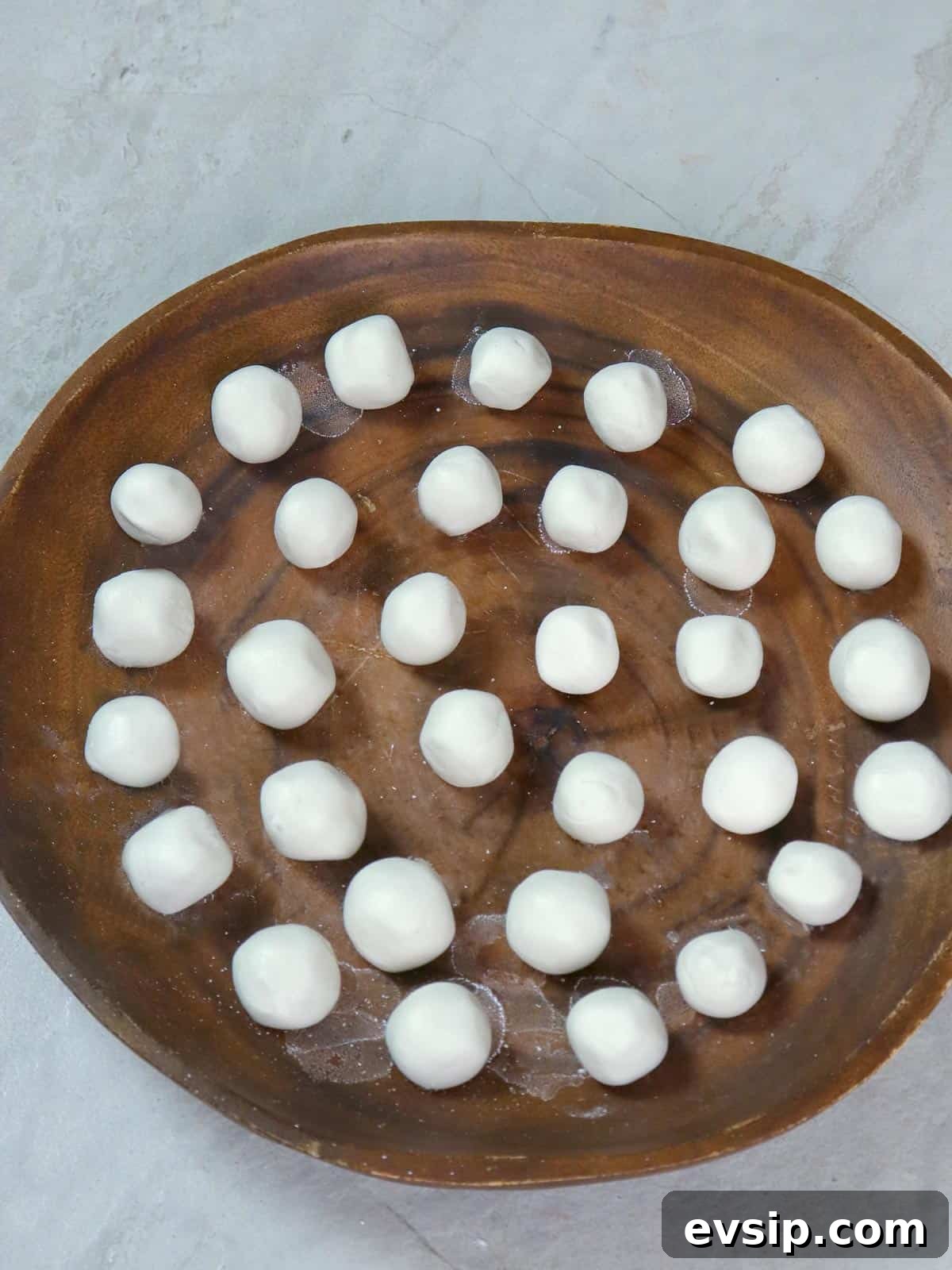
- Roll the dough into smooth, marble-sized balls with your palms. Place the formed balls in a single layer on a baking sheet or shallow plate and cover with a clean cloth to prevent drying.
- To refrigerate for short-term use, cover the tray with plastic wrap and chill until ready. To store long-term, freeze the balls in a single layer until firm, then transfer to airtight containers or resealable bags. Thaw briefly before adding to the hot stew.
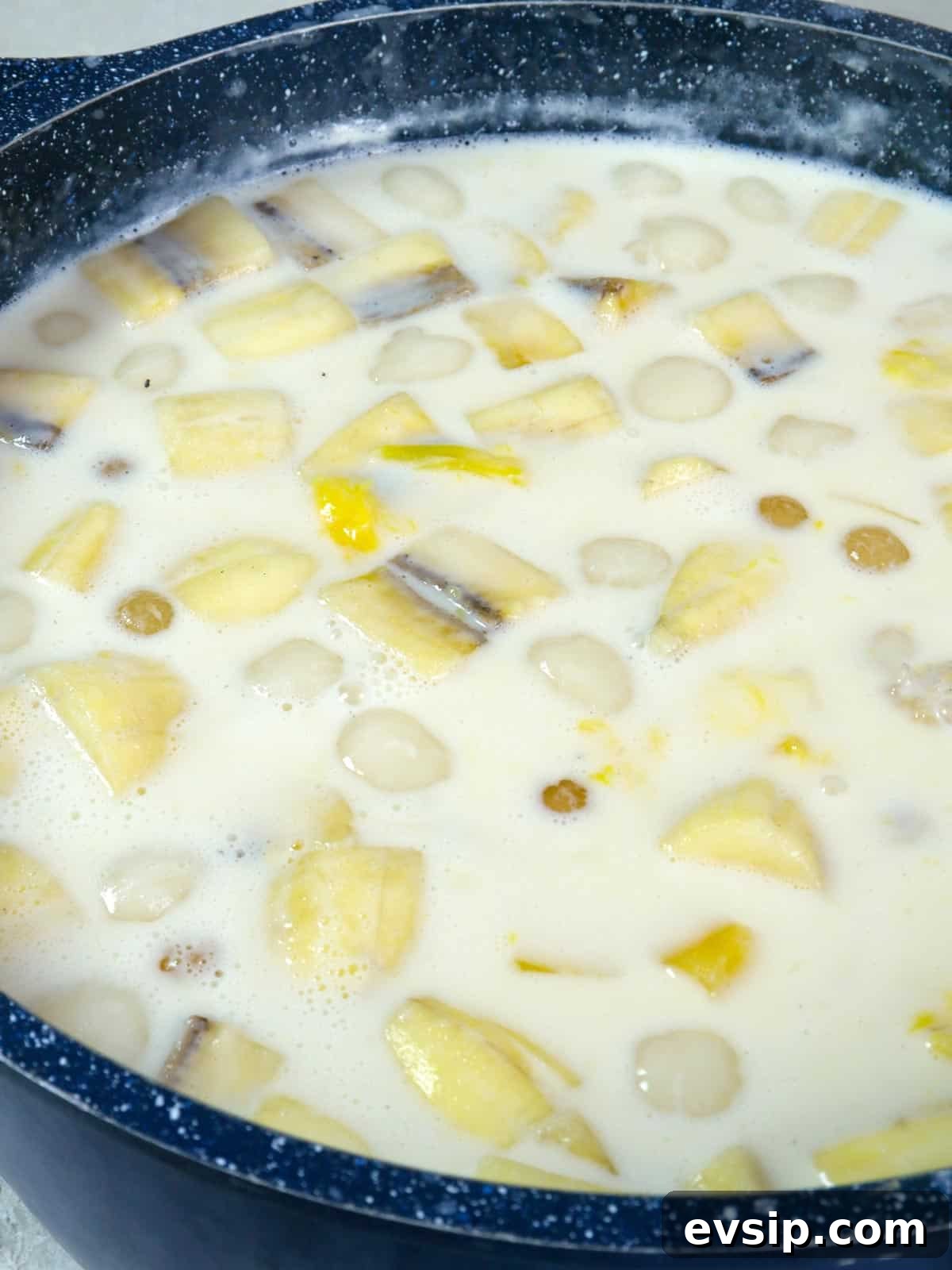
Cooking tips
- Cut the bananas and tubers into uniform pieces so everything cooks evenly.
- Cook sago pearls until they are translucent and tender. You can buy them already cooked or prepare dry pearls according to package instructions.
- If using canned jackfruit, drain it well to avoid extra syrupiness in the stew.
- For visual variety and subtle flavor, tint half of the bilo-bilo dough with a few drops of ube or jackfruit extract before shaping.
- Simmer the coconut milk gently. Avoid rapid boiling to prevent curdling or separation of the coconut cream.
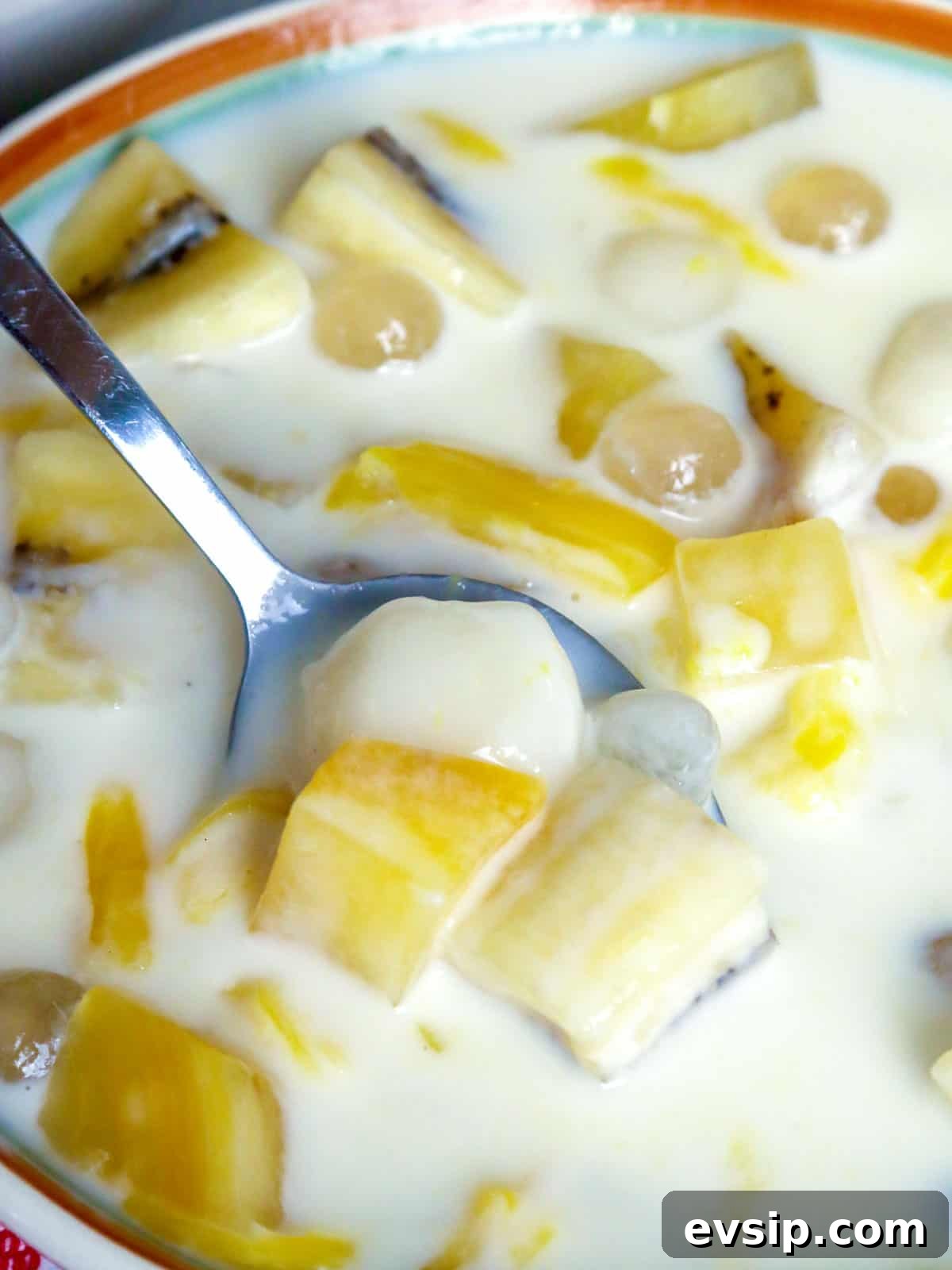
How to serve and store
- Ginataang halo-halo is delicious served warm or chilled. Warm is comforting and silky; chilled gives it a different, refreshingly sweet texture.
- Store leftovers in a sealed container in the refrigerator for up to 3 days. Freezing is not recommended because bananas and some tubers will become mushy and discolored, and the rice balls may become hard and lose their chewiness.
- Reheat gently over low heat. The stew thickens as it cools, so add a splash of coconut milk or water when reheating to restore a creamy consistency.
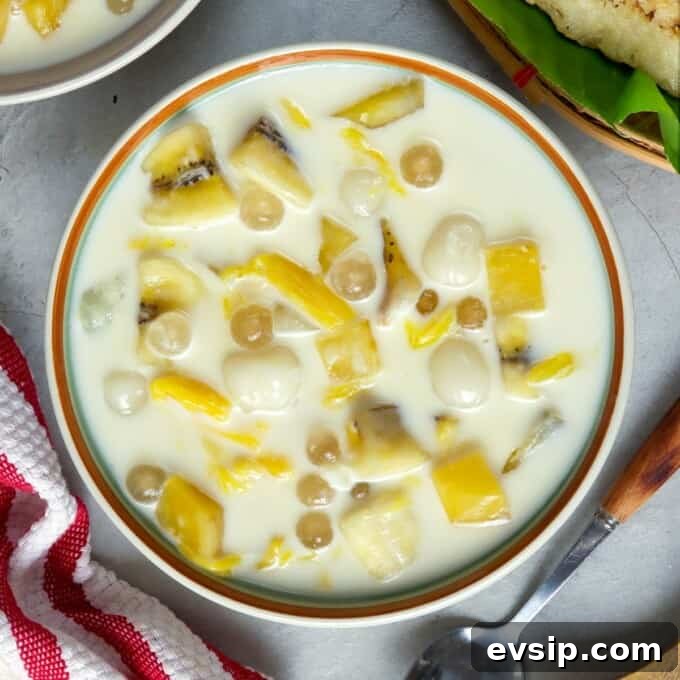
Ginataang Halo-halo
Ingredients
- 1 cup glutinous rice flour
- 2 ½ cups water (divided)
- 3 cans (13.5 ounces each) coconut milk
- 2 large camote (sweet potatoes), peeled and cubed (about 4 cups)
- 2 saba bananas, peeled and cubed (about 2 cups)
- 1 cup cooked sago
- 1 cup jackfruit strips
- 1 cup coconut cream
- 1 cup sugar (adjust to taste)
Instructions
- In a small bowl, combine the glutinous rice flour and ½ cup of water. Mix into a pliable dough. Adjust with more flour if too sticky or more water if too dry.
- Form the dough into smooth, marble-sized balls. Arrange them in a single layer on a baking sheet or plate and cover with a cloth until needed.
- In a large pot over medium heat, combine the coconut milk and the remaining 2 cups of water. Bring to a gentle simmer.
- Add the cubed camote and simmer for 3–5 minutes, or until nearly tender.
- Add the banana pieces, cooked sago, and jackfruit. Cook another 3–5 minutes.
- Gently add the glutinous rice balls and cook until they begin to float, about 3–5 minutes.
- Add the sugar and stir until dissolved. Taste and adjust sweetness as needed.
- Stir in the coconut cream and continue to simmer until the bananas and camote are tender and the sauce reaches your preferred thickness. Keep the heat low to avoid boiling the coconut milk.
- Remove from heat and serve warm or chilled.
Notes
- Try adding a few drops of ube or jackfruit extract to part of the dough for color and extra flavor.
- Maintain a gentle simmer to prevent the coconut milk from separating.
Nutrition Information
Calories: 477 kcal, Carbohydrates: 58 g, Protein: 4 g, Fat: 27 g, Saturated Fat: 24 g, Sodium: 47 mg, Potassium: 521 mg, Fiber: 3 g, Sugar: 22 g, Vitamin A: 3410 IU, Vitamin C: 8.1 mg, Calcium: 36 mg, Iron: 4 mg.