
Exploring how to use census records to uncover the hidden stories of your ancestors’ community with practical tips and techniques.
U.S. census records are a cornerstone for genealogists and family historians. They capture a snapshot of American life at ten‑year intervals and provide details that reveal not only individual families but the communities that shaped them.
For many people, a census entry is the first record they find when beginning family research. The simple process of tracking names and households across decades feels rewarding at first — and then more challenging as subtle clues appear that you might have missed. Census pages often contain more usable information than we initially realize, and learning to read them carefully can unlock richer stories about your ancestors and their surroundings.
The Census Overview
The first U.S. federal census was taken in 1790 and has been conducted every ten years since, though the 1890 census was largely destroyed and is unavailable to researchers. The most recent census occurred in 2020, but for genealogical purposes the 1950 census is the latest one available to the public.
Census content changed over time. Early censuses (1790–1840) often list only the head of household with tick marks or age brackets for other members. From 1850 onward, most population schedules recorded names and added details such as age, sex, race, birthplace, marital status, occupation, education, property information, and household relationships. These evolving data points make the census an exceptionally useful tool for tracking families and community change across decades.
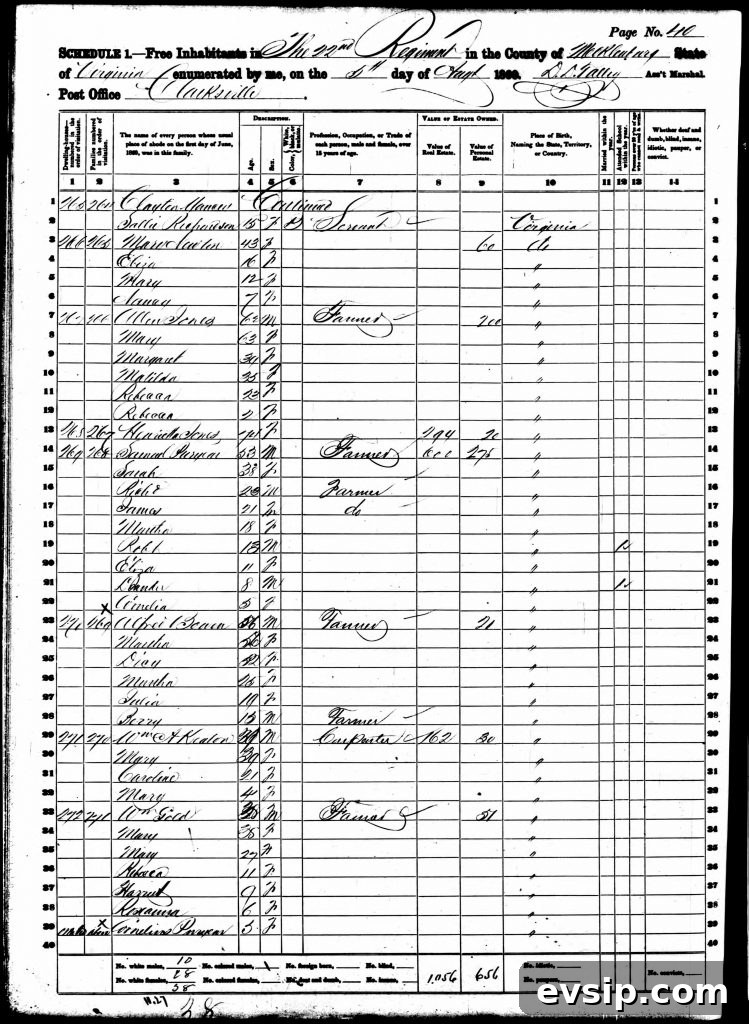
Many online repositories host census images and indexes, making searches and comparisons faster and easier. Use those digital collections to pull entries, but remember to check original images when possible to capture every detail and avoid transcription errors.
How to Use Census Records to Learn About Your Ancestors’ Community
Once you locate an ancestor in a census and note the household composition, resist the urge to move immediately to the next record. Instead, follow the census clues to build a picture of the community they lived in. Understanding that local context clarifies the economic, cultural, and social pressures that influenced your ancestor’s choices.
Identify the communities where your ancestors lived
Start by recording the place names shown on the census: city, township, county, and state. Once you have those locations, research local history to learn about industries, settlement patterns, transportation routes, and notable events. For example, knowing an ancestor lived in a rural farming district in the early 1900s directs you to agricultural history and local economic conditions that shaped family life and migration decisions.
Compare census data from different years
Comparing entries across decades reveals how a community evolved — whether it grew, diversified, industrialized, or declined. Changes in population size, occupational makeup, nativity, or property ownership help explain why families moved, changed occupations, or made other life decisions. Track the same addresses and neighboring households when possible to follow community continuity.
Look for patterns in the data
As you examine census columns, search for recurring elements: dominant industries, high rates of homeownership, concentrations of immigrants from the same country, or common occupations. Patterns indicate the local economy and social fabric. For instance, a town with many factory workers points to an industrial center whose work rhythms and hazards shaped daily life; a community with numerous immigrant households may have ethnic institutions you can research for more context.

Use census data to identify additional sources
Census details point to other records you should consult. Occupational clusters suggest business records, trade directories, or union archives. Large immigrant groups point toward ethnic newspapers, churches, mutual aid societies, and immigration or naturalization records. Land values, farm sizes, and agricultural schedules direct you to land deeds, tax lists, and agricultural censuses. Use the census as a roadmap to deeper, locally focused research.
For example, if a neighborhood shows many German-born residents, search for German-language newspapers, church registers, and community societies in that town. Those sources often reveal cultural life, community leaders, and social networks that standard records do not capture.
The Agricultural Census
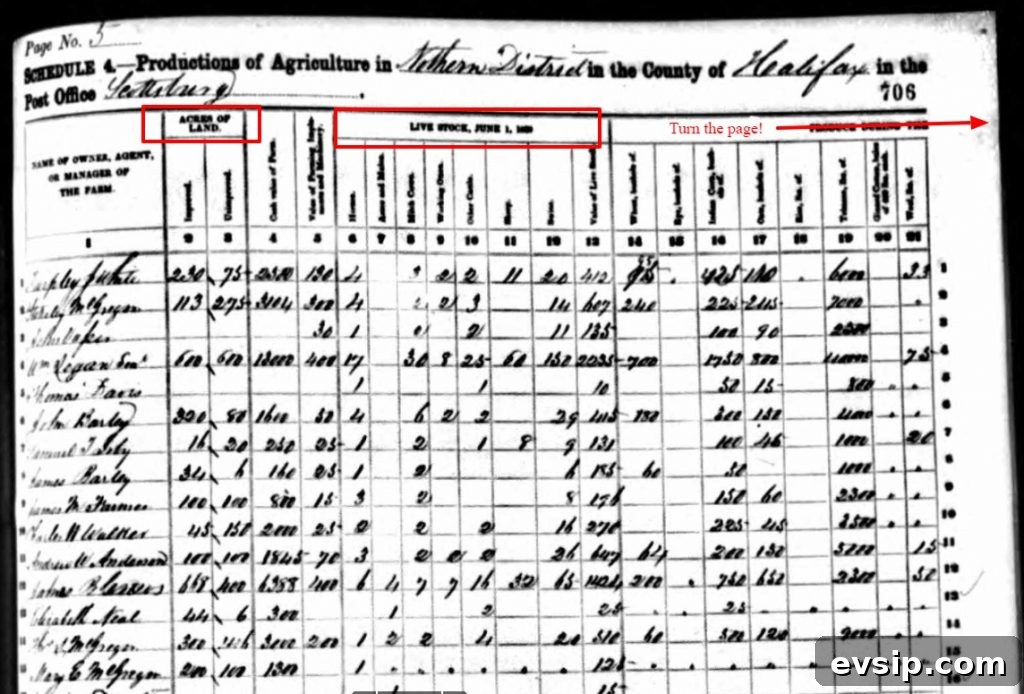
Between 1850 and 1880, agricultural schedules were enumerated alongside population schedules. These non-population censuses list farm acreage, crops produced, livestock, and the monetary value of farm products and equipment. Agricultural schedules are especially useful when researching ancestors who worked the land, providing economic context and helping differentiate subsistence farms from commercial operations.
Tips for Getting the Most Out of Your Census Research
When working through census pages, keep these practical tips in mind to uncover the most information efficiently:
- Understand census limitations. Enumerators and informants made mistakes. Ages, names, occupations, and relationships were sometimes recorded inaccurately. Always corroborate census data with other records such as vital records, land deeds, directories, and newspapers.
- Build timelines from census entries. Use the place and status information from successive censuses to map migrations, occupational changes, and household evolution. A timeline helps you ask targeted follow‑up questions and locate relevant local records.
- Turn census clues into research tasks. Keep a research plan and note possible leads suggested by the census — neighbors with the same surname, nearby industries, churches or schools listed, and unusual notations. Follow each lead methodically so you don’t lose promising threads.
Census records do more than list names; they place ancestors in communities with defined economic and social characteristics. By studying those communities through multiple censuses and complementary local sources, you gain a fuller picture of your ancestors’ daily lives, opportunities, and challenges.
Learn More about Census Records in These Posts
- A Close Up Look At The 1790 Census
- How to Make Sense of Those Tick Marks on Pre‑1850 Census Records
- A Close Up Look At Researching The 1880 Census
- Is Your Ancestor In The Often Overlooked U.S. Federal Non‑Population Schedules of 1850–1880?
- Help! I Can’t Find My Ancestor In the Census Record!