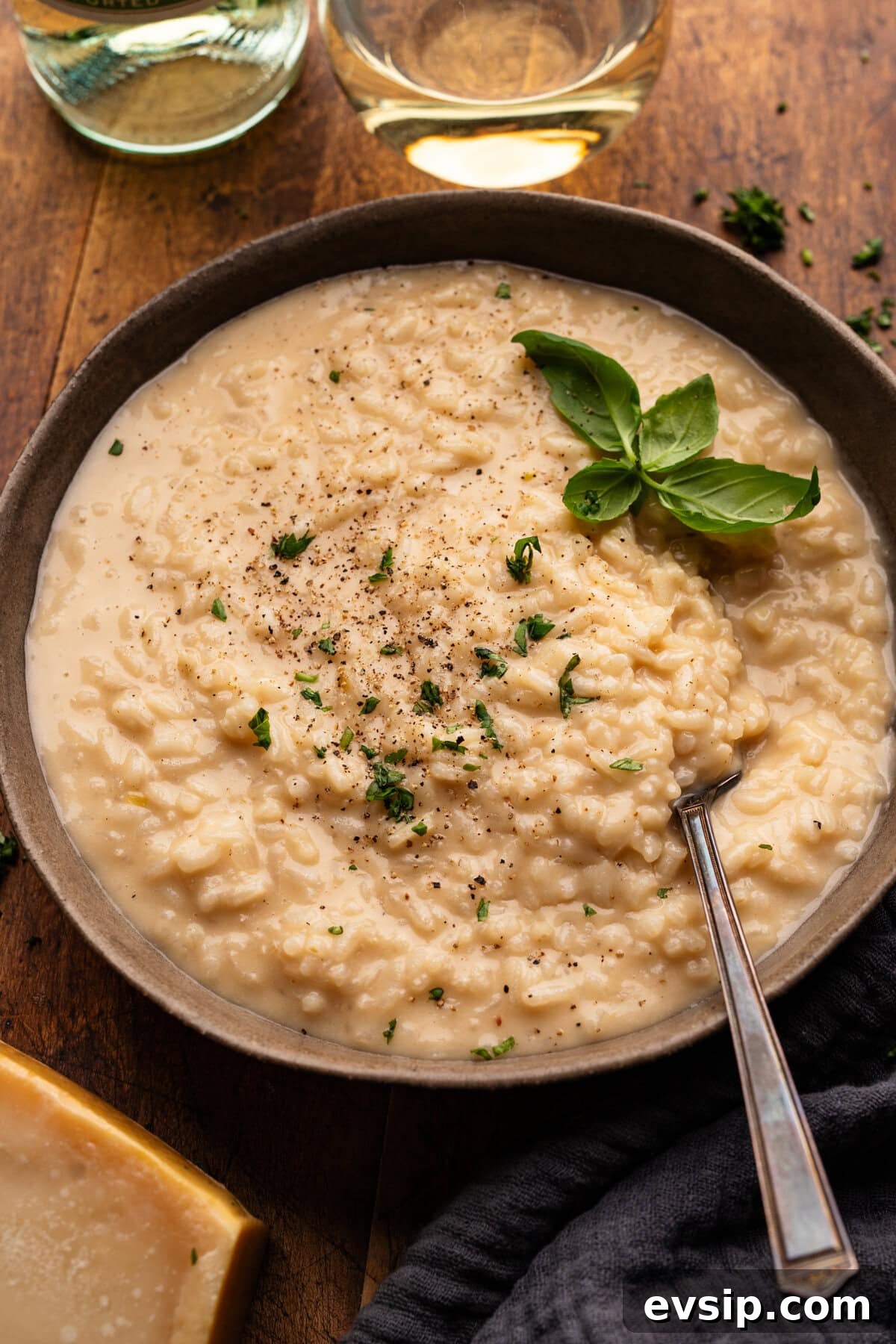
This Italian rice dish is luxuriously creamy and cheesy, made with special short-grain rice that gives it its signature velvety texture. Flavored with dry white wine and finished with butter, freshly grated Parmigiano Reggiano, and fresh herbs, this risotto makes a comforting and impressive side for many meals.
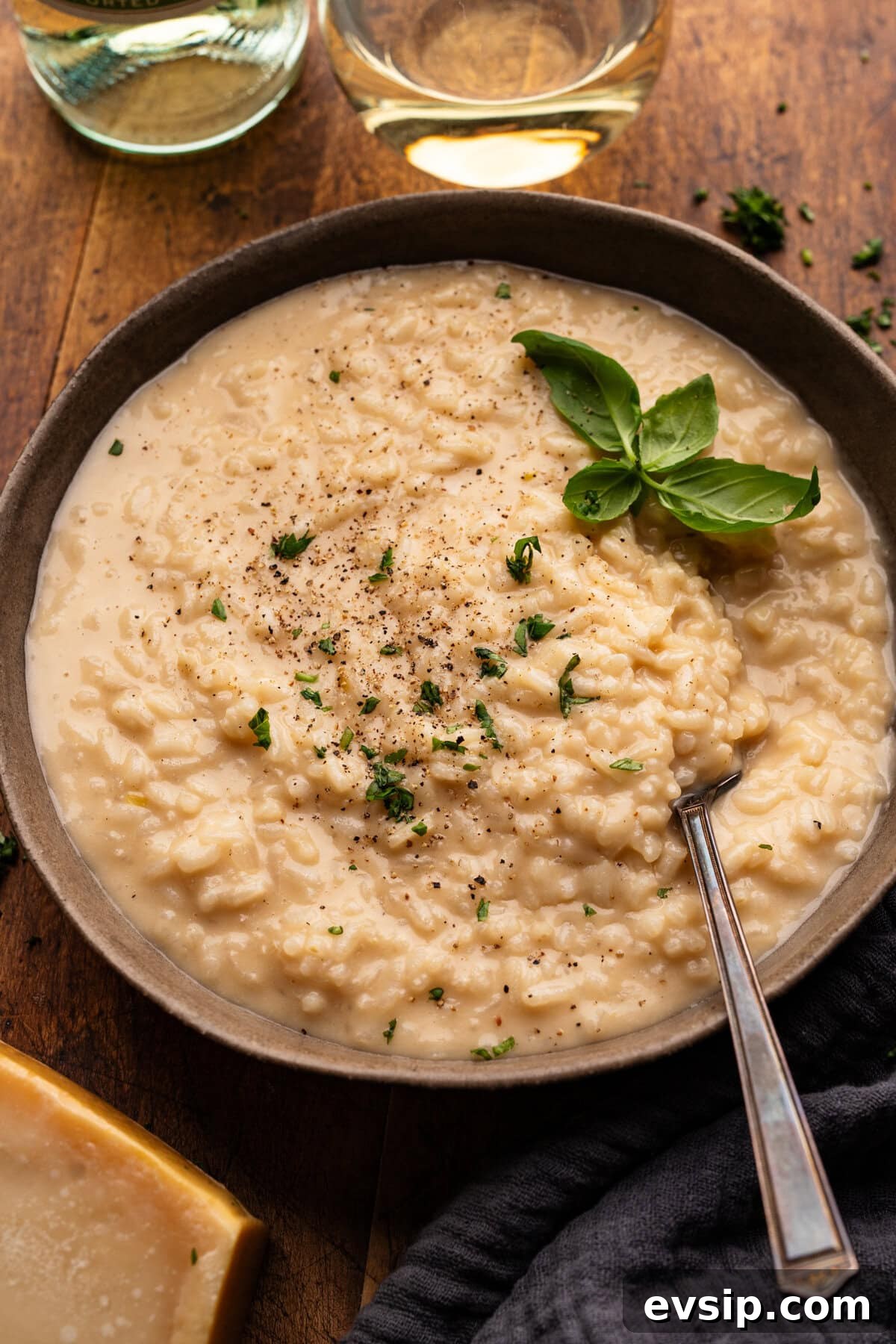
I’ve been making risotto for years. While some people find it intimidating, it’s actually straightforward when you follow the steps and pay attention to the rice as it cooks. The gradual addition of warm stock and frequent stirring coax the rice’s starch out, creating the creamy consistency risotto is known for.
This dish requires a little hands-on time, so set aside 20–30 minutes, put on some music, and enjoy the process. The result is a rich, cheesy rice that pairs beautifully with seafood, poultry, beef, pork, or simply roasted vegetables.
Ingredients
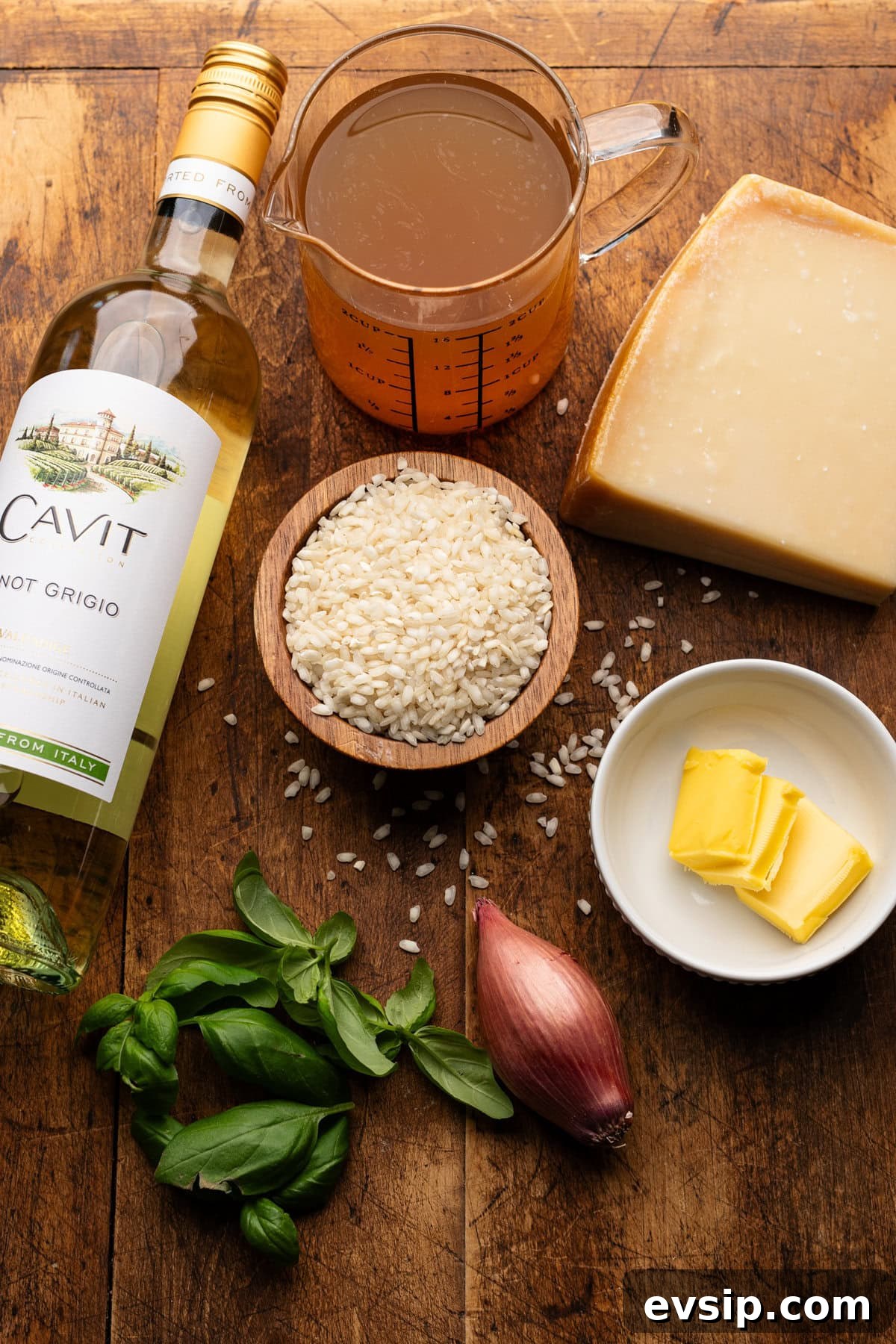
Arborio rice — Use arborio for a classic risotto because its high starch content creates creaminess. Carnaroli is an excellent alternative with even more starch.
White wine — Add a dry white wine such as Pinot Grigio or Sauvignon Blanc to deepen the flavor. Avoid sweet wines.
Chicken stock — Warm stock is added gradually to draw out the rice’s starches; use a good-quality store-bought or homemade stock.
Parmigiano Reggiano — Freshly and finely grated Parmigiano provides umami, saltiness, and extra creaminess.
Shallot — Finely diced shallot gives a delicate savory base; you can substitute a small onion if needed.
Fresh basil — Chopped basil adds brightness when serving.
Butter and oil — Use olive oil and a couple of tablespoons of butter to gently cook the shallots, plus an extra tablespoon at the end to enrich the risotto.
How to Make it
-
1
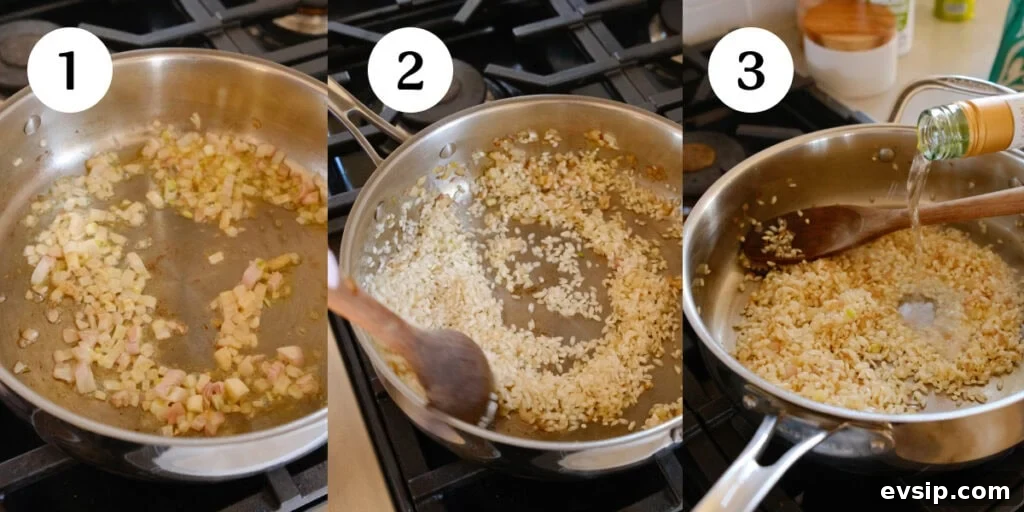
Cook the shallots. In a large pan over medium-low heat, soften the shallots in 1 tablespoon olive oil and 2 tablespoons butter, about 1–2 minutes. If using onion, cook 3–4 minutes until softened and finely diced.
-
2
Toast the rice. Add the arborio rice to the pan and stir constantly for about 2 minutes so the grains become lightly toasted and coated with fat.
-
3
Add the wine. Pour in 1/3 cup dry white wine and cook, stirring, until the wine is absorbed, about 2 minutes.
-
4
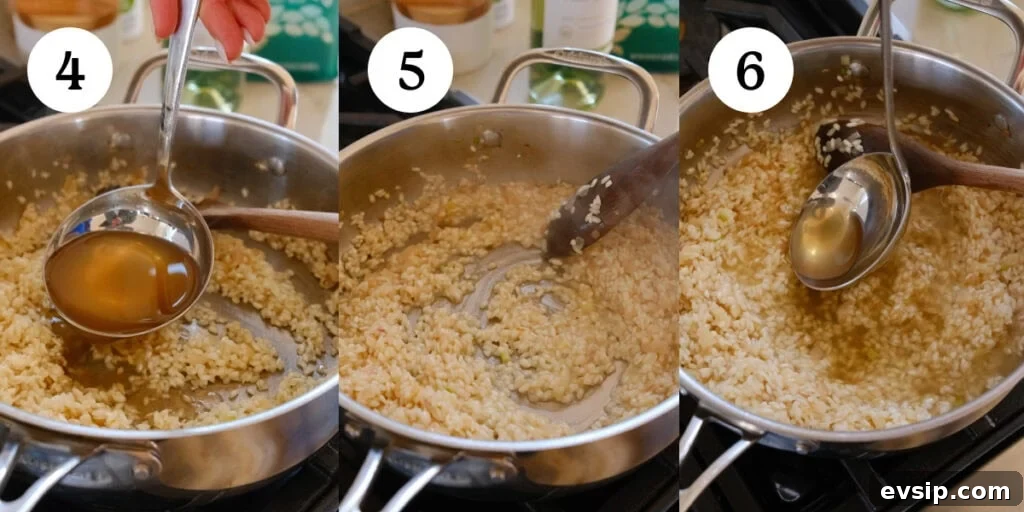
Add warm stock. Add 1 to 1 1/2 ladles of already-warmed chicken stock to the rice.
-
5
Stir frequently. Gently stir until the stock is absorbed, keeping the rice moving so it releases starch and becomes creamy.
-
6
Repeat. Continue adding warmed stock in 1 to 1 1/2 ladlefuls, stirring until each addition is absorbed. Cook until the rice is tender but still slightly firm to the bite (al dente).
-
7
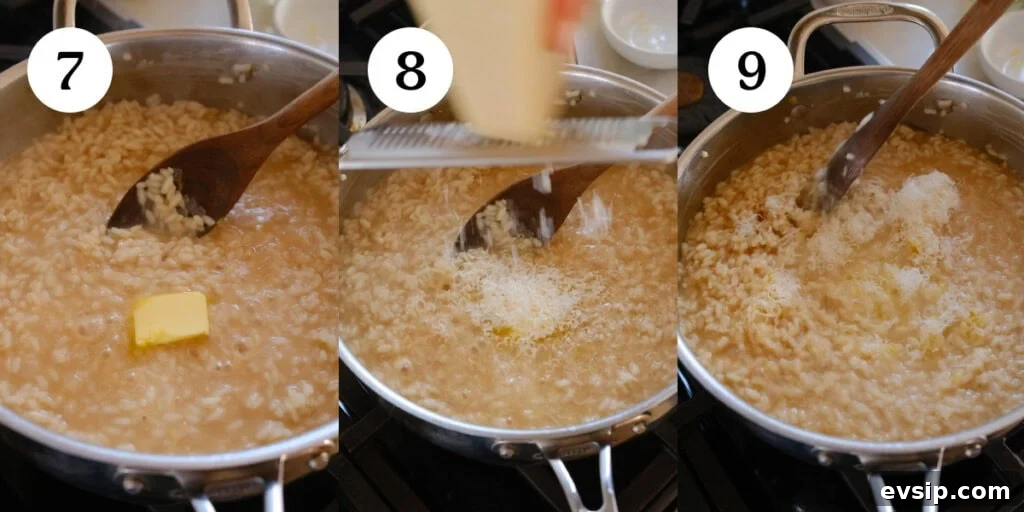
Finish with butter. When the risotto reaches the desired texture, stir in the remaining tablespoon of butter to enrich the dish.
-
8
Add Parmigiano Reggiano. Stir in one heaping cup of finely grated Parmigiano Reggiano so it melts into the risotto.
-
9
Season and serve. Taste and adjust seasoning with salt and black pepper. If the risotto firms up while resting, loosen it with a splash of warm stock. Serve topped with chopped fresh basil and extra grated Parmigiano.
Tips for a Successful Risotto
Cook it gradually. Add warm stock in small amounts and allow the rice to absorb it before adding more. Rushing this step prevents the creamy texture from developing.
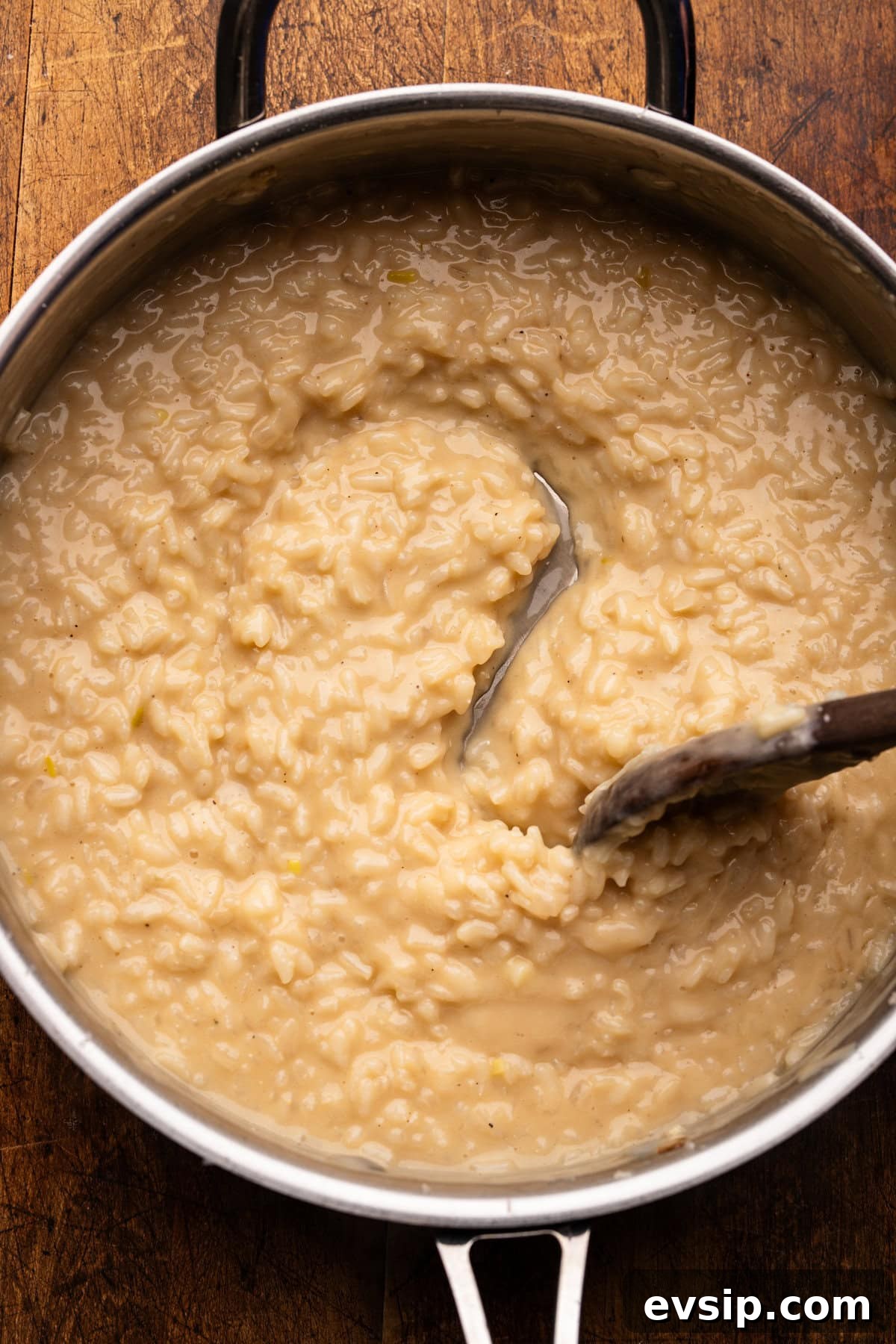
Aim for the right consistency. Proper risotto should be creamy and slightly loose—not soupy, not dry—and should spread slowly on the plate. The grains should be tender with a gentle al dente bite.
Always toast the rice. Toasting the rice briefly with the aromatics brings out a nutty flavor and primes the grains to release starch.
Do not rinse the rice. Risotto relies on the rice’s surface starches to create creaminess, so skip rinsing.
The finishing touches matter. Taste and adjust seasoning at the end. A generous amount of freshly grated Parmigiano Reggiano adds savory depth—add more cheese or a pinch of salt if needed, plus a crack of black pepper and fresh herbs.
Use warmed stock. Cold broth cools the pan and slows the process. Warm stock helps the rice cook evenly and release starch more effectively.
Serving Suggestions
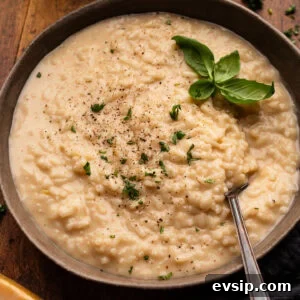
Risotto works as you would serve rice—pair it with seafood like scallops, shrimp, or white fish, or serve it alongside grilled chicken, pork, or beef. It also complements roasted or sautéed vegetables such as mushrooms, asparagus, peas, or butternut squash. Finish plates with extra Parmigiano and fresh herbs for a bright final touch.
Classic Risotto
Print Pin
Video Tutorial
Ingredients
- 1 Tablespoon olive oil
- 3 Tablespoons salted butter, divided
- 3 shallots, diced
- 1 cup dry arborio rice
- 1/3 cup dry white wine, I use Pinot Grigio
- 32 oz chicken stock, Or vegetable or beef stock works
- 1 heaping cup finely and freshly grated Parmigiano Reggiano, plus more for serving
- 2 Tablespoons fresh basil, chopped
- salt and pepper to taste
Instructions
-
Cook the shallots. In a large pan on medium to low heat, cook the shallots until soft with 1 tablespoon of oil and 2 tablespoons of butter, about 1–2 minutes. If using onion, cook 3–4 minutes and finely dice it.
-
Toast the arborio rice. After the shallot is soft (not browned), add the arborio rice and toast for about 2 minutes, stirring constantly.
-
Add the wine. Add 1/3 cup of dry white wine and cook with the rice until absorbed, about 2 minutes.
-
Add warm stock and stir frequently. Add 1 to 1 1/2 ladles of warmed chicken stock and gently stir until absorbed. Repeat, adding more warmed stock and stirring frequently.
-
Repeat until cooked. Continue until all stock is used and the rice is tender but still slightly al dente.
-
Add Parmigiano Reggiano and butter. Stir in the remaining tablespoon of butter and one heaping cup of finely grated Parmigiano Reggiano.
-
Finish and serve. Taste and adjust with more cheese or a pinch of salt if needed. Serve topped with black pepper, chopped fresh basil, and extra grated Parmigiano. Enjoy!
going dark