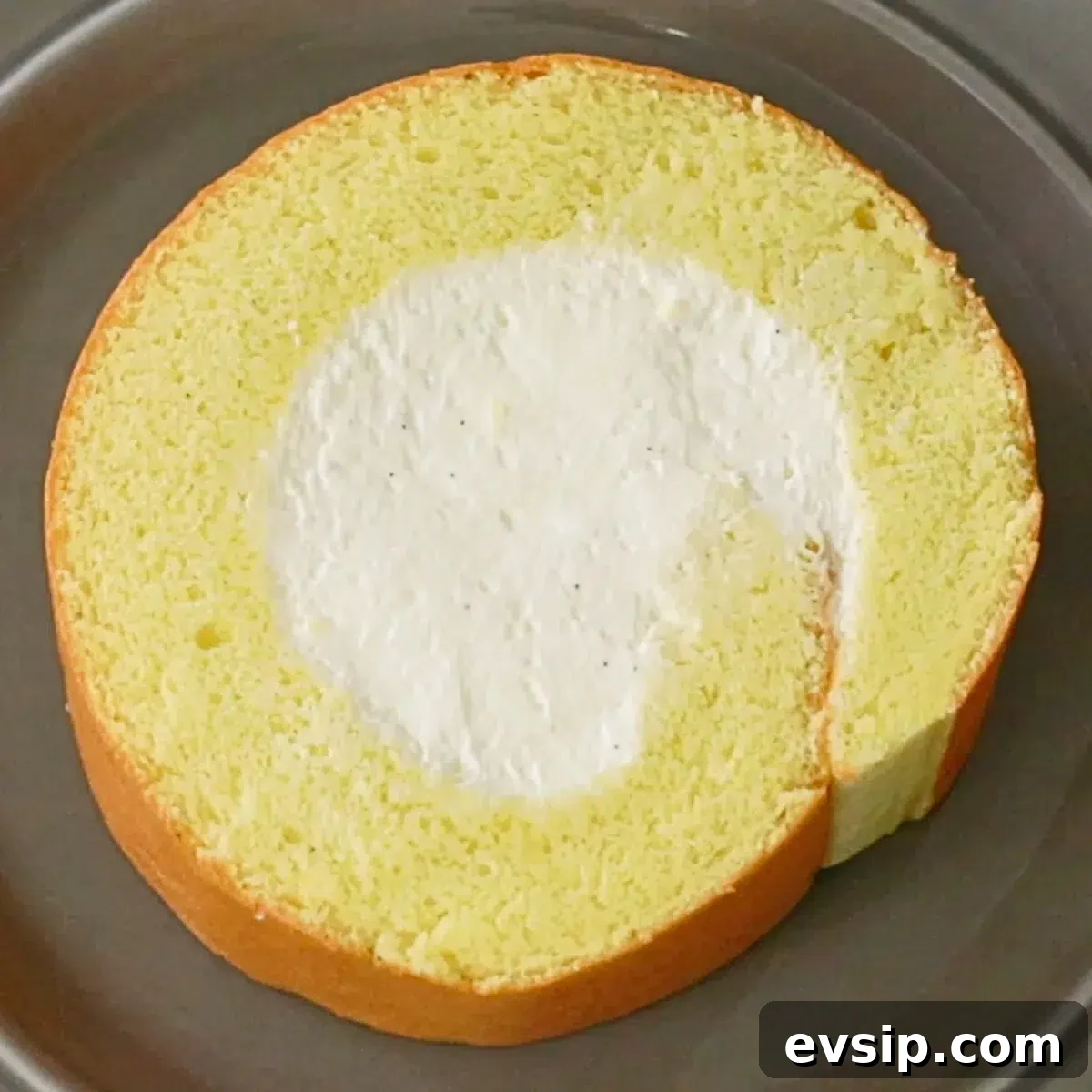
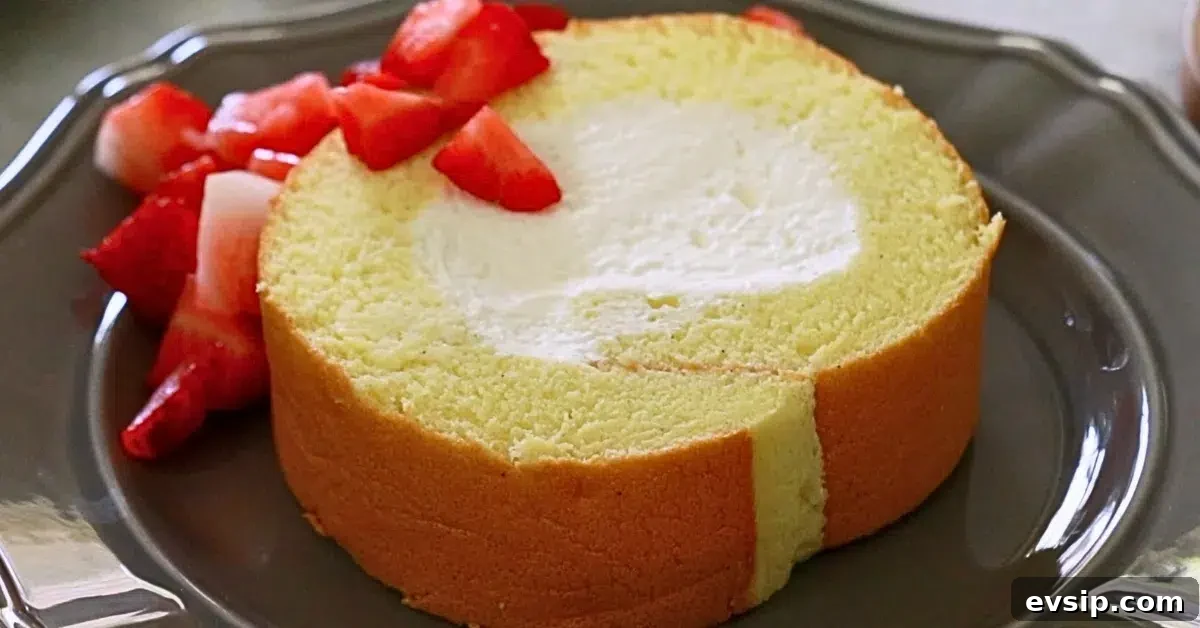
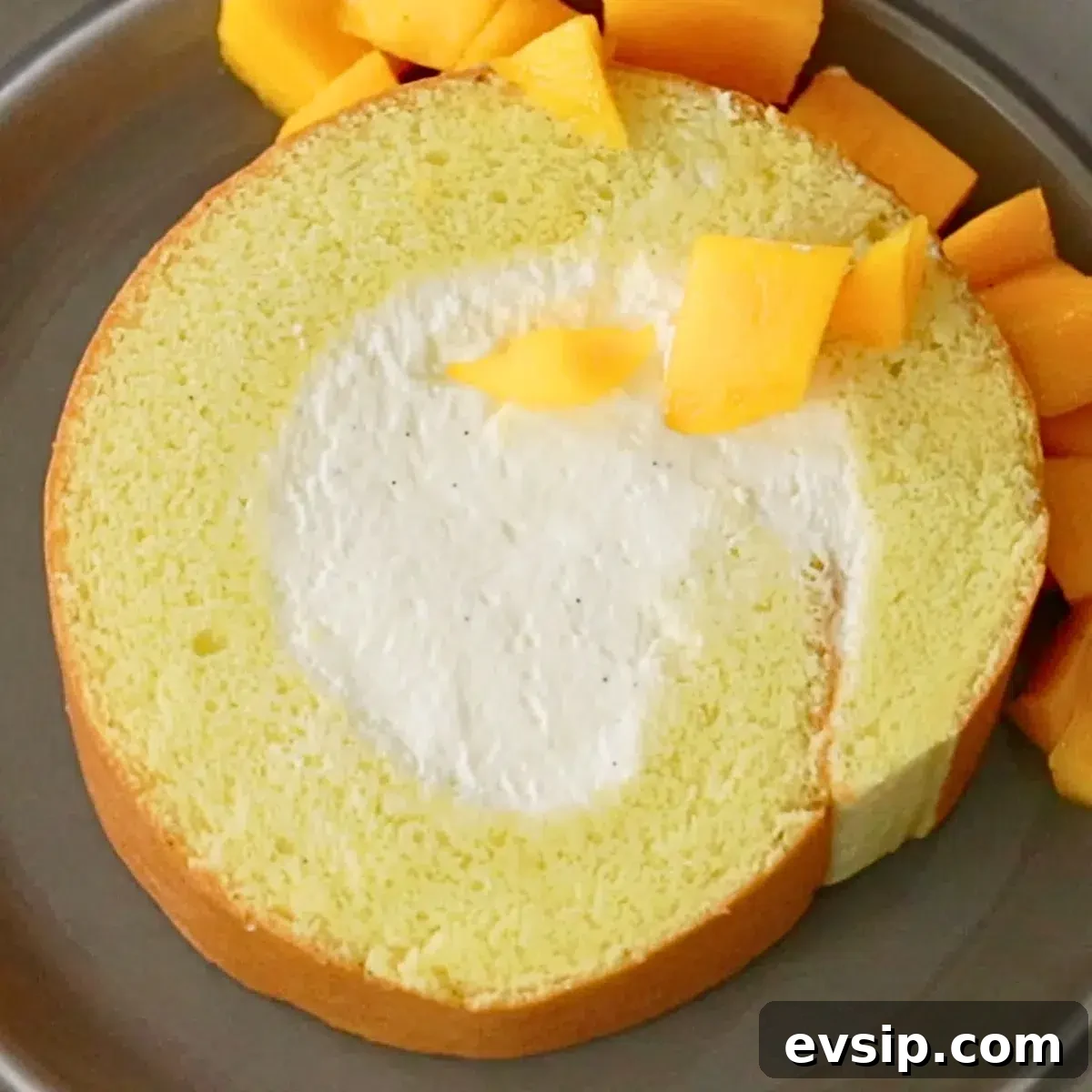
The best vanilla roll cake EVER! — a perfectly fluffy, moist vanilla sponge filled with Chantilly whipped cream. If you’ve had dry or heavy roll cakes before, try this recipe for a light, tender result.
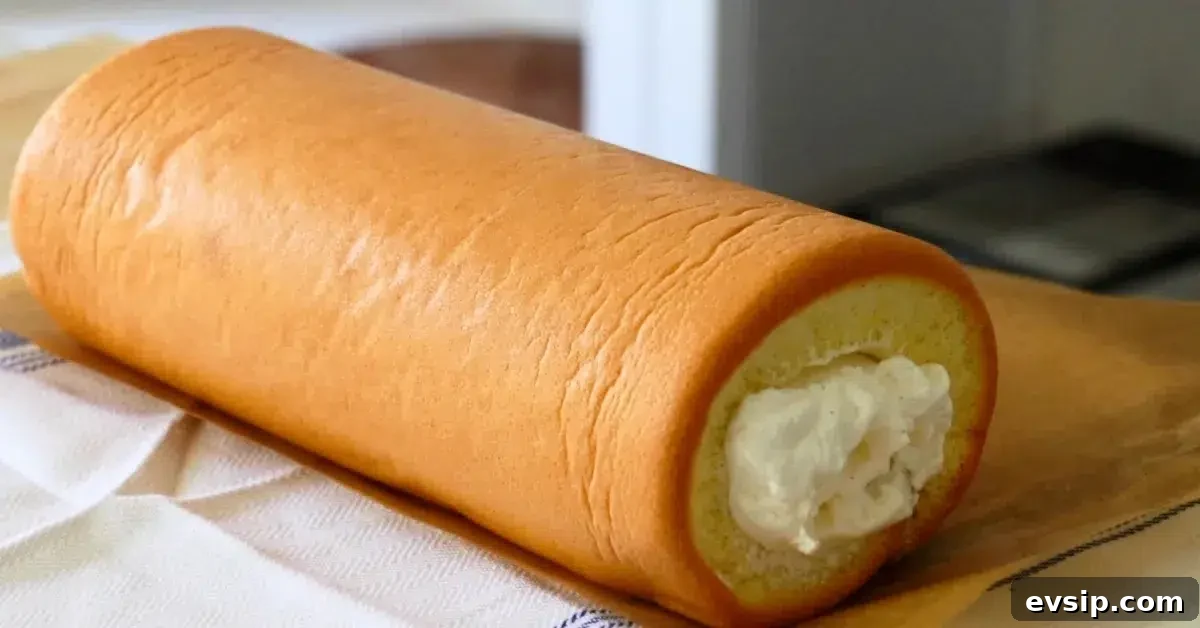
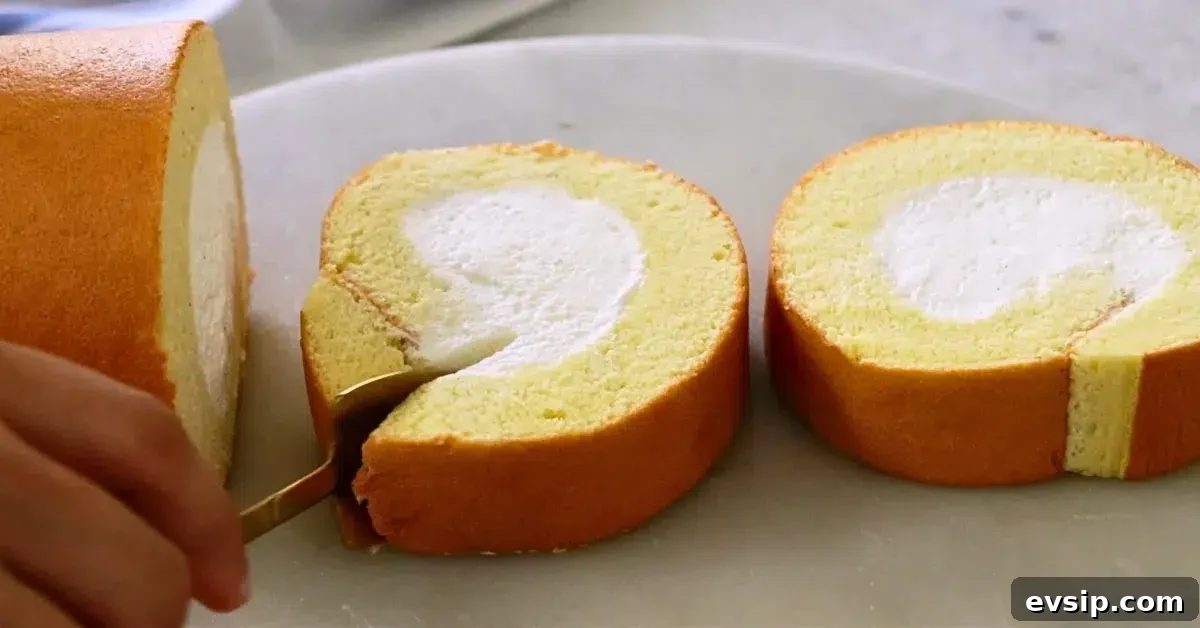
Making a roll cake can feel intimidating at first, but with the right technique you’ll get a soft, even sponge and a neat roll every time.
Common problems home bakers face:
- Flat sponge cake
- Dense texture
- Cracked sponge when rolling
- Uneven or messy appearance
In this guide you’ll learn practical tips and techniques to avoid those issues.
What you’ll learn here:
- How to prep the baking pan so the sponge releases easily
- Techniques for an airy, silky sponge texture
- Baking tips for a sheet sponge
- How to roll a sheet cake without cracking
- How to slice the roll neatly
Let’s get started.
Why you’ll love this vanilla roll cake
- The sponge is exceptionally fluffy.
- It stays moist — no more dried roll cake.
- You don’t need to pre-roll the sponge: its springy texture resists cracking, saving time and effort.
- It keeps well in the fridge for about 4 days when stored properly.
After making roll cakes many times, this recipe consistently delivers a light, satisfying result with straightforward steps — very beginner-friendly.
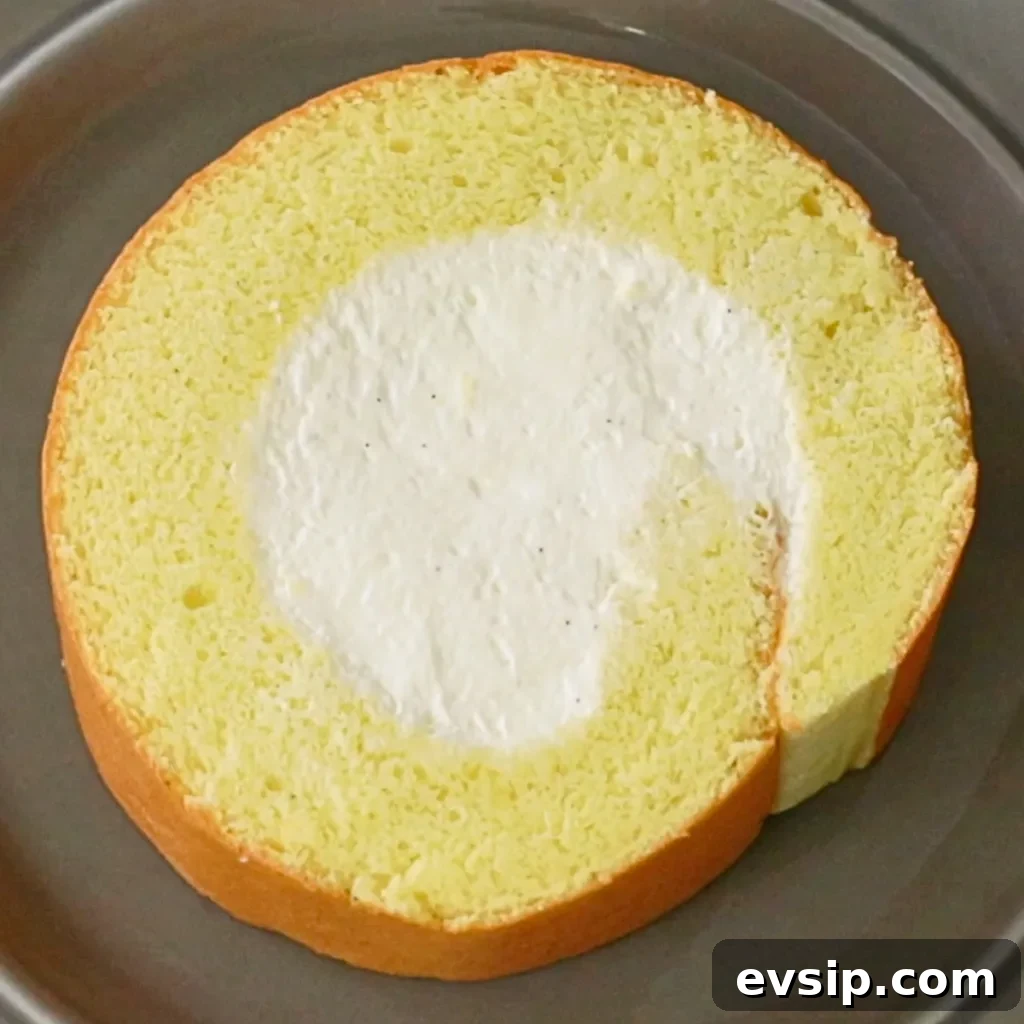
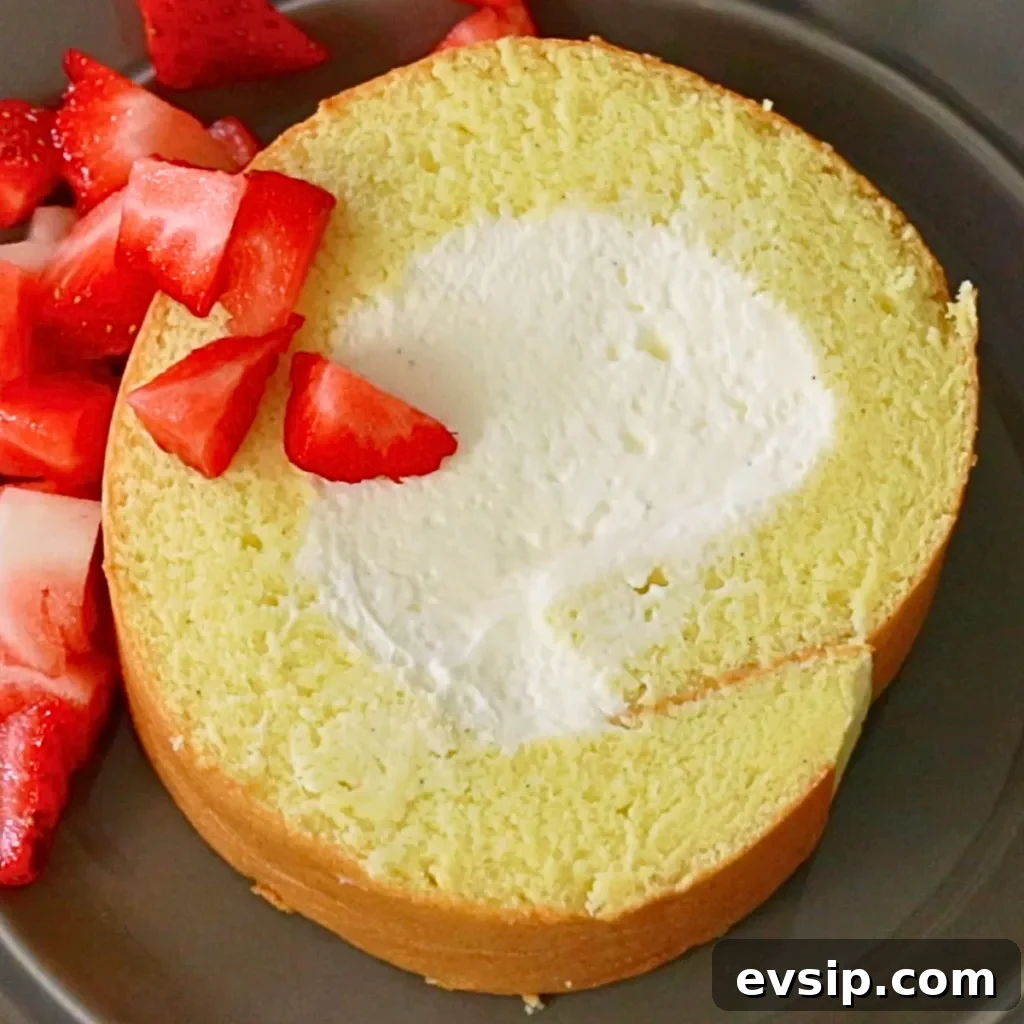
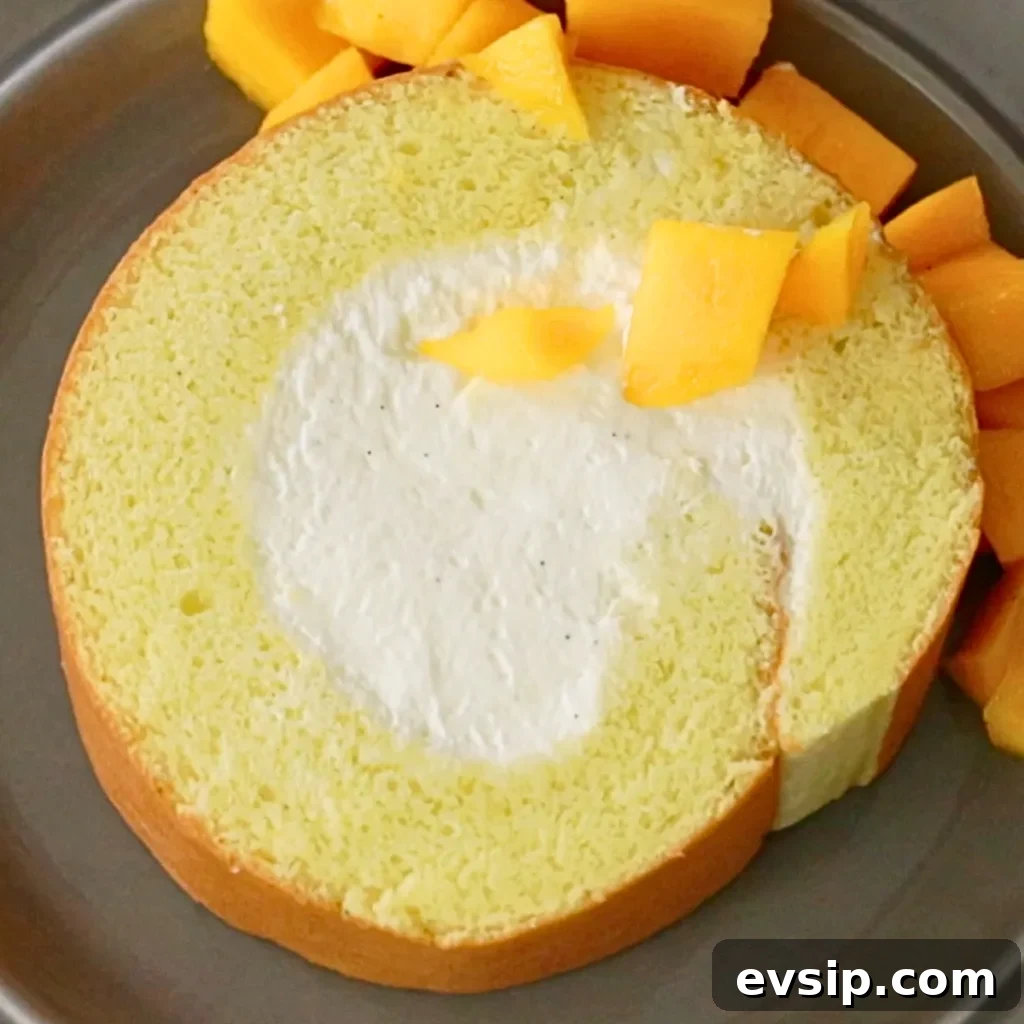
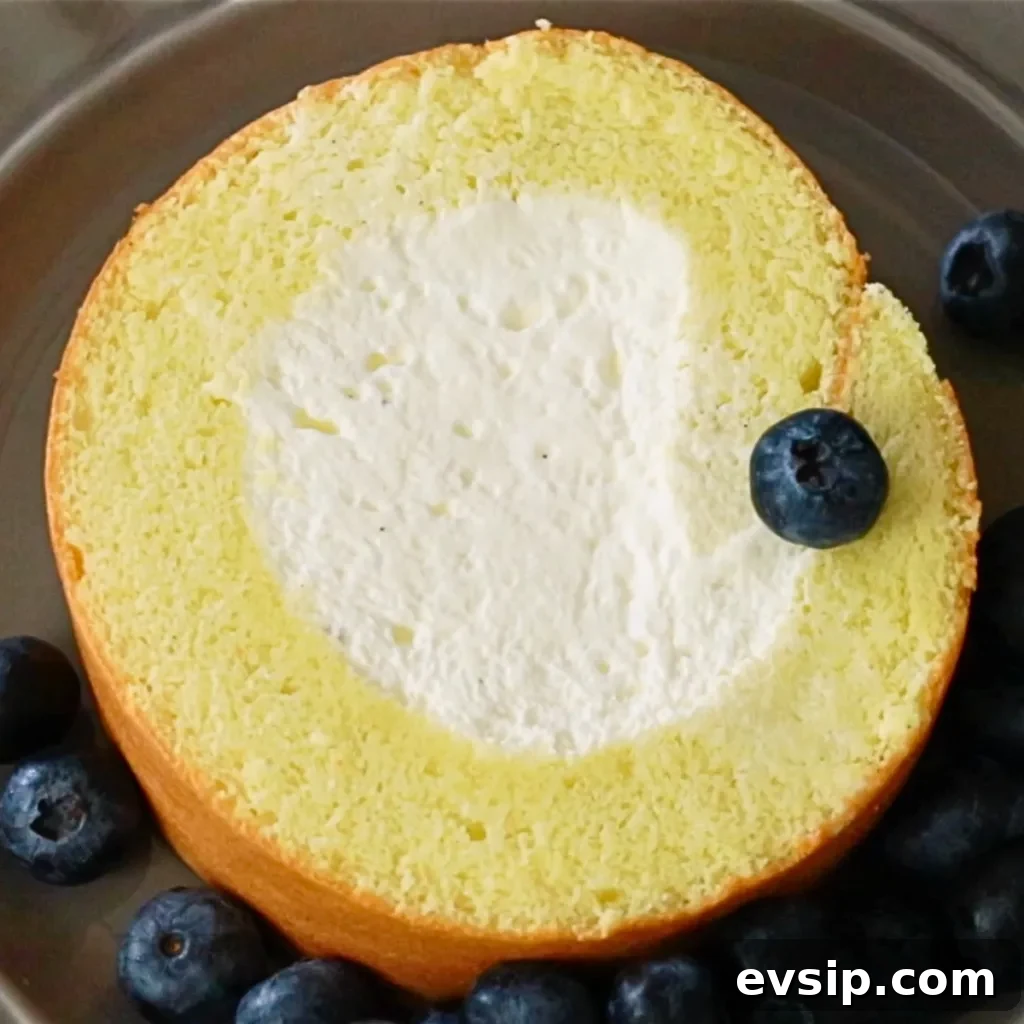
What is a roll cake?
A roll cake is a sheet sponge cake rolled up with a filling. Typically a light sponge is used to make rolling easy. Popular fillings include whipped cream, buttercream, and jam. This recipe is inspired by the Japanese-style roll: very airy sponge and Chantilly cream.
5 popular types of roll cakes
- Swiss roll: A sponge rolled with cream, buttercream, or jam.
- Jelly roll: A sponge rolled with jam.
- Japanese roll cake: Extremely light sponge rolled with whipped cream; often made with a large meringue component and less flour. This recipe follows that style.
- Roulade: Can be sweet or savory; fillings vary from pastry creams to meats and vegetables.
- Buche de Noël (Yule log): A Christmas classic — a chocolate sponge rolled with chocolate cream or ganache.
Names and variations differ by region, but the basic concept is always a thin cake rolled with a filling. Explore the styles that appeal to you.
VIDEO: Watch how to make the Vanilla Roll Cake
Follow the step-by-step video tutorial to see the techniques in action and understand each step clearly.
Ingredients you’ll need
Sponge Cake
- Egg whites: Make sure no yolk or oil contaminates the whites so they whip properly.
- Sugar (for meringue): Stabilizes the meringue; use granulated or caster sugar.
- Egg yolks: Add richness and color to the sponge.
- Sugar (for yolks): Helps aerate the yolks when whipped.
- Vanilla: Use vanilla beans, paste, or extract for flavor.
- Cake flour: Use cake flour for a tender, light crumb — avoid bread or all-purpose flour.
- Milk: Preferably whole milk for richness.
- Oil: Neutral-tasting oil such as vegetable, canola, or light olive oil.
Cake Syrup
- Granulated sugar
- Water
Whipped Cream Filling
- Heavy cream: Use 40–50% fat cream if possible for a stable, stiff whipped cream that supports the sponge.
- Granulated sugar
- Vanilla (bean, paste, or extract)
Step-by-step instructions
Preparations
- Separate the eggs carefully.
- Line a 10.5″ x 15″ (26.6 x 38 cm) sheet pan with parchment, trimming corners so it lies flat.
- Combine milk and oil; you’ll add them at the end of mixing.
- Sift the cake flour.
- Preheat the oven to 355°F (180°C).
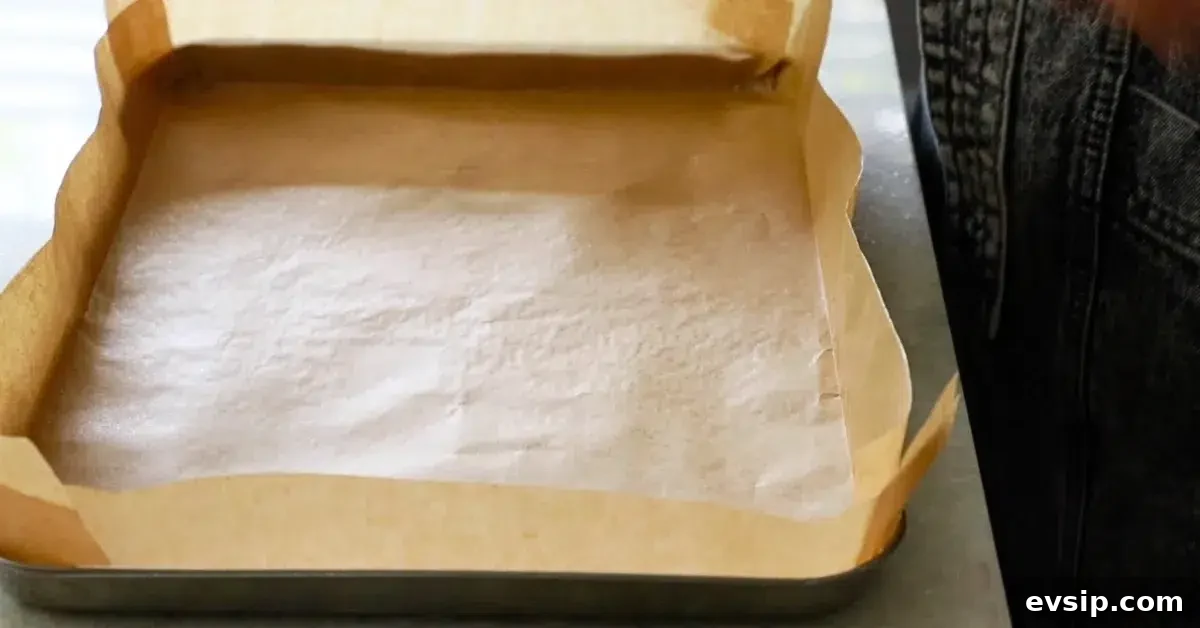
- Even a tiny bit of yolk or oil in the whites will prevent proper whipping. Make sure bowls and utensils are spotless.
- Cake flour can clump; sifting improves the texture and makes folding easier.
Make the egg yolk mixture
- Mix egg yolks, vanilla, and the sugar reserved for yolks.
- Whip until very pale and fluffy to trap air for a light sponge.
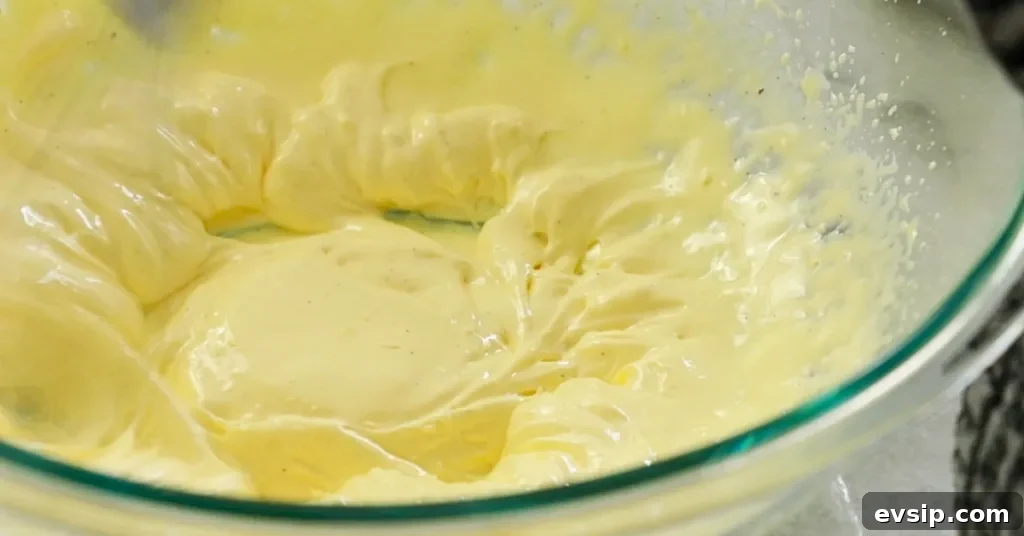
- After adding sugar to the yolks, whisk quickly to avoid grainy spots.
- Wipe batter from the bowl sides to prevent dried residue.
Make the meringue
- Beat egg whites at medium-high until foamy, then add half the sugar.
- When aerated and glossy, add the remaining sugar and whip to soft peaks.
- Reduce to low speed near the end to smooth large bubbles; the peak should curl when lifted.
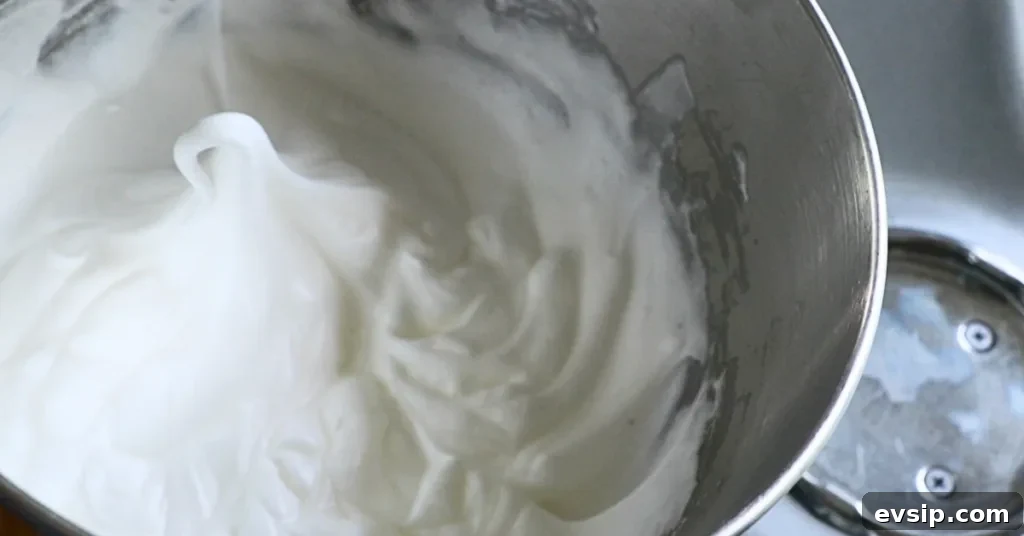
Don’t over-whip the meringue to rock-hard peaks — it will be harder to fold into the yolks. Aim for glossy soft peaks.
Combine the mixtures
- Gently fold one-third of the meringue into the yolk mixture with a whisk to loosen the batter, using scooping-and-tossing motions.
- Fold in the remaining meringue until mostly combined.
- Sift in cake flour and fold until no streaks remain.
- Add the milk and oil and fold until the mixture is about 70–80% homogeneous, then switch to a spatula to ensure the bowl sides and bottom are mixed.
- Fold gently to preserve air — vigorous stirring deflates the batter and yields a dense, flat sponge.
- Use a whisk initially to break down meringue lumps quickly, then a spatula to finish. The batter should fall in ribbon-like streams when tested.
Bake the cake
- Pour the batter into the prepared pan, level the surface with an offset spatula, and tap the pan gently on the counter to release large air pockets.
- Bake at 355°F (180°C) for about 10–15 minutes, depending on your oven.
- Remove from the pan and cool on a wire rack.
- Avoid overbaking, which dries the sponge and causes cracks when rolling.
- Adjust baking time if you use a different pan size — a larger pan with a thinner layer will bake faster.
Make cake syrup
Make the syrup while the sponge bakes so it cools before use.
- Combine sugar and water in a small pot or microwave-safe bowl and heat until the sugar dissolves.
- Cool and set aside.
Applying syrup is optional but highly recommended — it keeps the sponge moist and improves flavor.
Make the cream filling
- Whip heavy cream with sugar and vanilla until very stiff but still fluffy.
- A firm whipped cream helps support the airy sponge when rolled.
- Keep cream cold while whipping — use chilled bowls or add ice water under the mixing bowl if your kitchen is warm.
- Stop whipping just before it starts to separate; it should be fluffy and stable.
Roll the cake
- To prevent parchment from sticking and pulling the cake skin, lightly brush a thin layer of oil over the sponge surface.
- Place fresh parchment on the cake, flip it onto the new paper, and peel off the original lining.
- Trim the long sides for clean edges. On one short end, cut a diagonal at the edge to create a smoother seam when you begin rolling.
- Make 3–5 shallow parallel cuts about ½” apart along the short edge to help the cake bend more easily.
- Brush the surface evenly with cake syrup.
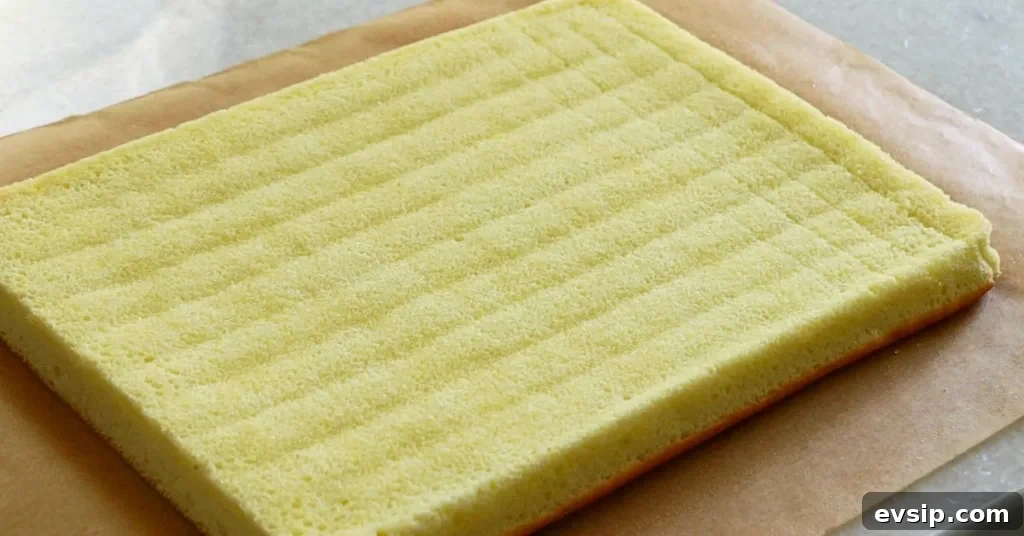
- Spoon and spread the whipped cream with an offset spatula. Don’t put too much cream near the edges to avoid spillage.
- Lift the parchment and gently fold the cream-covered edge inward to form a small starting cylinder. Use your fingers if needed.
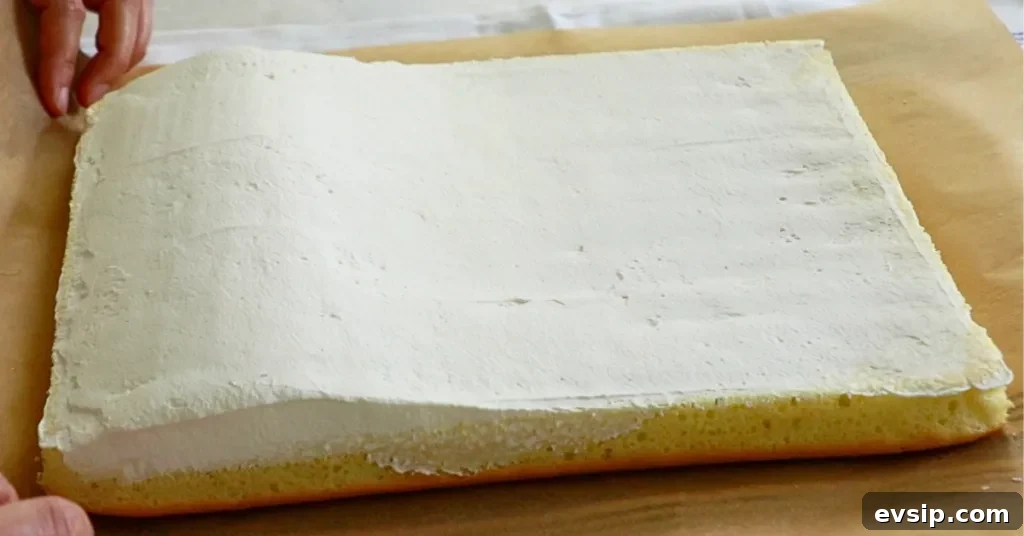
- Once the small roll is formed, hold the parchment with one hand to stabilize it and pull the paper forward with the other to complete the roll. The cake edge should sit at the bottom.
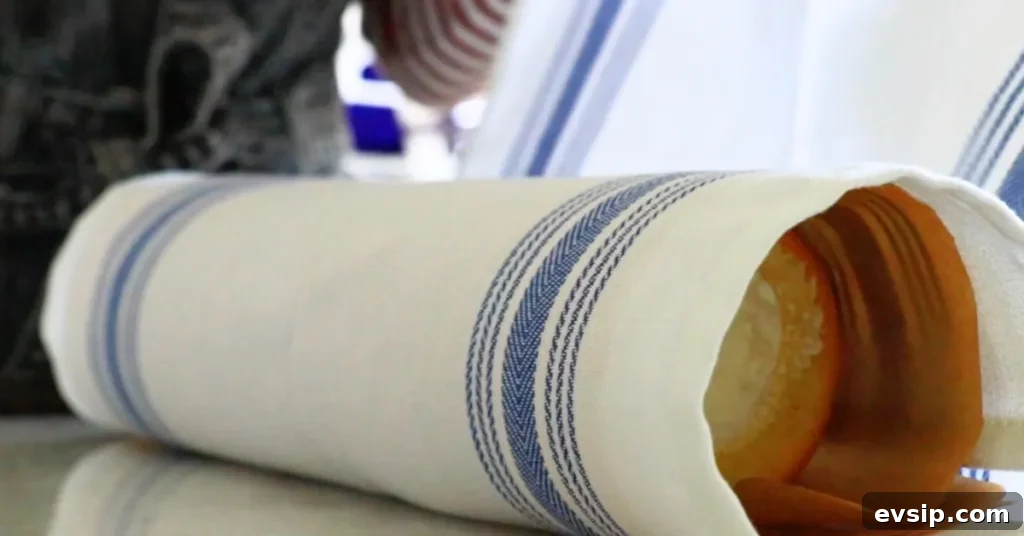
- Tighten the roll with parchment and secure with tape or wrap with a towel to keep it snug.
- Chill in the refrigerator for 1–2 hours before slicing.
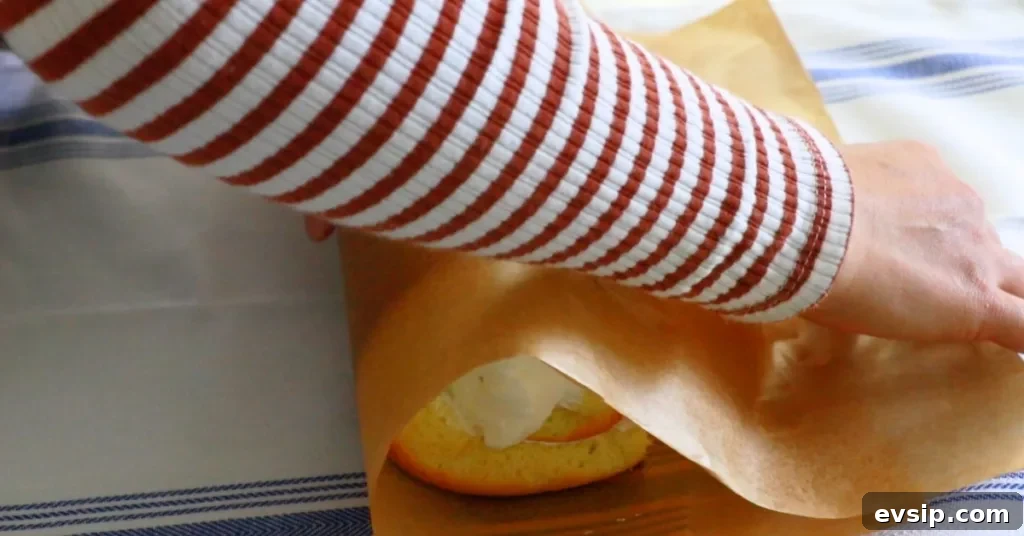
- If your work surface is slippery, place a towel beneath the parchment to keep it from sliding.
- If the roll is not tight enough, compress it gently with a spatula before chilling.
- You can also roll along the longer side for more spiral turns; the cake will be thicker when done that way.
How to slice it
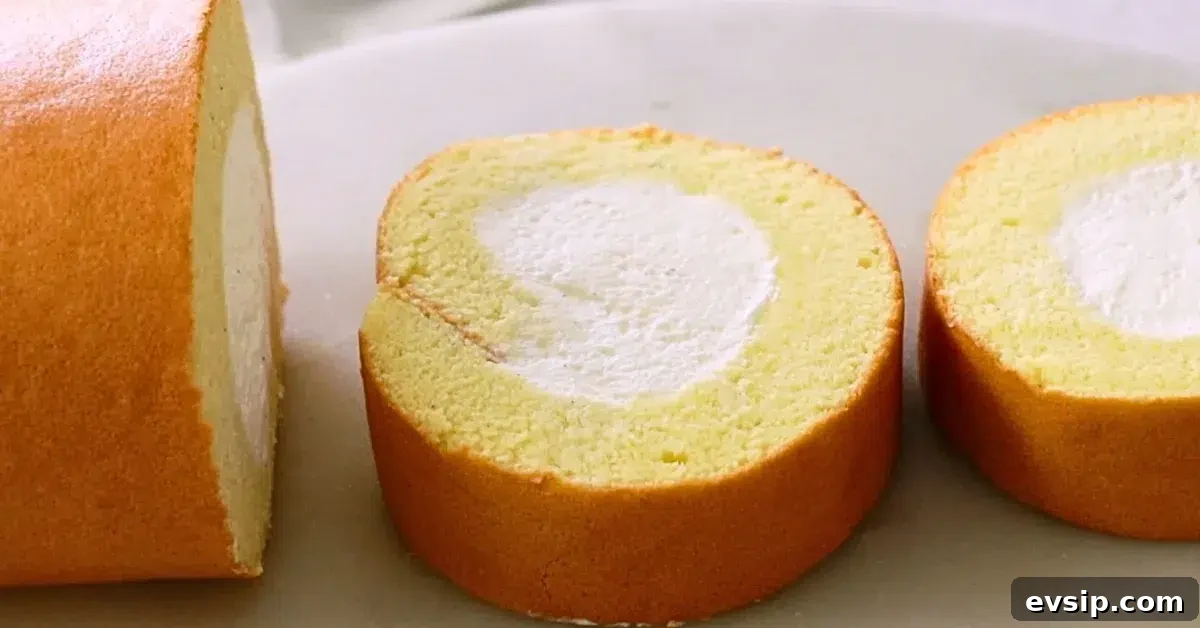
- Warm a knife in hot water, dry it, then slice with a gentle back-and-forth motion while supporting the cake with your other hand.
- Wipe the knife between cuts for clean slices.
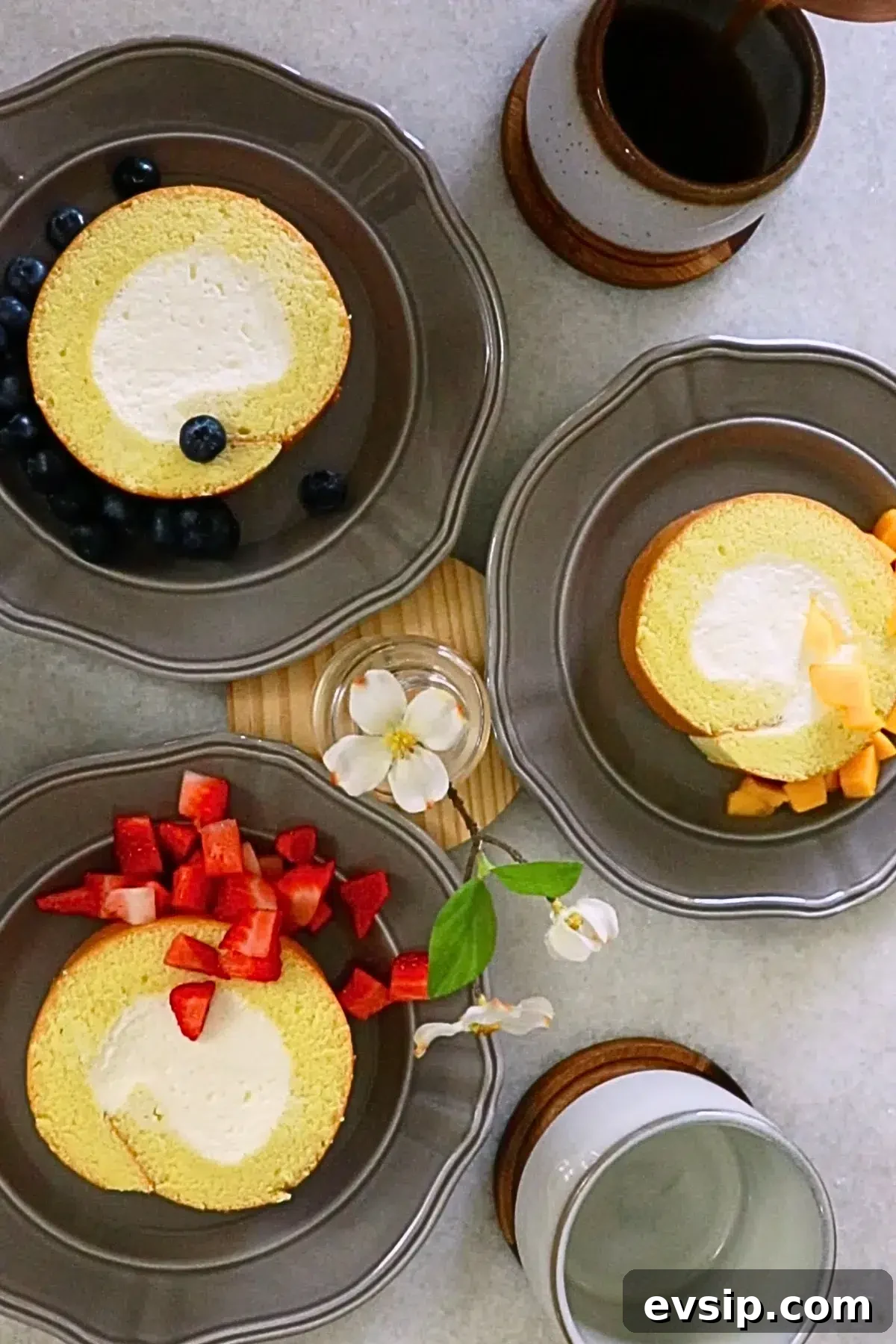
Serve the vanilla roll as-is or pair it with fresh fruit for brightness and contrast.
How to store it
Wrap the cake surface (if unfrosted) to prevent drying and store in an airtight container in the fridge for 4–5 days. For the best flavor and texture, consume within the first few days.
Avoid leaving a whipped-cream-filled roll at room temperature for many hours; whipped cream can lose stability. Use buttercream if the cake must sit out for extended periods.
FAQ & Troubleshooting
Troubleshooting
Common causes: 1) Overbaking; 2) Leaving it at room temperature too long before rolling.
Usually caused by overbaking or applying too much pressure when rolling. Be very gentle while rolling.
Possible reasons: 1) Meringue not whipped enough; 2) Over-mixing the batter; 3) Taking too long to fold and spread the batter, which lets trapped air escape; 4) Using all-purpose flour instead of cake flour.
Check the cream’s fat content — under 35% can be unstable. Also, a warm room can prevent proper whipping; chill the bowl and work in a cool area.
Other FAQs
Yes; adjust baking time accordingly. A larger pan spreads the batter thinner and bakes faster. Make 1.5–2 batches if using a smaller pan.
Yes. Buttercream is more stable at room temperature. Chill if you want it firmer or leave it to soften before serving.
This sponge rises from whipped eggs. Whipping creates many air bubbles that expand in the oven. Proper whipping and quick baking are the keys to a light texture.
Other variations
Try different fillings and add-ins:
- Jam: strawberry, raspberry, blueberry
- Flavored whipped cream: chocolate, matcha, coffee
- Buttercream styles: Swiss, Italian, French, American
- Cream cheese frosting
Extra additions:
- Fresh berries
- Caramel sauce
- Chocolate ganache
- Lemon curd
Decorations:
- Fresh fruit
- Herbs for garnish
- Spread a thin layer of frosting or dust with powdered sugar
Experiment with flavors and presentations for special occasions.
More fluffy cake recipes
If you enjoy this roll cake, try other light sponge recipes as well.
- Vanilla Chiffon Cake
- Vanilla Sponge Cake (Genoise)
- Chocolate Sponge Cake (Genoise)
- Matcha Sponge Cake
- Strawberry Cream Chiffon Cake
Did you try the recipe?
Share your honest feedback in the comments — I’d love to hear how it turned out for your gathering or celebration.
Thank you! — Aya
Fluffy Vanilla Roll Cake
Pin Recipe