
If your sourdough starter isn’t bubbling, doubling, or performing as it should, it needs a targeted boost. Starters can survive periods of neglect, but getting them back to reliable activity takes consistent care and the right techniques. Below are practical, tried-and-true methods to strengthen a sourdough starter and restore vigorous yeast activity.
These tips help when:
- your starter still smells like nail polish remover after feeding;
- it’s been neglected in the fridge or left unfed on the counter for too long, leading to excess acidity;
- your starter has plateaued after a few weeks and won’t reliably double;
- your loaves lack oven spring, have a gummy crumb, or a pale crust.
Table of Contents
- What Causes A Weak Sourdough Starter?
- Use A Scale!
- Stir Your Starter
- Feed Your Sourdough Starter Superfood
- Discard Before Every Feed
- Rethink Your Feeding Ratio
- Keep Your Starter At A Lower Hydration
- Keep Your Sourdough Starter Warm
- Totally Refresh Your Starter
- Frequently Asked Questions
What Causes A Weak Sourdough Starter?
Many things can weaken a starter, but the most common issue is excess acidity. When a starter goes too long without being fed—left in the fridge for months or on the counter for several days—lactic acid bacteria can dominate and produce high acidity. Wild yeast tolerate some acidity, but in a highly acidic environment they reproduce poorly, so bubbling and rise slow or stop entirely.
A healthy starter should consistently double or triple after a feed. It will smell pleasantly yeasty, be full of bubbles, and yield loaves with good oven spring and an open crumb. If your starter isn’t showing those signs, focus on correcting the balance so the yeast can thrive again.
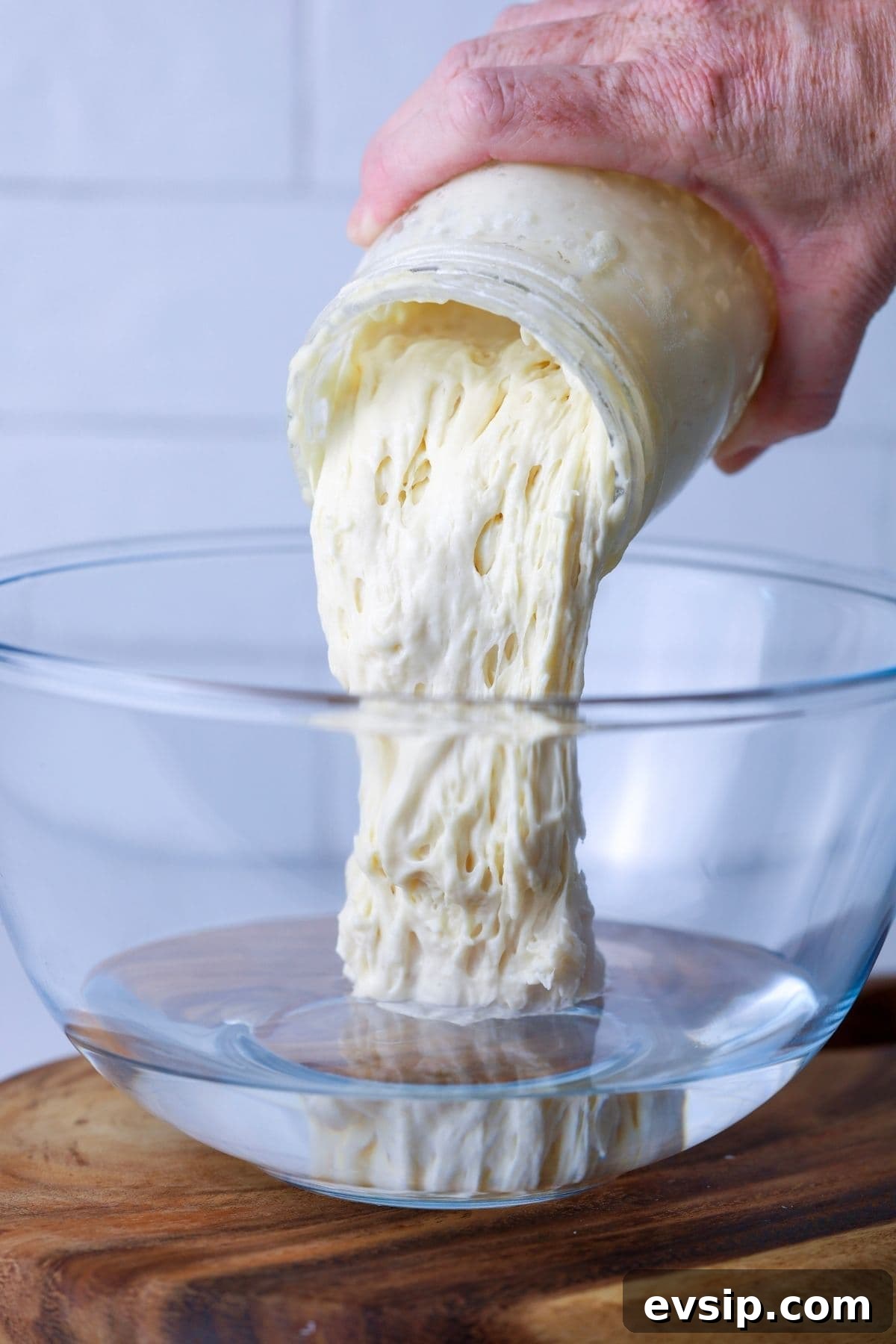
Use A Scale!
Always weigh starter, flour, and water in grams with a digital kitchen scale. Measuring by weight gives consistent feedings and predictable results. Volumetric measures (cups) vary in density and will cause inconsistent hydration and feeding ratios. If you want reliable activity, weigh your ingredients.

Stir Your Starter
Stirring between feedings helps distribute nutrients and oxygen and moves yeast and bacteria through the mixture. Microorganisms themselves don’t move much, so stirring gives them access to fresh flour and water and helps them produce carbon dioxide. Stir thoroughly after a feed and consider stirring again a few hours later to boost activity.
Starter Tip
A little oxygen early after feeding is beneficial to yeast. Stirring won’t harm your starter and can speed recovery.
Feed Your Sourdough Starter Superfood
If your starter began on refined white flour, add rye or whole grain for a nutrient boost. Rye flour is especially beneficial: it supplies extra nutrients that help yeast and bacteria flourish. Try substituting half your usual flour with rye for several feeds and you should notice faster, stronger activity. Freshly milled whole wheat also adds nutrients and can increase wild yeast activity. When changing flours, expect a short adjustment period as the microbiome adapts.
Discard Before Every Feed
Discarding before feeding keeps acidity from building up. Transfer a portion of starter into a clean jar for feeding and throw out the old bulk. Failing to discard allows acids and waste to accumulate, leading to sluggish, foul-smelling starters that won’t rise well.
Rethink Your Feeding Ratio
If your starter frequently forms hooch (a layer of liquid), it’s hungry and may need larger feedings rather than just more frequent ones. Try a 1:2:2 feeding ratio (starter:flour:water) instead of 1:1:1. If you’re reluctant to use more flour, reduce the starter you keep—for example use 25 g starter with 50 g flour and 50 g water—so you still feed it more relative food without wasting excess flour.
Keep Your Starter At A Lower Hydration
A thin, runny starter can hide bubbles and is prone to acidity. Giving the starter flour only for one or two feeds will stiffen the mix, lowering hydration and encouraging stronger, visible bubble structure. If the starter is very runny, the extra flour will incorporate easily; if it’s already stiff, it will loosen as it ferments.
After one or two stiffer feeds, return to your usual hydration. If you need a 100% hydration starter for a recipe, you can bring it back at the next feed—measure a portion into a clean jar and feed equal parts flour and water to reach 100% hydration.
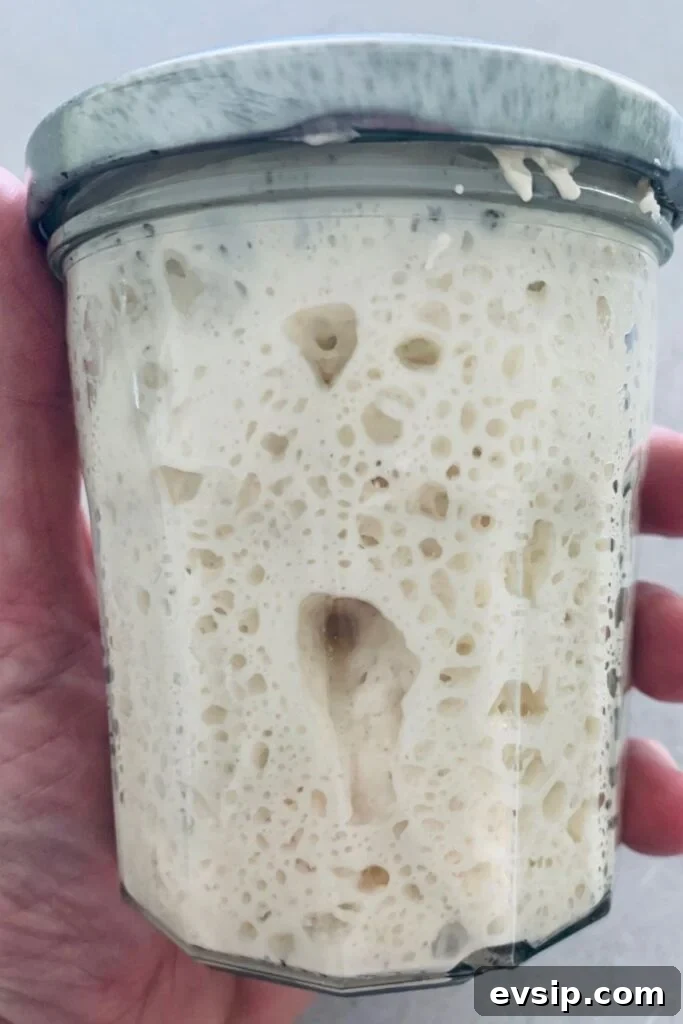
Keep Your Sourdough Starter Warm
Temperature matters. Starters kept below about 70°F (21°C) will be sluggish; keeping a starter between roughly 75°F (24°C) and 82°F (28°C) encourages yeast activity without promoting excessive acid build-up. Find a warm but stable spot—avoid letting the starter exceed about 82°F (28°C), which can favor acid production.
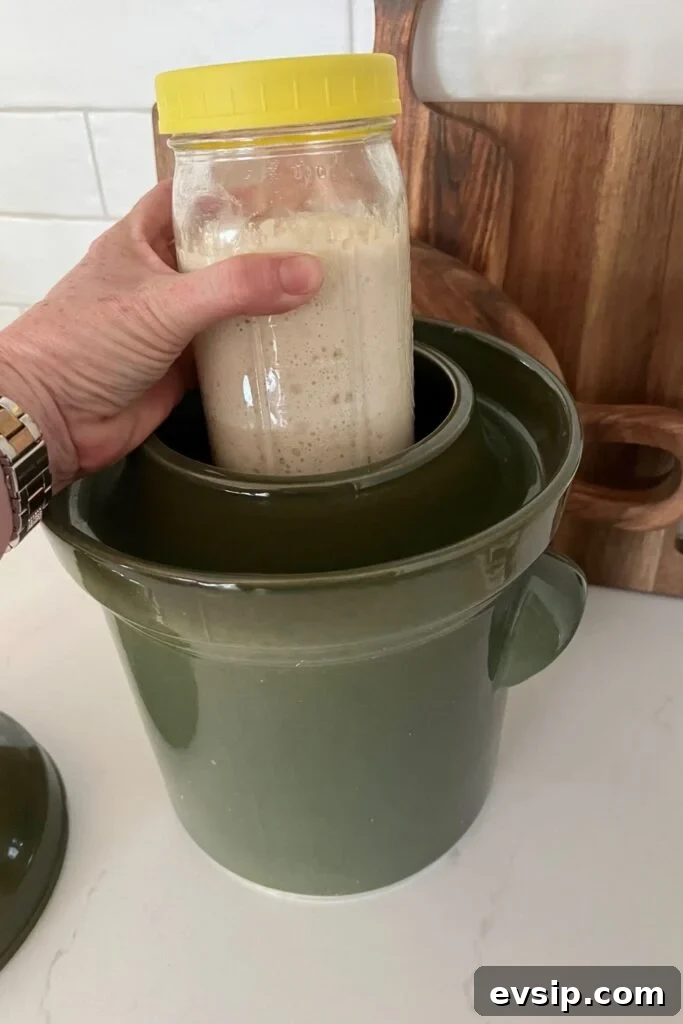
Totally Refresh Your Starter
If activity is minimal despite adjustments, perform a full refresh to reset the balance and reduce acidity. This method is effective after neglect or overfeeding:
- Place 5 g of starter into a clean jar and discard the rest.
- Feed that 5 g with 25 g flour and 25 g water (a 1:5:5 ratio) and mix thoroughly. Cover loosely and let it rise.
- If it doubles, proceed; if not, wait 12 hours and continue refreshing.
- Take 5 g from the jar and transfer it to a clean jar, then feed with another 25 g flour and 25 g water. Mix well and let this double. It should become bubbly and smell pleasant.
- When the refreshed jar peaks, resume regular feedings. For stability, feed at a 1:2:2 ratio and remember to discard before feeds to prevent acid re-accumulation.
These steps should revive your starter and get you back to baking better sourdough. In most cases, excess acid is the underlying problem, so focus on rebalancing food, hydration, temperature, and discard practices to restore vigorous yeast activity.
Frequently Asked Questions
You can, but it’s unnecessary for strengthening a starter. Sugar feeds yeast but won’t correct an acidic imbalance. Reserve sugar for sweet doughs unless you’re intentionally developing a sweet starter.
Early on, starters often bubble without doubling. This indicates bacteria and yeast are still balancing. Given time and consistent feedings, yeast should dominate and produce reliable rise.
Yes. Stirring helps distribute food and oxygen and encourages even fermentation, which supports growth.
No. Acidic juices alter the microbiome and are unnecessary. Stick to flour and water and the recovery steps above.
Yes. Rye and whole grain flours boost nutrition and activity, but switching flours may cause a brief adjustment period. If you want consistency, stick to the same flour for routine feedings.
Yes. Avoid chlorinated, distilled, or reverse-osmosis water. Use filtered or tap water that’s free from strong chlorine to support a healthy starter.