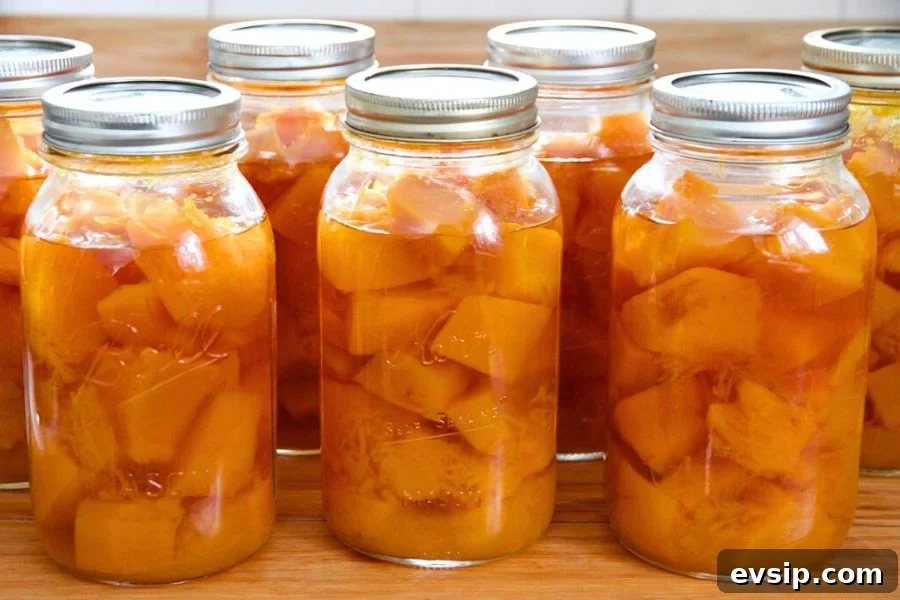
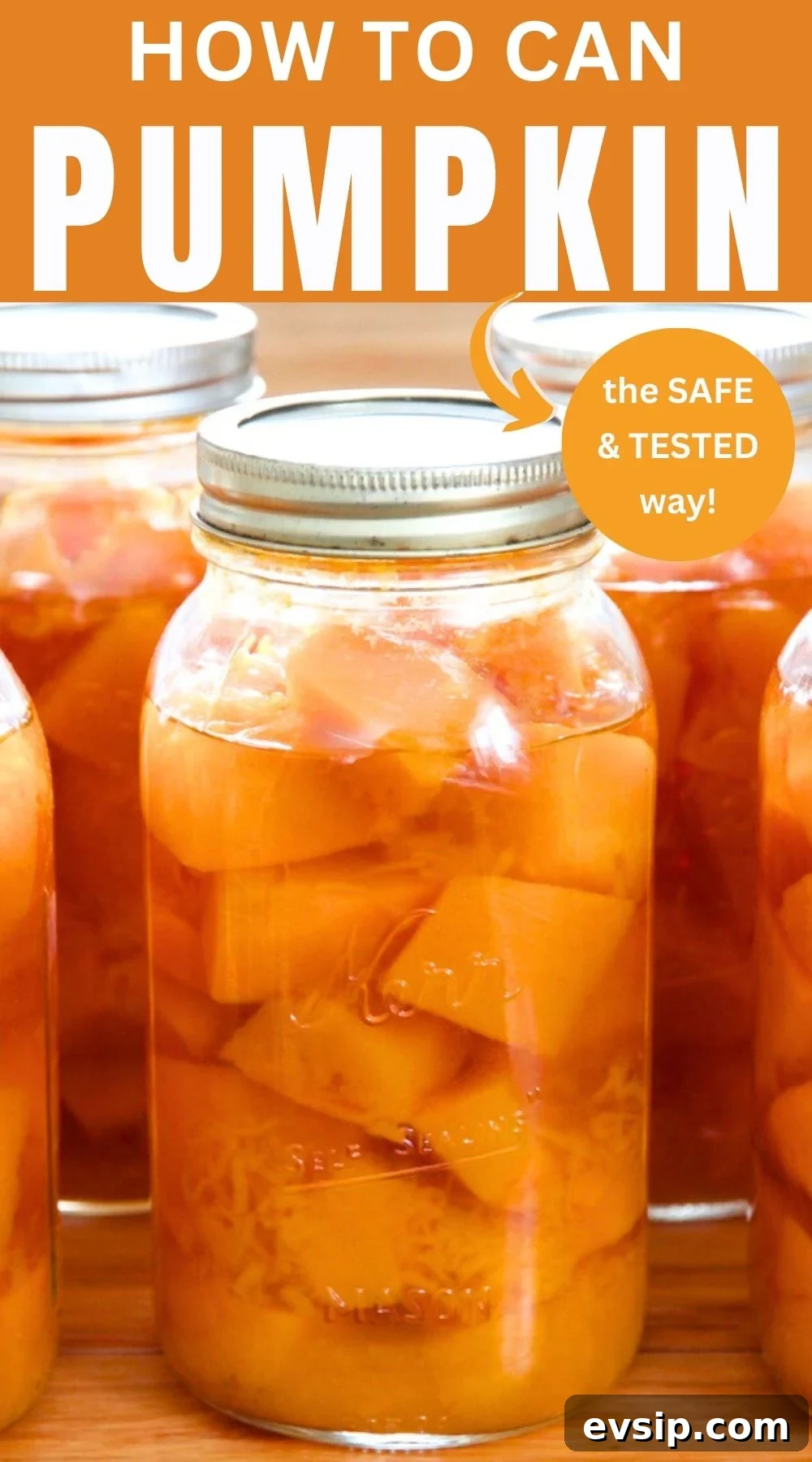
Start canning pumpkin in your kitchen so you have homemade pumpkin ready to use year-round for pies, breads, soups, baby food, and other favorite recipes.
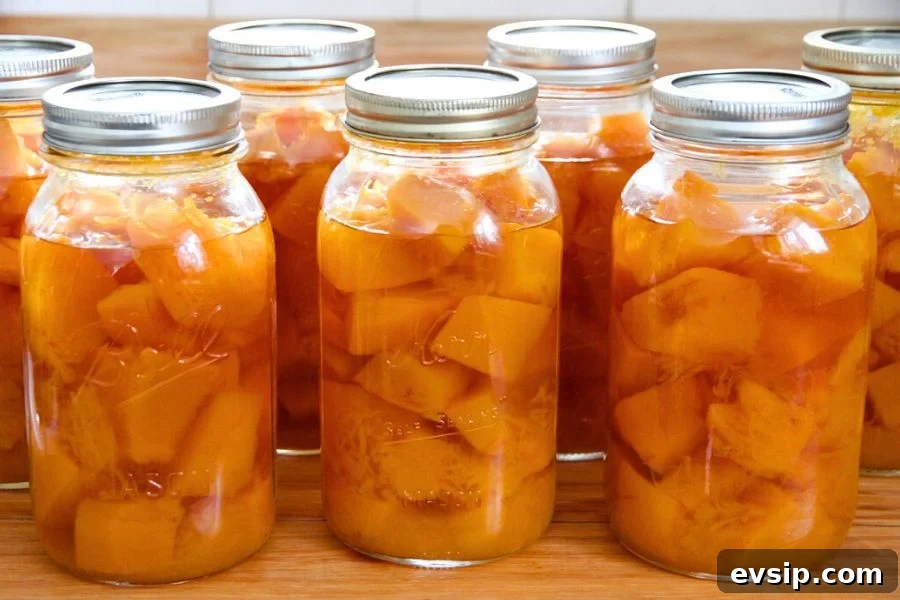
While it isn’t safe to can pumpkin in pureed form, canning pumpkin in 1-inch chunks is a reliable preservation method. Having jars of pumpkin cubes on the pantry shelf makes it easy to turn them into puree quickly when a recipe calls for it.
You can buy suitable pumpkins in the fall or grow your own. I grow mine at the cottage because they’re simple to plant from seed and they store well. If you often wait until late in the season to process them, consider varieties with thicker skin that keep longer in cold storage so the flesh stays firm until you can can it.
Best Type of Pumpkin for Canning
For the best flavor and texture when canning, choose pumpkins grown for eating rather than the typical large field pumpkins used for decoration. There are two basic groups:
Field pumpkins — common for carving and decorating. They usually have stringy flesh and a bland flavor, so they’re not ideal for canning.
Sugar pumpkins — also called sugar pie pumpkins. Smaller with smooth, sweet flesh, these are the preferred choice for canning, baking, and cooking.
If you grow your own or shop at a farmers market, look for sweet, dense varieties. Examples include:
- Jarrahdale
- Long Island Cheese
- Luxury Pie
- Moranga
- Musquée d’Hiver (Provence)
- Queensland Blue
- Sugar (sugar pie) pumpkins
- Winter Luxury
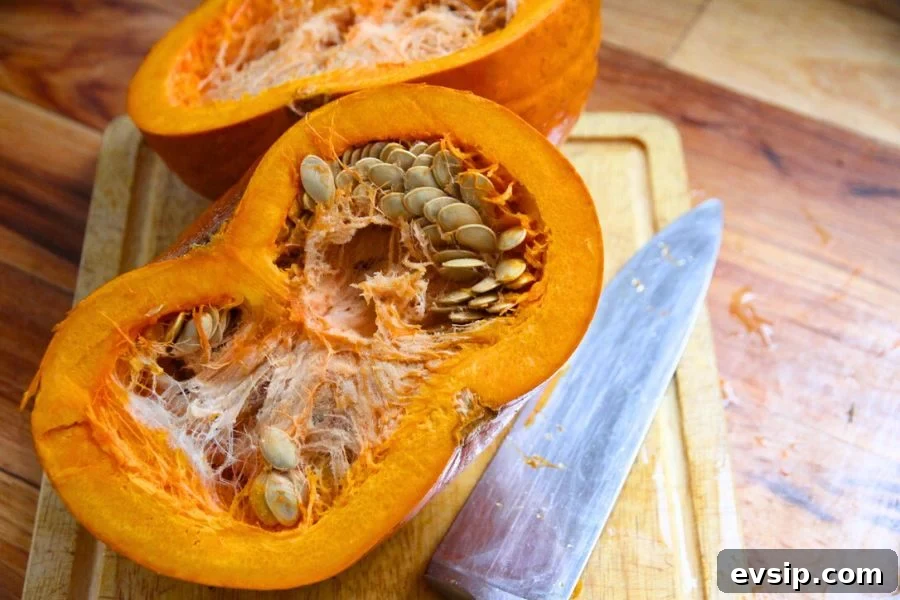
Ingredient List
- Whole pumpkin(s)
- Water
- Optional: salt
Salt is optional; add it only if you prefer salted pumpkin in your recipes.
Tools You Need
- Pressure canner (required — pumpkin is low-acid)
- Large stock pot
- 7 quart canning jars (or pints if halving the recipe)
- Canning lids and bands
- Canning funnel
- Jar lifter
- Cooling rack
- Cutting board
- Large kitchen knife
- Vegetable peeler
Because pumpkin is a low-acid food, you must use a pressure canner. Water-bath canners, steam canners, pressure cookers, and Instant Pots do not reach the required temperatures to safely destroy botulism spores.
How to Can Fresh Pumpkin
1. Scrub the pumpkin to remove dirt. Use a very sharp knife to cut it in half and scoop out seeds with a large spoon. Save seeds for roasting or compost.
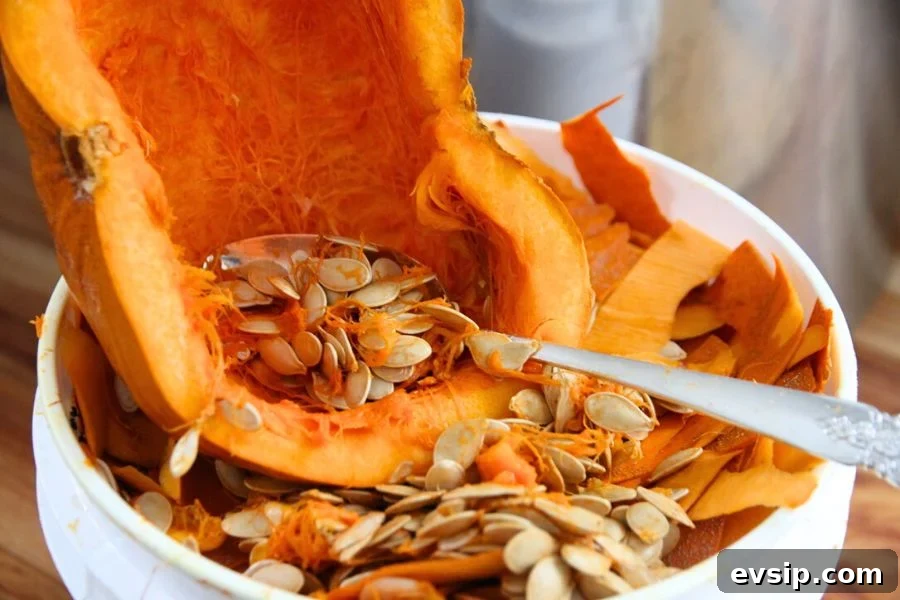
2. Cut halves into 2–3 wedges. Peel with a vegetable peeler or use a knife to remove the rind, as you would with a melon.
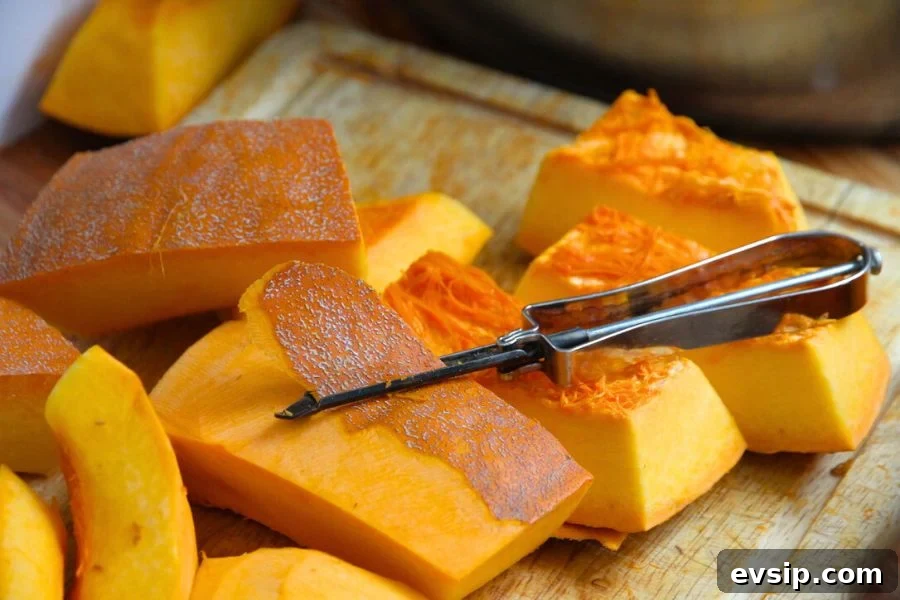
3. Chop the peeled wedges into roughly 1-inch cubes for even heating.
4. Place cubes in a large stockpot and add cold water to cover by 1–2 inches. Cover and bring to a boil.
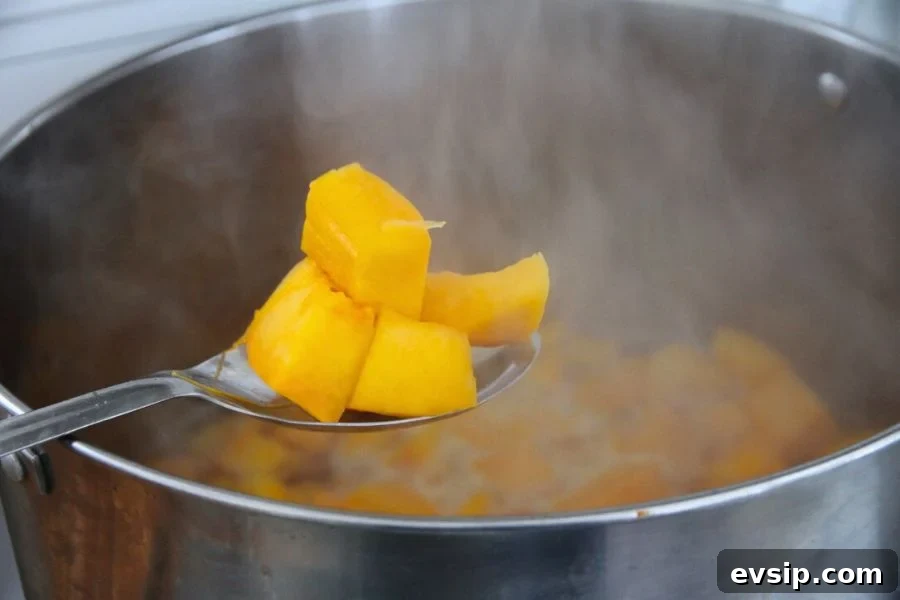
5. While the pumpkin heats, prepare your pressure canner by adding water and starting it on the stove. When the pot of pumpkin reaches a boil, boil the cubes for 2 minutes (this is the hot-pack method).
6. Heat glass jars by running hot water over them. Using a canning funnel, add hot pumpkin cubes to each jar, covering them with the cooking liquid so everything stays submerged. Leave 1 inch of headspace.
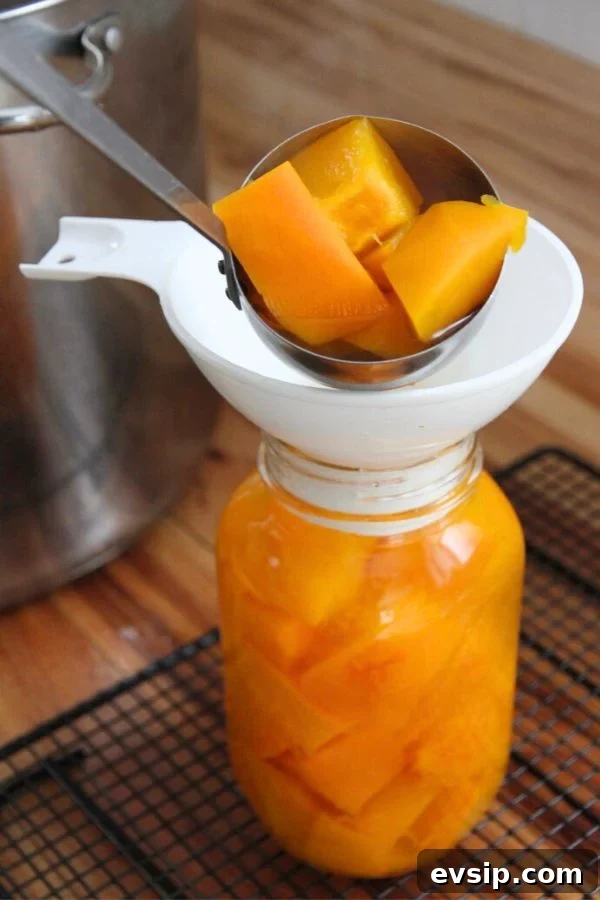
7. Wipe jar rims, apply lids and bands fingertip-tight, and place hot jars in the pressure canner. Process quarts according to the times and pressure guidelines below.
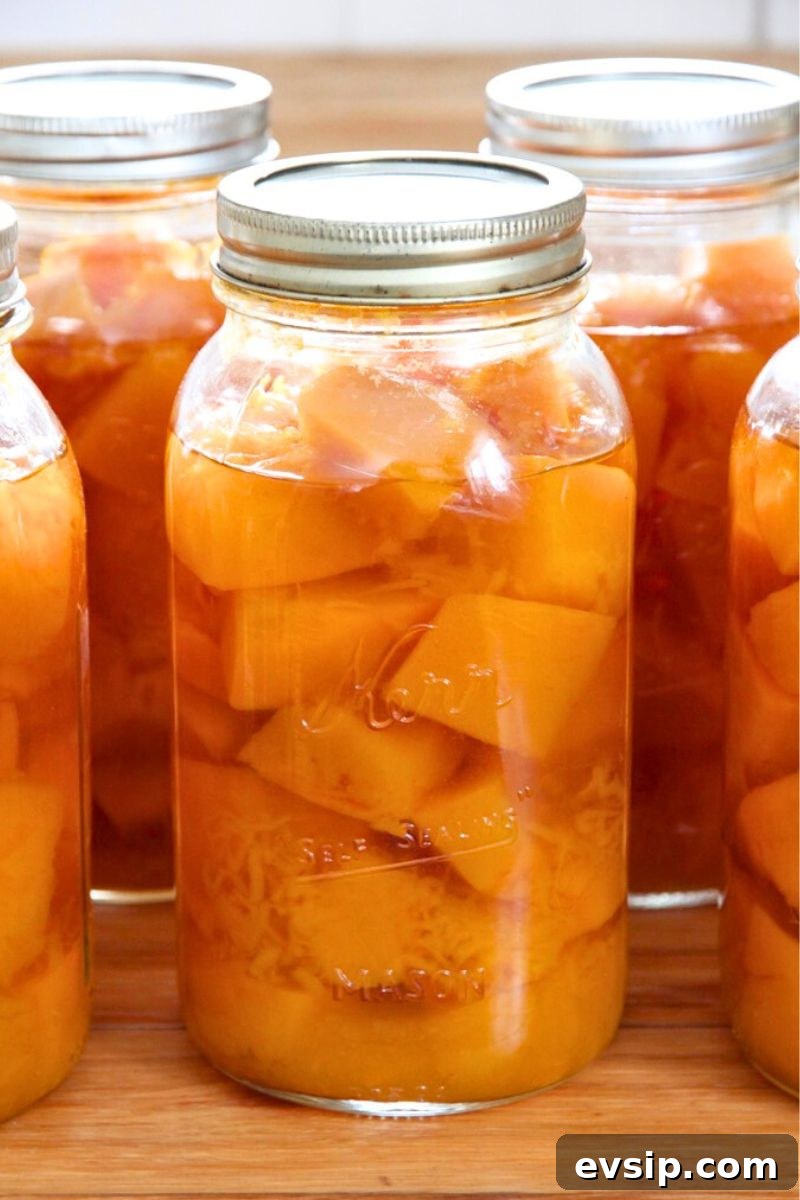
Safety Tips for Canning Fresh Pumpkin
- Use firm, sweet pumpkins for best flavor and texture.
- Cut cubes about 1 x 1 inch so they heat evenly during processing.
- Always preheat pumpkin cubes (hot pack); processing times are based on this method.
- Never puree pumpkin before canning — purees do not heat evenly in a pressure canner.
- Do not use jars larger than 1 quart (1 liter) for canning pumpkin.
How to Turn Canned Pumpkin into Puree
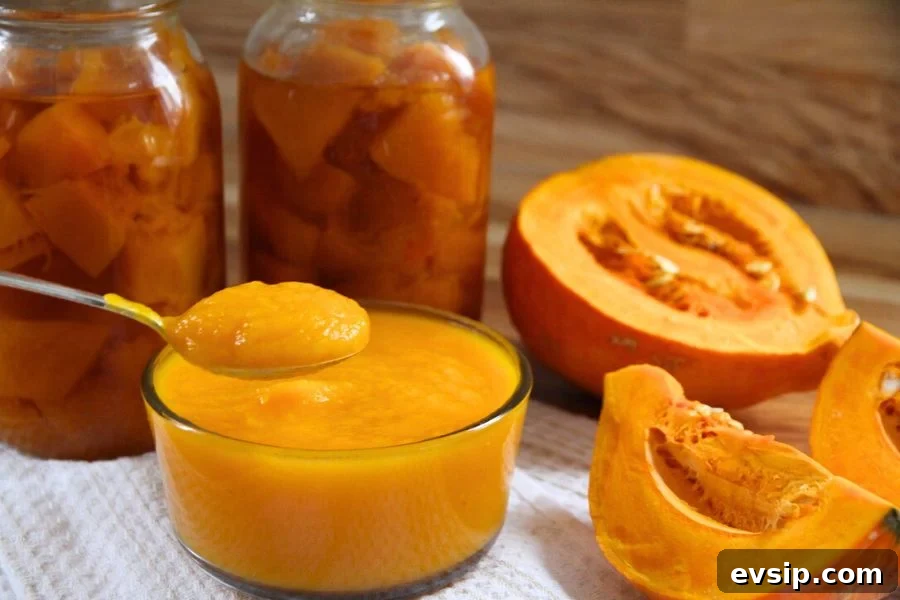
Drain canned pumpkin cubes in a colander for a few minutes, then puree with a food processor, blender, or immersion blender. Because canned pumpkin is packed in liquid, the puree will be thinner than commercial canned pumpkin; to thicken it, simmer gently on the stovetop while stirring until it reaches the desired consistency.
Ways to Use Home-Canned Pumpkin
Home-canned pumpkin puree works well in many recipes. Try it in:
- Pumpkin bread
- Pumpkin butter
- Pumpkin custard
- Pumpkin muffins
- Pumpkin pie
- Pumpkin soup
How to Pressure Can Pumpkin
Equipment
- pressure canner
- 7 quart jars
- 7 small-mouth lids and canning bands
- canning funnel
- jar lifter
- cooling rack
- large stock pot
- cutting board
- large kitchen knife
- vegetable peeler
Ingredients
- 16 pounds whole pumpkin
- Water to cover cubed pumpkin by 1–2 inches
- 7 teaspoons salt (optional)
Instructions
- Weigh pumpkins to ensure you have about 16 pounds.
- Scrub pumpkins clean at the sink.
- Cut in half and scrape out seeds with a metal spoon.
- Add water to the pressure canner and preheat while preparing pumpkin.
- Slice pumpkin into 1-inch wedges.
- Remove rind with a peeler or knife.
- Chop into 1-inch cubes and place in a stockpot.
- Cover cubes with 1–2 inches of water and bring to a boil.
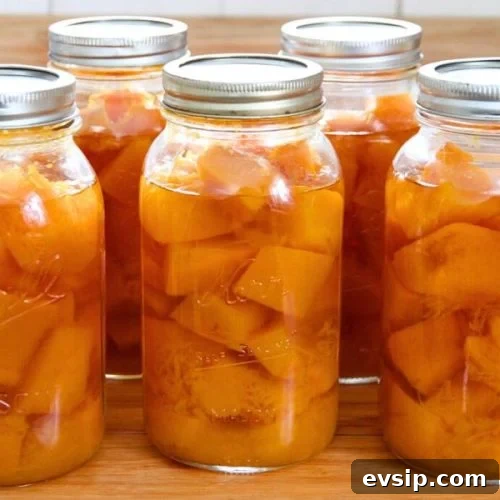
- Boil cubes for 2 minutes, then ladle hot pumpkin and cooking liquid into hot quart jars, leaving 1 inch headspace.
- Add 1 teaspoon salt per jar if desired.
- Wipe rims, add lids and bands, tightening fingertip-tight.
- Process quarts in a pressure canner for 90 minutes at the pressure required for your altitude and canner type.
- After the canner returns to 0 pressure, remove the lid and lift jars to a cooling rack.
- Allow jars to sit 8–12 hours before testing seals. Refrigerate any unsealed jars.
- To make puree, drain cubes briefly and puree with a blender or immersion blender.
Notes
Canning Pumpkin at Home
Processing times
Quarts: 90 minutes
Pints: 55 minutes
Pressure adjustments by altitude
Dial gauge canner
0–2,000 ft: 11 lb
2,001–4,000 ft: 12 lb
4,001–6,000 ft: 13 lb
6,001–8,000 ft: 14 lb
Weighted gauge canner
0–1,000 ft: 10 lb
1,001–8,000 ft: 15 lb
Did you make this recipe?
Share your results and favorite uses for home-canned pumpkin.