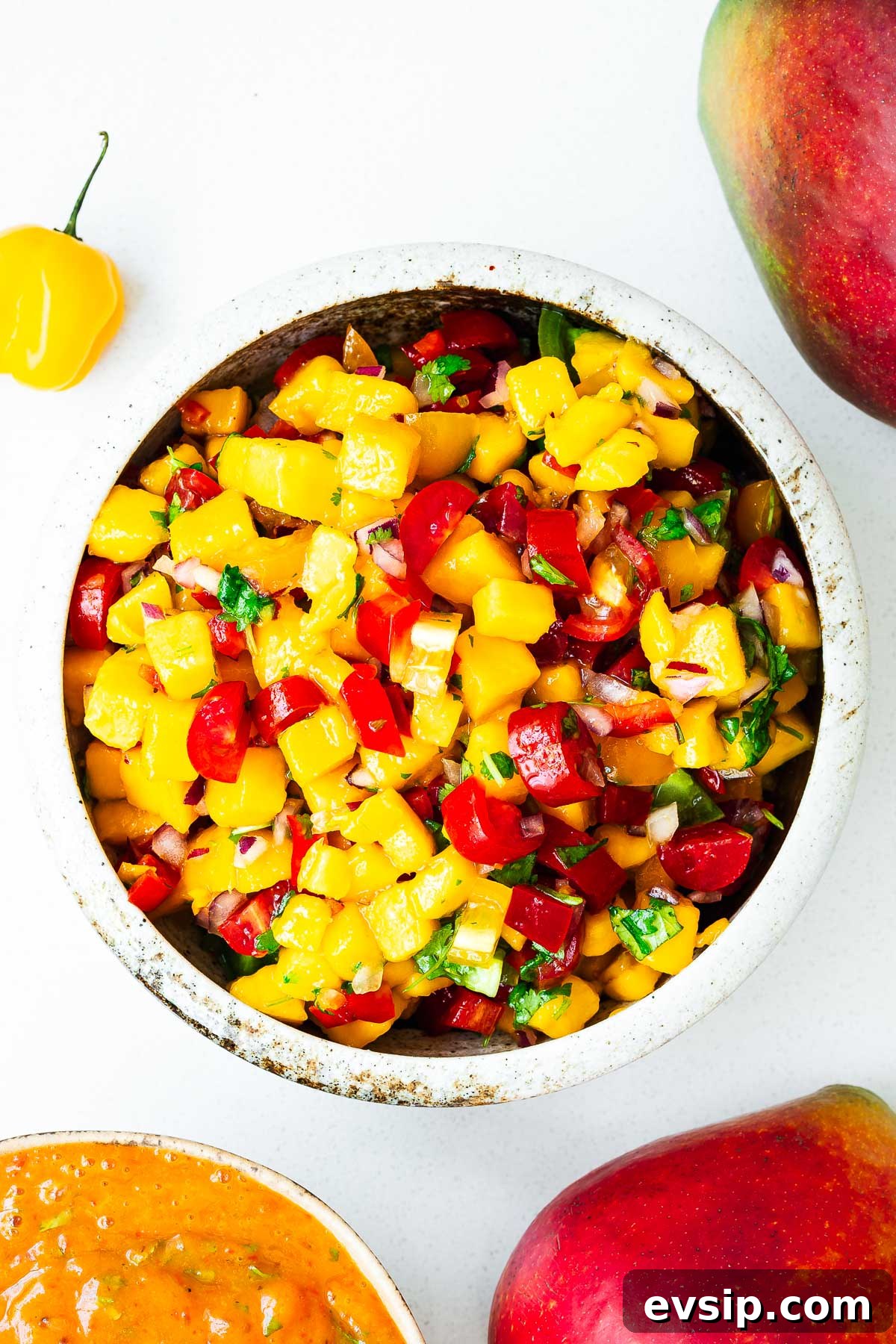
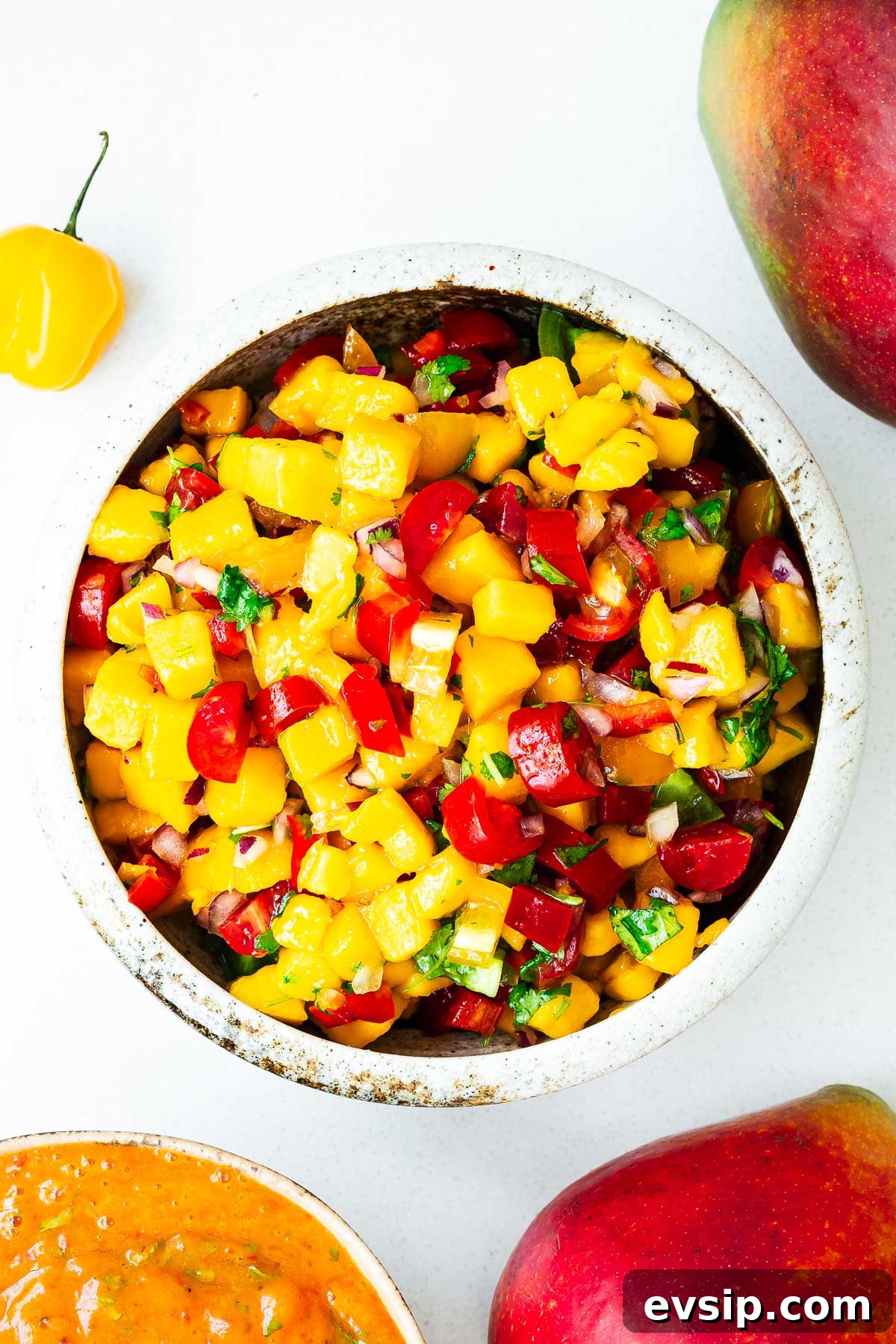
This mango habanero salsa pairs ripe mango’s tropical sweetness with the fiery heat of habanero peppers for a bright, balanced condiment. The fresh lime juice brightens the flavours, making this salsa both sweet and spicy—perfect for anyone who loves a little heat.
It works as an easy, plant-based appetizer served with tortilla chips, and it’s naturally gluten-free and dairy-free. It’s also delicious with fish tacos, grilled meats, chicken wings, or as a vibrant topping for bowls and sandwiches.
In this post:
- Ingredients and substitutes
- How to make fresh mango habanero salsa
- Serving suggestions
- Frequently asked questions
- Habanero mango salsa recipe card
Ingredients and substitutes
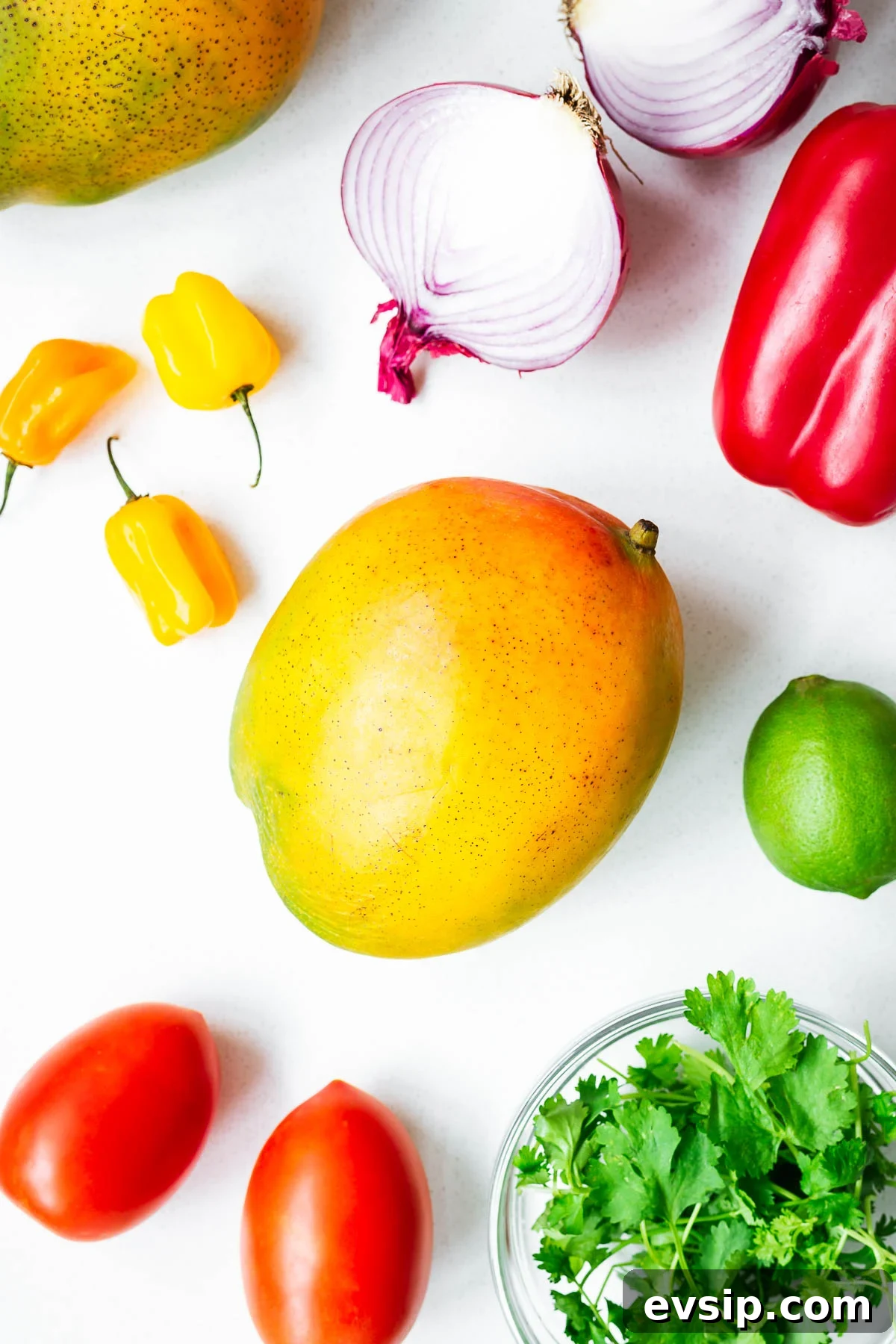
This vibrant salsa needs only a few fresh ingredients. Choose ripe but slightly firm mangoes and fresh herbs for the best results.
- Tomatoes: Small heirloom tomatoes add colour and flavour. Cherry tomatoes or finely diced Roma work well too.
- Red bell pepper: Adds crunch and sweetness. Yellow or orange bell pepper can be substituted.
- Red onion: Provides a sharp bite; yellow or white onion are acceptable swaps.
- Habanero peppers: Very hot—use caution. One habanero per mango gives significant heat; adjust to taste. Scotch bonnet peppers are similar. For milder salsa use serrano or jalapeño peppers.
- Mangoes: Use ripe but still somewhat firm mangoes to avoid a watery salsa. One mango yields about two cups diced.
- Cilantro (coriander): Fresh cilantro adds herbaceous brightness. Replace with parsley if you dislike cilantro.
- Lime juice: Fresh lime juice adds acidity and a tropical lift. Lemon juice can be used in a pinch.
- Salt and black pepper: Adjust to taste, using sea salt or kosher salt for best flavour.
How to make mango habanero salsa
This fresh salsa comes together quickly and showcases the contrast between fruity mango and hot habanero. Exact quantities are available in the recipe card below.
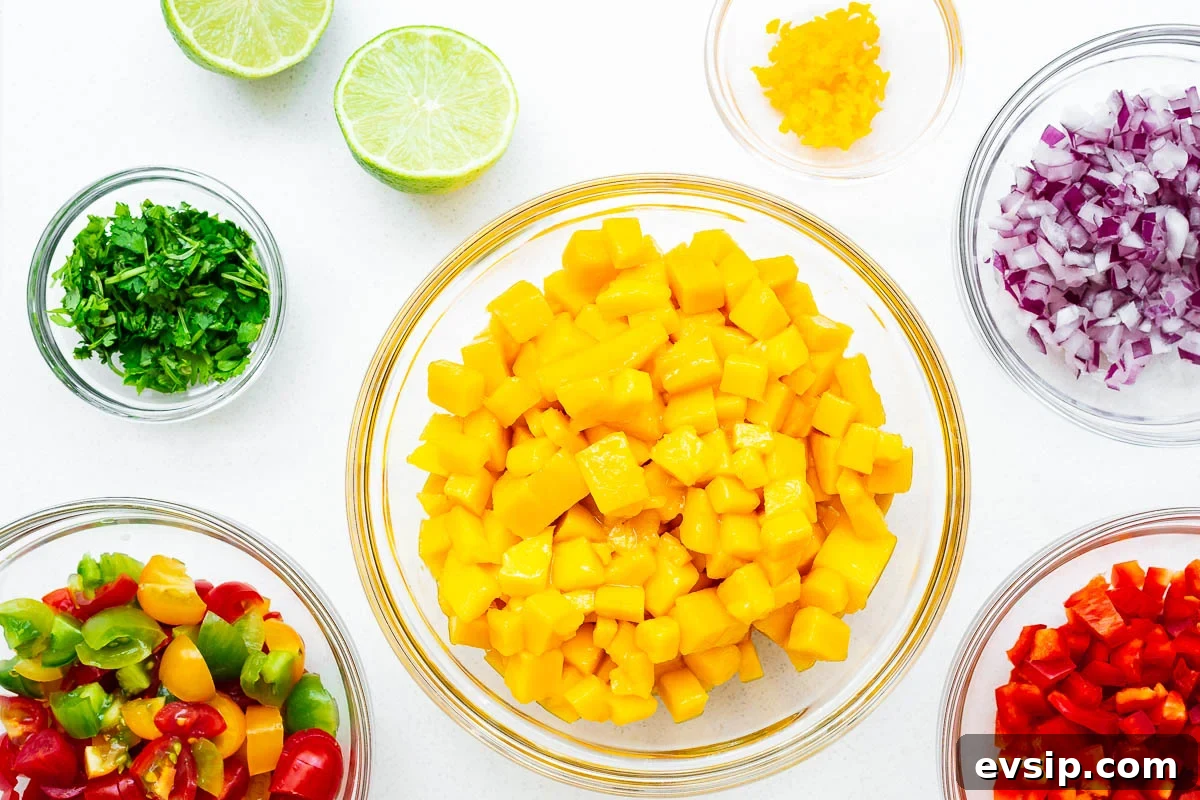
Step 1: Prep the ingredients. Finely dice the red onion, tomatoes and red bell pepper. Mix them in a large bowl and drain any excess tomato juice. Peel and dice the mango into small cubes and add to the bowl. Finely chop the habanero—remove seeds and membranes for a milder result and always handle hot chiles carefully.
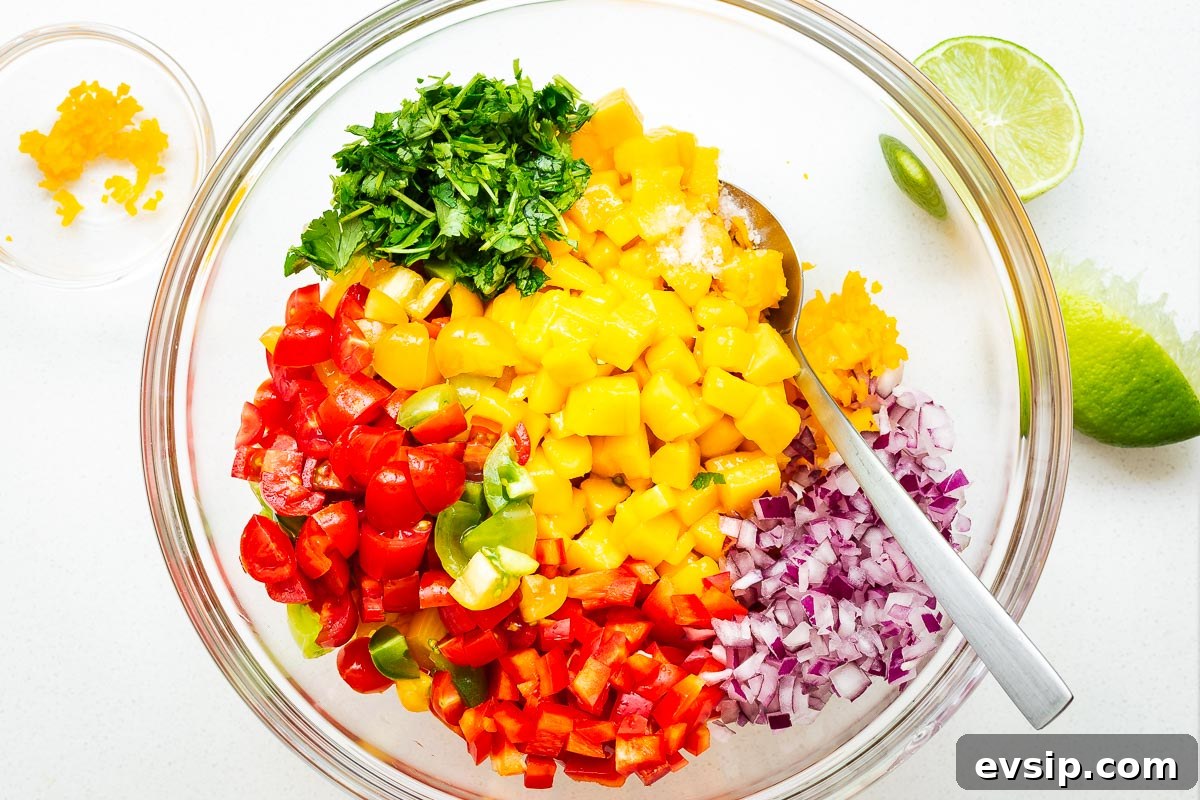
Step 2: Assemble. Add the chopped habanero (start with half), chopped cilantro and fresh lime juice to the bowl. Season with about 1/2 teaspoon salt, stir, and taste. Add more habanero and seasoning only after tasting so you can control the heat.
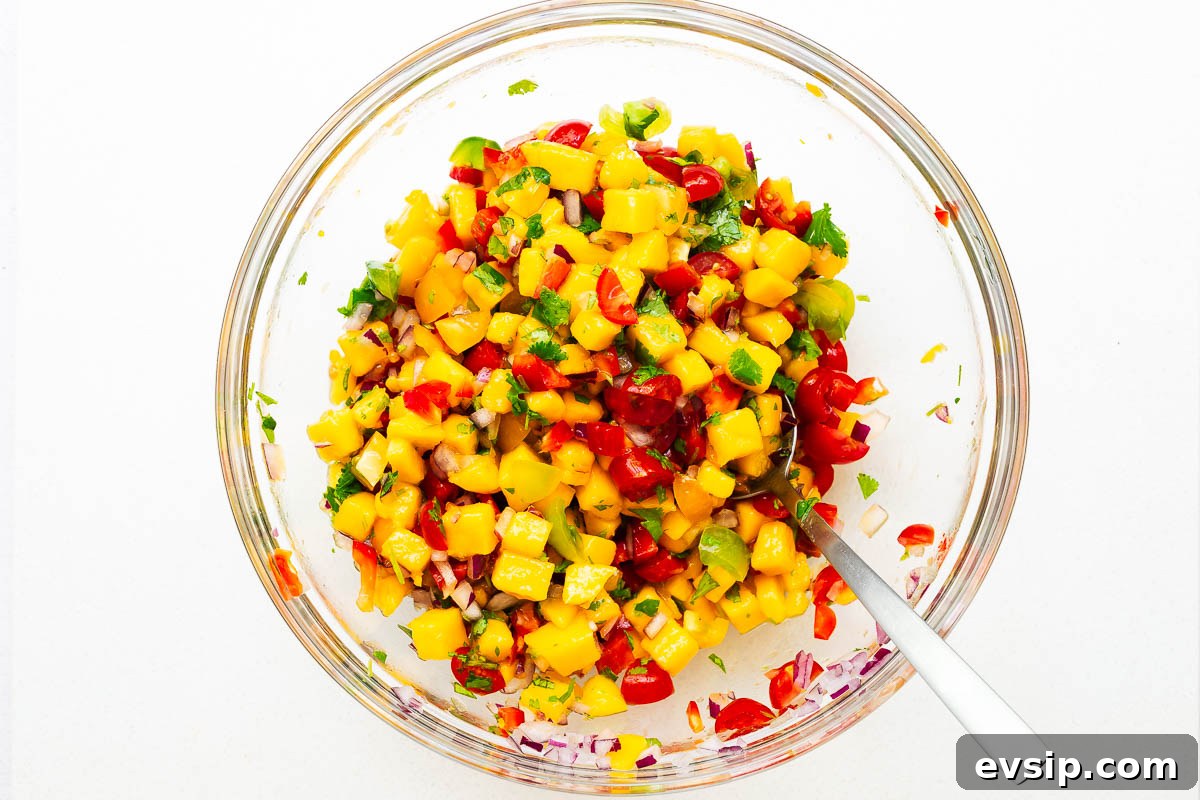
Step 3: Adjust and chill. Mix well, adjust salt and pepper to taste, then cover and refrigerate for at least 30 minutes to let the flavours meld. Serve chilled.
Storage
Fresh mango salsa is best eaten the day it’s made, but leftovers keep in an airtight container in the refrigerator for up to three days. Before serving, drain off any excess liquid for best texture.
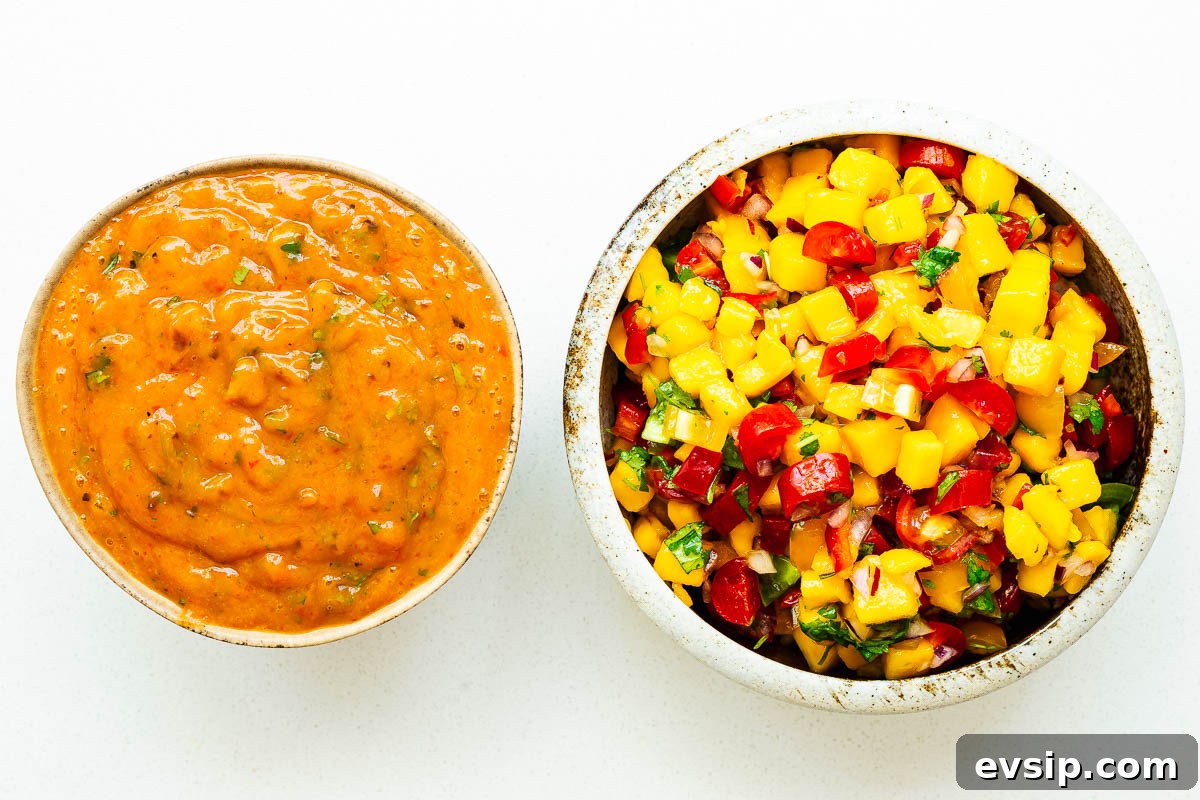
Fresh salsa vs roasted mango habanero salsa
A fresh salsa is uncooked, chunky and bright—similar to a mango pico de gallo. Roasting the vegetables and chiles develops smoky, deeper flavours; after roasting you can pulse the mixture in a food processor for a smoother, roasted mango habanero salsa.
Habanero salsa variations
This mango habanero salsa is versatile—try these variations to change texture and flavour:
- Mango tomato salsa: Replace the red bell pepper with an extra cup of diced tomatoes.
- Habanero pineapple salsa: Swap pineapple for mango for a tangier, tropical version.
- Mango avocado salsa: Fold in diced avocado just before serving for creaminess.
- Mango corn salsa: Add a cup of cooked, cooled corn kernels—grill the corn first for smoky notes.
- Mango black bean salsa: Stir in a cup of cooked, drained black beans for extra protein and texture.
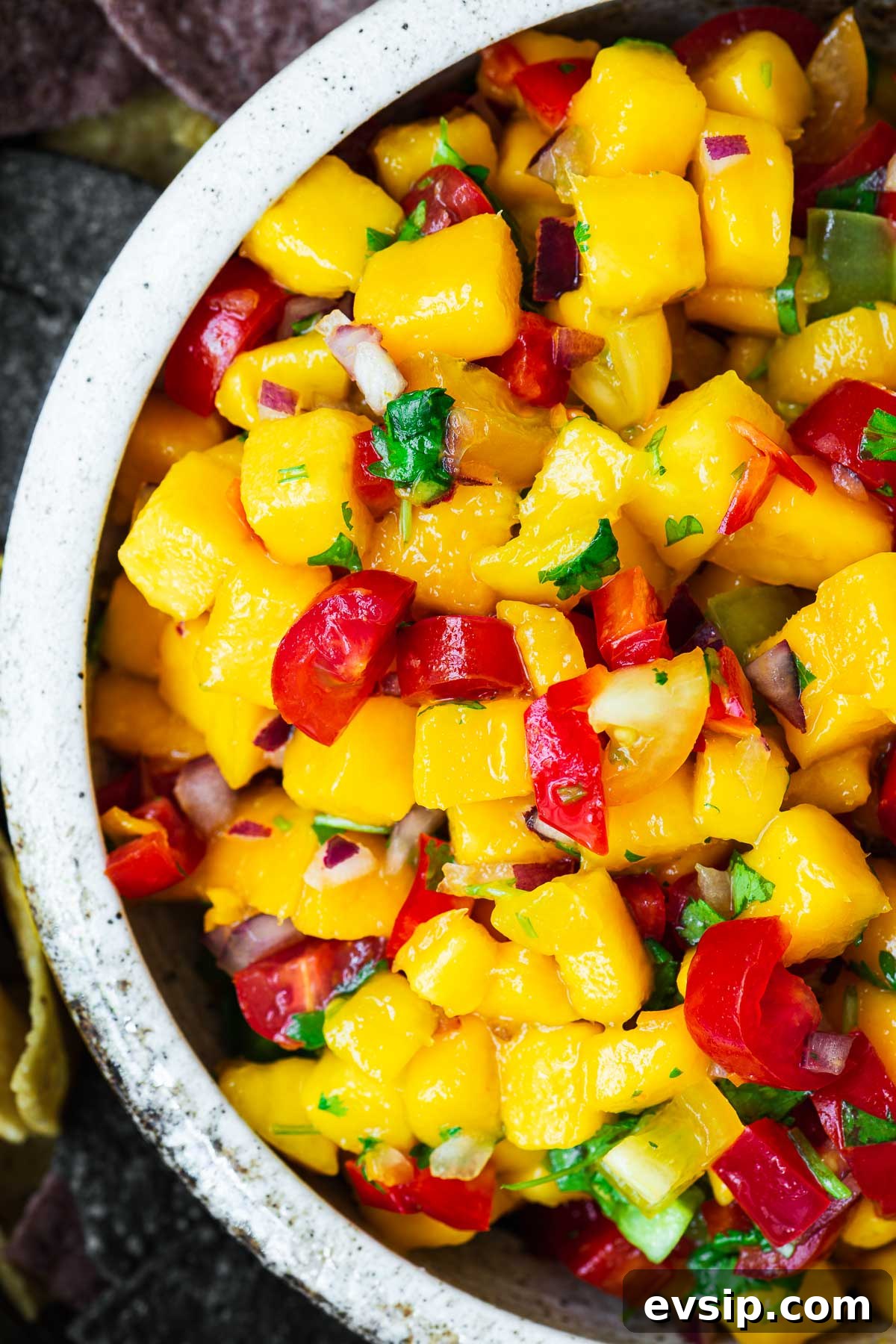
How to use mango habanero salsa
This salsa adds a zesty, spicy lift to many dishes. Popular uses include:
- Topping for Mexican dishes: Spoon over tacos, nachos, burritos, quesadillas, fajitas or enchiladas for a fresh burst of flavour.
- As a dip: Serve chilled with tortilla chips. It also brightens creamy dips or guacamole when mixed in sparingly.
- Mix into salads and bowls: Add a scoop to grain bowls, salad bowls or burrito bowls—pairs especially well with corn, black beans and mild cheeses.
- Spoon onto sandwiches: Add to burgers, sliders or wraps for a tropical, spicy element.
- Finish grilled proteins: Use as a topping for grilled tofu, chicken, fish or steak—the sweet heat contrasts beautifully with charred flavours.
Frequently asked questions
Remove the seeds and membranes from habanero peppers before chopping, or use milder chiles such as jalapeños or serranos. Serving the salsa alongside sour cream or yoghurt can also help mellow the heat.
Yes, habaneros can be eaten raw, roasted, or cooked. They are very hot (about 100,000–350,000 Scoville units). To reduce heat, remove seeds and membranes and handle with care.
Mango salsa pairs well with Mexican dishes like tacos and burritos, and with grilled proteins, rice bowls, or as a vibrant topping for guacamole and other dips.
Yes—habanero peppers bring significant heat, but the mango’s sweetness helps balance it. Reduce the number of chiles or remove seeds for a milder salsa.
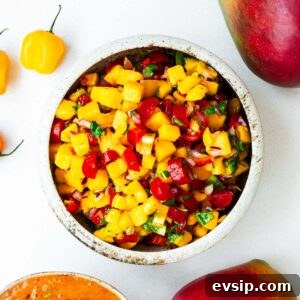
Easy Mango Habanero Salsa Recipe
Ingredients
- 2 cups small tomatoes*
- 1 red bell pepper
- ½ red onion
- 2 habanero peppers*, or to taste
- 2 mangoes, ripe yet firm
- ½ cup fresh cilantro, finely chopped
- 2 tablespoons lime juice, from 1 lime
- sea salt and black pepper, adjusted to taste
Instructions
-
Finely dice the tomatoes, red bell pepper and onion. Mix in a large bowl and strain off any excess tomato juice.
-
Peel and dice the mangoes into small cubes, then add them to the diced vegetables.
-
Finely chop the habanero. Deseed and devein if you prefer a milder salsa.
-
Add cilantro, lime juice and half the habanero to the bowl along with ½ teaspoon salt. Stir and taste; add more habanero and seasonings as desired.
-
Cover and refrigerate for at least 30 minutes to let the flavours meld. Serve chilled.
Notes
- Heirloom tomatoes give great colour, but cherry or Roma tomatoes are good alternatives.
- Habaneros are very spicy; start with half a pepper per mango if you’re unsure. Wear gloves when handling hot chiles.
- Best eaten the day it’s made. Store leftovers in an airtight container for up to 3 days and drain excess liquid before serving.
For a smooth, smoky sauce, roast the same ingredients and blend them into a roasted mango habanero salsa.
Try more easy dip recipes
- Easy Guacamole Without Onion or Tomato
- Lemony Hummus Without Garlic (3 Ways)
- Lebanese Muhammara (Walnut & Red Pepper Dip)
- Labneh with Sweet & Spicy Cherry Tomato Sauce