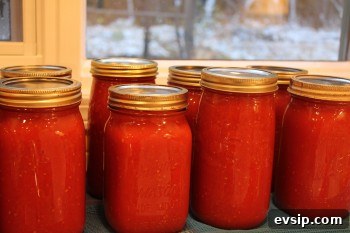
This easy method for canning tomatoes requires no peeling. Puree the tomatoes in a food processor, simmer to the thickness you prefer, and process in hot jars. You’ll have ready-to-use home-canned tomatoes to enjoy all winter long. (Skip to recipe.)
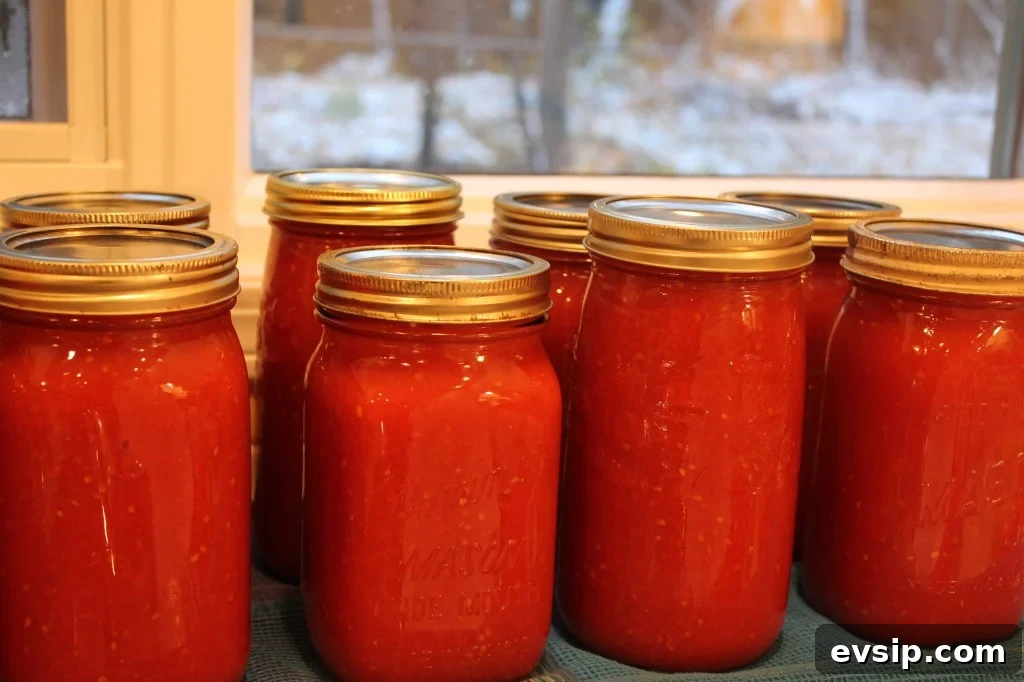
Here in the far north, everything is a little later than in warmer regions: rhubarb pushes up in May, daffodils finally bloom in June, and tomatoes take their time. While people further south were enjoying ripe tomatoes in July and August, ours stayed stubbornly green. The few ripened fruits in the garden were treasured.
When the first frosts threatened, I picked bucketfuls of hard green tomatoes and brought the plants to the compost. The tomatoes were spread in shallow boxes in the basement and slowly ripened inside, turning into a colorful indoor harvest—reds and greens that felt like an early promise of the holidays.
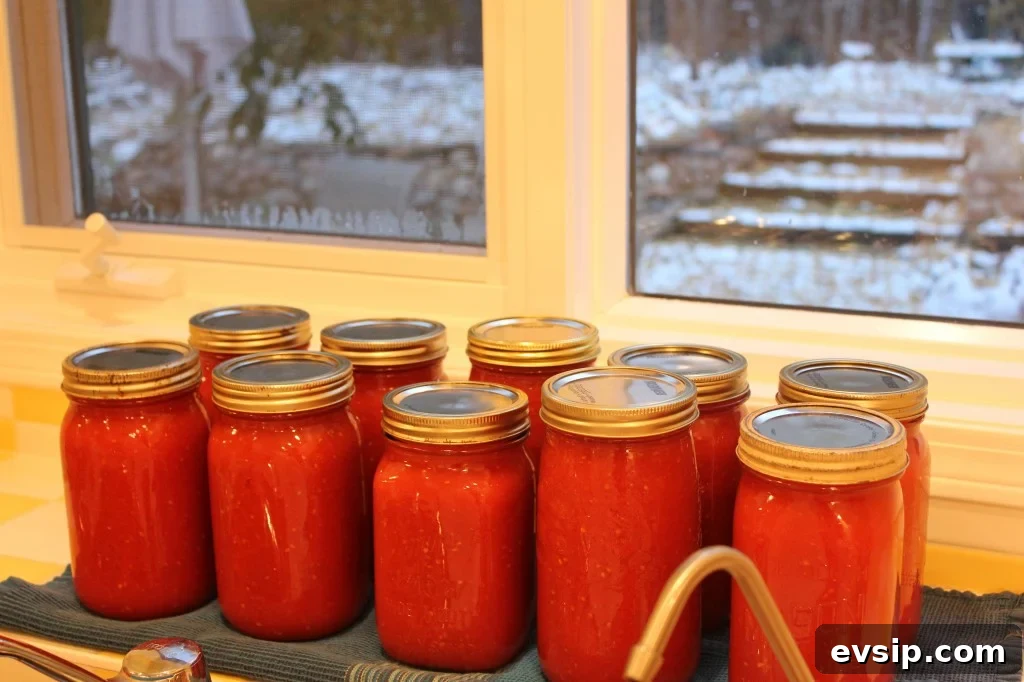
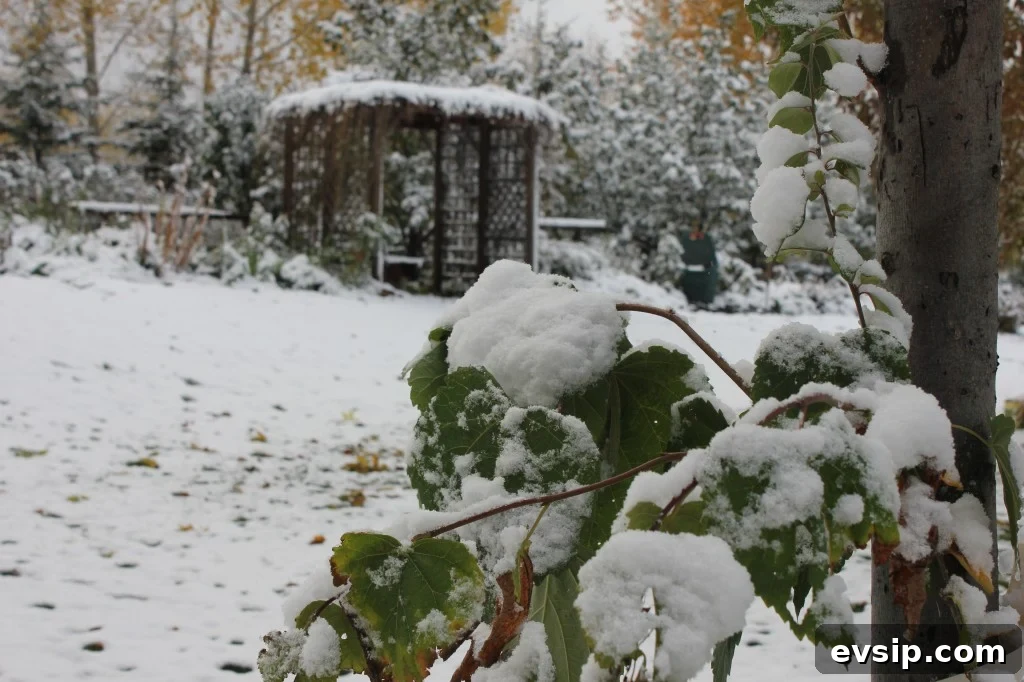
Which was a blessing, because we had an unexpected early snow.

We had an early snow.

Our world turned white.

I love the stark beauty,
. . . but I hope it melts soon.
There is something comforting about the first snowfall. Coming home from work to stir a pot of tomatoes slowly simmering into a rich sauce felt cozy. The process is simple—tomatoes, a pinch of salt if you like, a bay leaf or two, and some lazy stirring.
On a cold, stay-inside day, simmering and canning a big batch of garden tomatoes satisfies that urge to prepare for winter. The bright jars on the shelf will bring a bit of summer to long winter evenings.
I skip peeling because it saves time and effort. My usual routine is to puree the tomatoes in a food processor, reduce them on the stove, and pack them hot into sterilized jars. It’s quick, practical, and versatile.
* * * * *
Notes: You can preserve the pureed, reduced tomatoes as-is or season them slightly. A bay leaf or a little salt is all you need for a plain puree that works as a base for sauces, soups, chilies, and stews. If you prefer, add garlic, onions, or Italian herbs to make a finished tomato sauce. If you don’t can, the cooled puree freezes well in freezer-safe containers.
Simple Canned Tomatoes
- Tomatoes — at least 5 lb (about 2 kg) to start (see notes)
- Salt to taste (coarse or pickling salt recommended)
- Bay leaves, optional
- 1 tablespoon bottled lemon juice per quart of tomato puree (see safety note below)
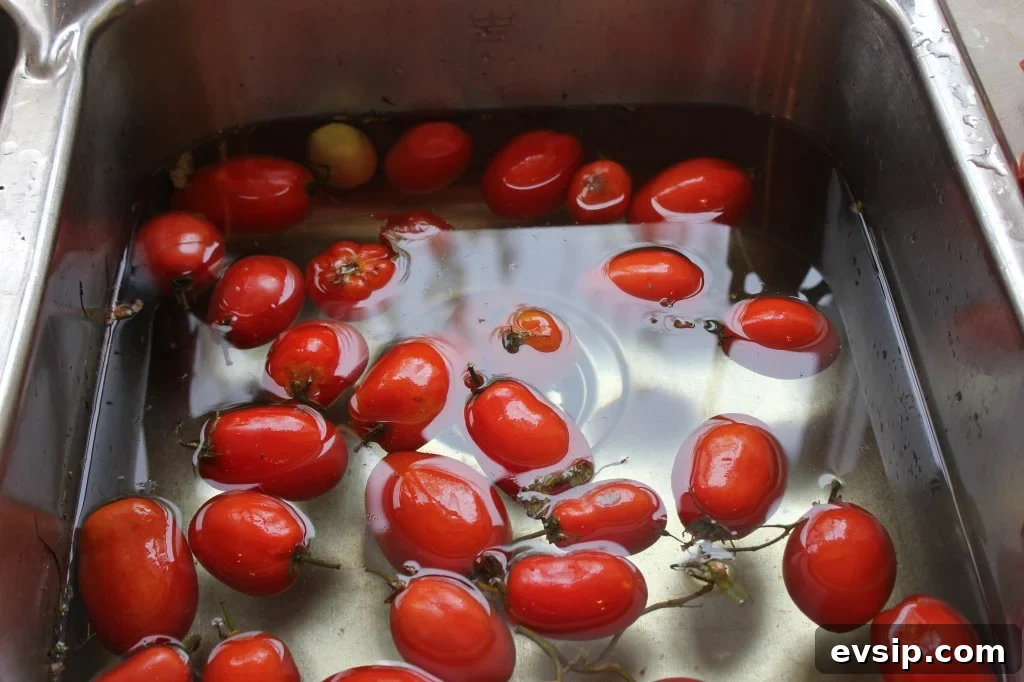
Wash the tomatoes, remove cores and any blemishes, and add them to the bowl of a food processor. Don’t overfill—about three-quarters full is comfortable to work with.
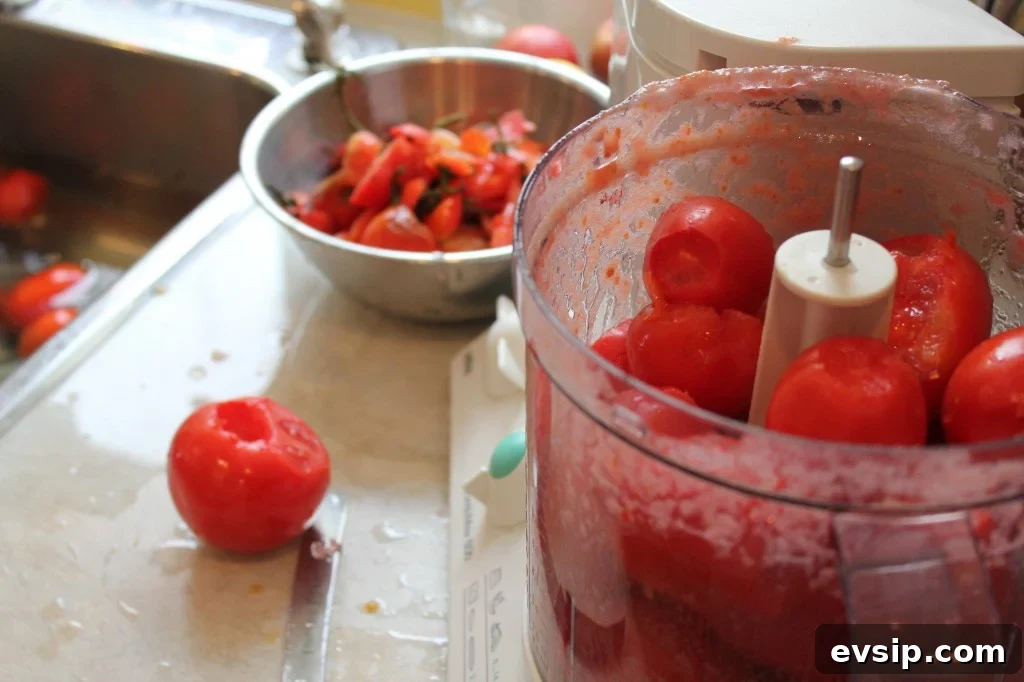
Pulse the tomatoes until they become a coarse puree but avoid grinding the seeds into powder.
Transfer the puree to a large, heavy-bottomed pot that leaves plenty of headspace—no more than three-quarters full—to prevent boiling over. Bring the puree to a boil, then lower the heat and let it simmer gently, uncovered, stirring occasionally. Reduce for at least one hour; two or three hours will yield a thicker, richer sauce.
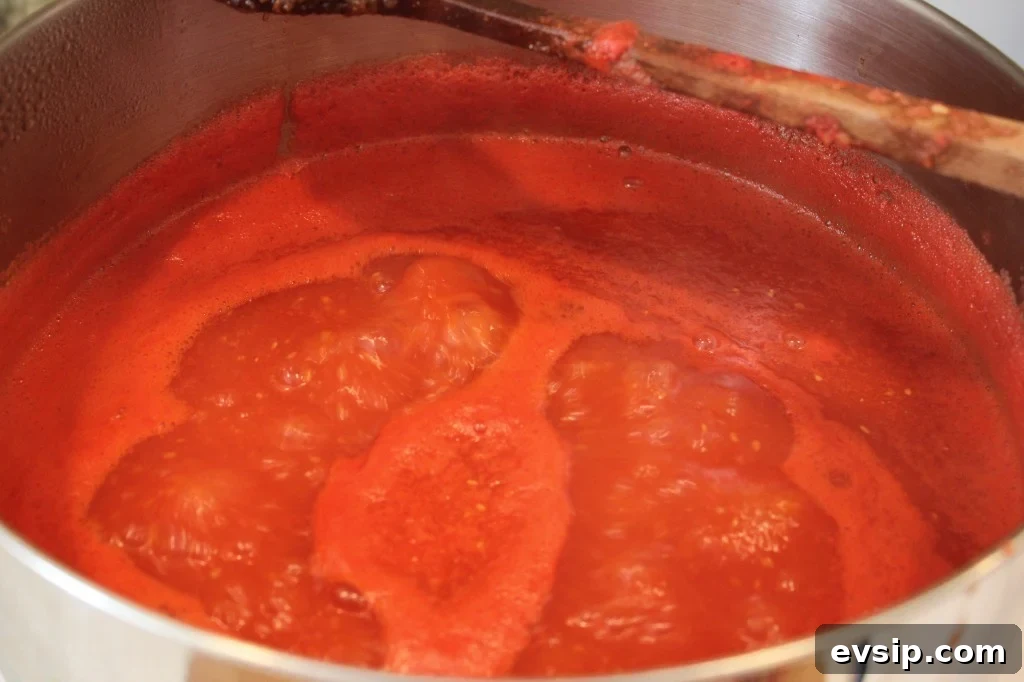
How long you reduce depends on how watery your tomatoes are, the pot’s surface area, and how thick you want the final product. Expect at least an hour, though longer yields better texture. Foam may form on the surface at first but will mostly reintegrate with longer simmering. If you add salt, start conservatively—about 1/2 teaspoon (2.5 ml) per quart/litre—and adjust to taste. Add bay leaves while simmering, then remove them before canning.
Sterilize the canning jars by washing them on the hottest dishwasher cycle and leaving them hot until you need them. Heat the metal lids in simmering water so they’re warm when you seal the jars.
When the puree has reached your desired thickness, remove bay leaves and ladle the hot puree into the sterilized jars. Add 1 tablespoon of bottled lemon juice to each quart jar (or 1/2 tablespoon per pint). Fill to about 1/2 inch (1 cm) headspace. Keep the remaining puree hot on the stove while you fill jars so the contents go in hot. Work with two or three jars at a time so the others stay hot in the dishwasher.
Wipe rims clean, place hot lids on the jars, and screw on rings until fingertip-tight. Process the jars in a boiling water bath for 20 minutes for quart jars (15 minutes for pints).
Remove jars and set them on a towel in a draft-free place to cool undisturbed. You should hear the satisfying ‘pop’ as each jar seals. Any jars that fail to seal should be refrigerated and used within a week.
If you prefer freezing, cool the simmered puree and transfer it to freezer-safe containers before freezing.
Notes on yield: Using a mix of regular and plum tomatoes, 5 lb produced about 7 cups of puree after 30 minutes of cooking and about 5 cups after one hour. Roughly, 1 lb of tomatoes yields about 1 cup of puree after an hour of reduction, though this varies by tomato type and cooking time.
Safety note: Commercial guidelines recommend adding bottled lemon juice or citric acid to canned tomatoes because their acidity can vary. Use 1 tablespoon bottled lemon juice (or 1/4 teaspoon citric acid) per quart to ensure safe acidity. If the added acidity tastes too bright, balance it with about 1 teaspoon of sugar per quart.
Guten Appetit!

You might also like:
Home Canned Peaches with Vanilla
Easy Oven-Canning Method for Dill Pickles
Hot and Spicy Zucchini Salsa
Sweet ‘n Tangy Peach Pear Chutney