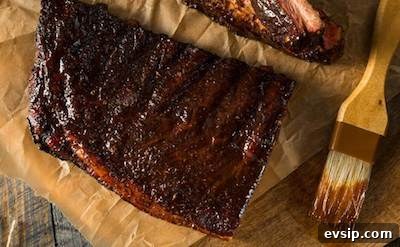
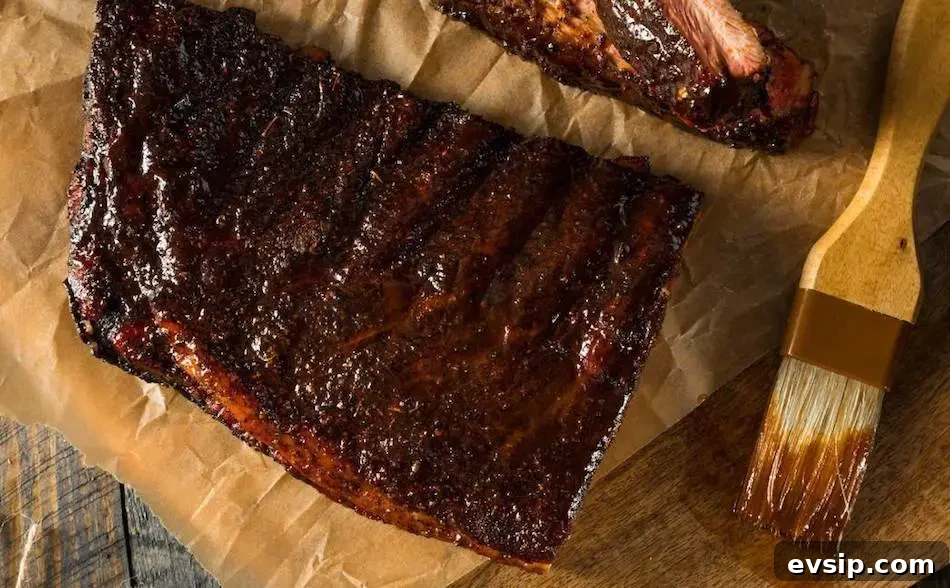
Saucing is the crucial final step in smoking ribs. After hours in the smoker, the glaze delivers the last layer of flavor and gives the ribs their glossy finish. Timing matters: apply sauce too early and the sugars will burn; apply it too late and it won’t meld with the meat. Every pitmaster has their own approach, so there’s no single right way. Below are practical tips and techniques used by experienced cooks to get the best sauced ribs.
Saucing typically takes place in the final stage of the cook, usually during the last hour. When smoking ribs, cooks generally follow three stages: an initial unwrapped stage to develop bark, a wrapped stage to tenderize, and a final stage to glaze the ribs.
Quick Tips
- Saucing is the last step in the rib smoking process and adds the final layer of flavor.
- Apply sauce during the last 30–60 minutes to prevent burning—sauces are high in sugar and scorch easily.
- Use a soft basting brush, squirt bottle, or light spritz to apply sauce without damaging the bark.
- Build flavor in layers: smoke, then rub and seasoning, then sauce.
- Common schedules include 3-2-1 and 2-2-1 methods, but many pros adjust by feel rather than strict times.
| Technique | Pros | Cons |
|---|---|---|
| Basting brush | Precise coverage and control over both sides | Can damage delicate bark if used too roughly |
| Squirt bottle | Quick, controlled application without touching the meat | Harder to control exact amount in some cases |
| Applying during wrapping stage | Can infuse additional flavor during the rest period | May not allow a proper glaze to set on the unwrapped surface |
| Applying during unwrapped stage | Allows glaze to set and caramelize properly | Requires close attention to avoid burning |
When To Add Sauce?
Pork ribs typically need about 4 to 4½ hours, depending on temperature and size. Aim to apply sauce in the final 30 to 60 minutes. If you sauce earlier, the sugars in barbecue sauce can burn, darkening the ribs and producing a bitter flavor. Monitor the heat and move the ribs if flare-ups or excessive charring occur.
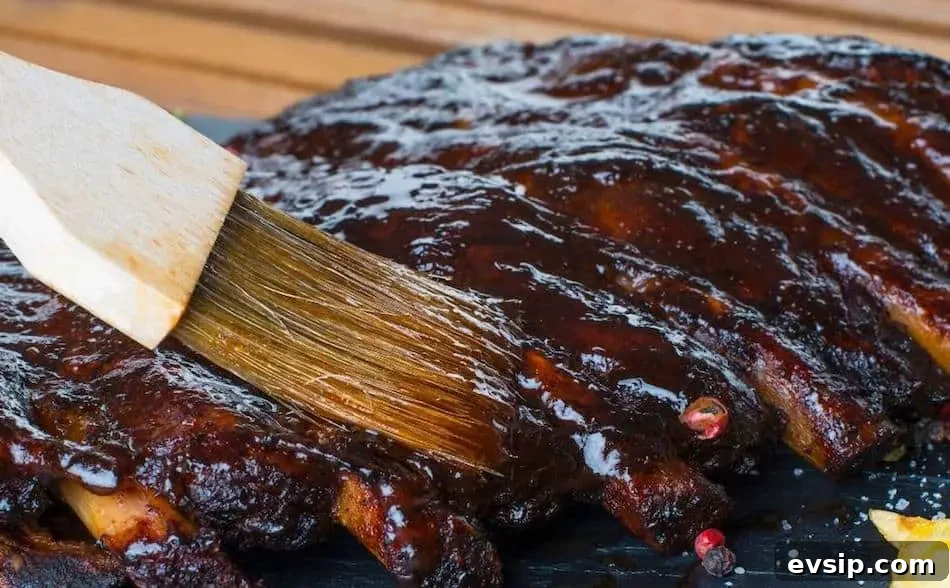
Set the Glaze
No matter which cooking schedule you follow, the glaze belongs at the end. Some cooks add sauce briefly before wrapping to let flavors penetrate, while others wait until the unwrapped finish so the glaze can caramelize. In either case, return the sauced ribs to the smoker unwrapped for a short period so the glaze can set and develop a shiny finish.
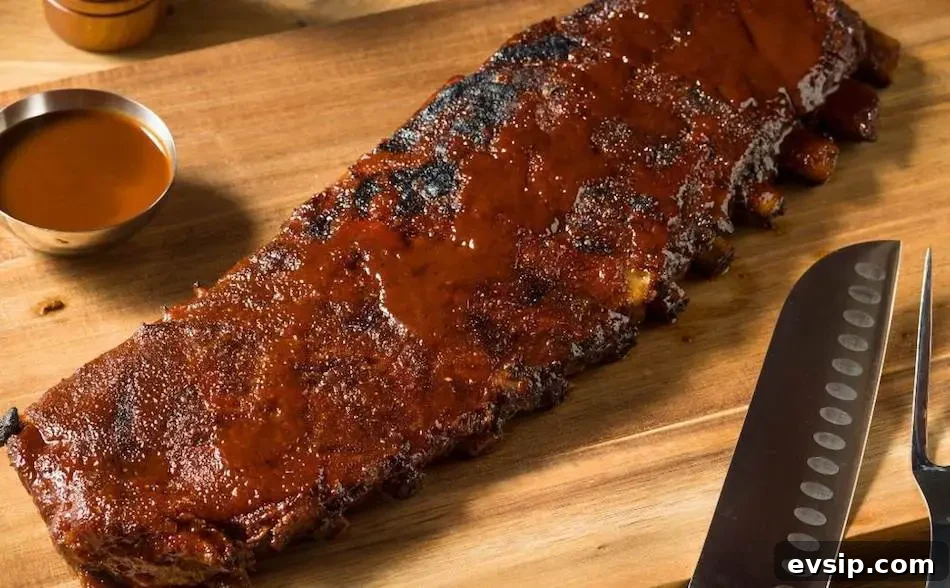
Don’t Burn The Sauce
Sugary sauces and honey-based glazes scorch quickly, so keep a close eye on the ribs once sauced. If the heat is too high or the sauce goes on too early, it will blacken and impart an unpleasant burnt taste. If necessary, move the ribs to indirect heat or raise the grill temperature slightly and watch for caramelization without burning.
How To Sauce Ribs
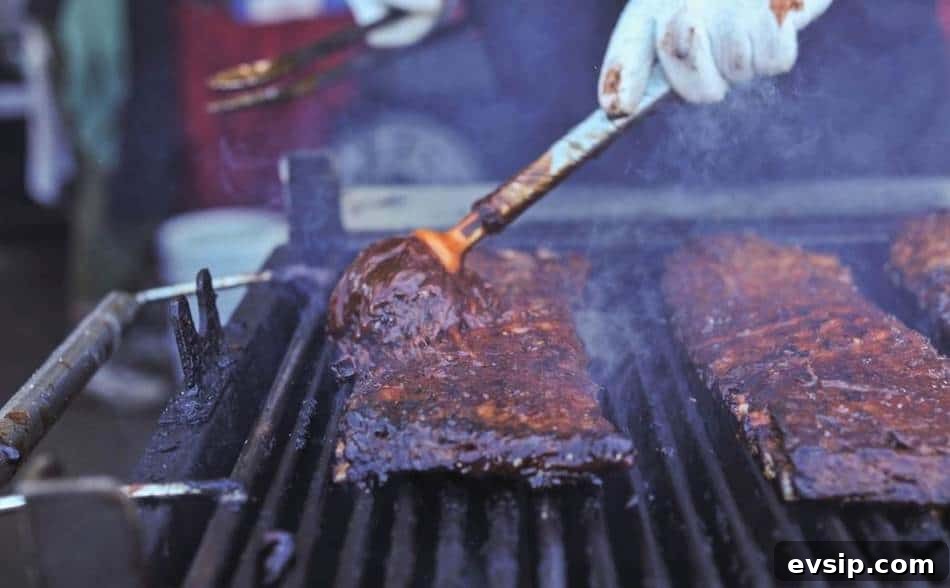
The most common method is to brush sauce on with a soft basting brush, coating both sides evenly. A squirt bottle offers a no-touch alternative that minimizes damage to the bark. When using tongs, be gentle—metal tongs can tear the bark, so handle racks with a towel or heat-resistant gloves when possible.
Aaron Franklin prefers a no-touch approach: he squirts sauce from a bottle and then spritzes apple cider vinegar to help spread the sauce evenly. He often mist the meat about 15 minutes before saucing to prepare the surface so the glaze adheres better.
Layers of flavor
Low-and-slow smoking is about building layers of flavor. Smoke contributes the first layer, the rub and seasoning add another, and the sauce finishes the profile. The bark formed in the early stages adds texture and concentrated flavor. Saucing is the last layer—applied carefully and at the right moment so it enhances rather than overwhelms the bark.
Two popular timing frameworks are the 3-2-1 method (3 hours unwrapped, 2 hours wrapped, 1 hour sauced) and the 2-2-1 method (2 hours unwrapped, 2 hours wrapped, 1 hour sauced). Both are widely used online, but many experienced pitmasters feel these schedules can overcook ribs. Experts like Aaron Franklin rely on appearance and feel rather than strict timing.
Franklin’s approach: smoke ribs around 235–275°F for an initial period (commonly about 2 hours uncovered), spritz with apple cider vinegar 15 minutes before wrapping, apply sauce at the wrap stage, then continue cooking wrapped. After the wrapped phase he removes the foil, adds a final coat of sauce, and returns the ribs to the smoker for a short time (around 10–20 minutes) to set the glaze. He finishes by testing tenderness—twisting and bending the rack—aiming for tender meat that still holds to the bone rather than completely falling off.
The Best Sauces For Glaze
Most favorite barbecue sauces work well as a glaze. Sweet, tomato-based sauces are traditional for pork ribs and provide the familiar sticky finish. You can experiment with Asian-style sauces or custom blends, but classic American-style barbecue sauces are the standard choice for a glossy, balanced glaze.
How Aaron Franklin Cooks Ribs
Aaron Franklin often smokes ribs at around 275°F. He uses olive oil as a binder and a simple rub—typically one part salt to two parts coarse black pepper, occasionally with a touch of paprika for color and optional onion or garlic powder for extra savoriness. He trims and squares the rack, applies the binder and rub, then smokes the ribs mostly undisturbed during the initial phase.
At roughly the two-hour mark he’ll spritz with apple cider vinegar, apply sauce directly from a bottle without touching the meat, then wrap the ribs in foil and return them to the smoker. After the wrapped phase he unwraps, adds another layer of sauce, and smokes briefly unwrapped to set the glaze. He assesses doneness by feel: the ribs should be tender but not falling apart.
Best Ribs For Smoking
Spare ribs and baby back ribs are the most popular choices for smoking. Other cuts like rib tips, riblets, and country-style ribs follow the same principles, though beef ribs are typically treated differently and often served without a sweet glaze. Pork pairs well with sugary sauces, which is why they’re commonly sauced at the end of the cook.
My Favorite Meat Smoking Tools
Thanks for reading. Below are a few useful tools for smoking meats. These are items I recommend to beginners and enthusiasts for reliable, consistent cooking results.
Meat Thermometer: A dual-probe thermometer is invaluable for monitoring both smoker and meat temperatures. A reliable, affordable two-probe unit remains one of the best starter purchases.
Instant Read Thermometer: A fast, accurate instant-read thermometer helps check doneness in multiple spots during the final stages of the cook.
Wireless Thermometer: Wireless or Wi‑Fi thermometers let you monitor temperatures remotely from your phone for stress-free cooks.
Butcher Paper: Unwaxed, food-grade butcher paper is ideal for wrapping meats while preserving bark and moisture during the resting phase.
Advanced Thermometer and Controller: For serious smokers, multi-probe Bluetooth/Wi‑Fi thermometers and automatic controllers can turn a charcoal smoker into a set-and-forget cooker and provide detailed logs of your cooks.