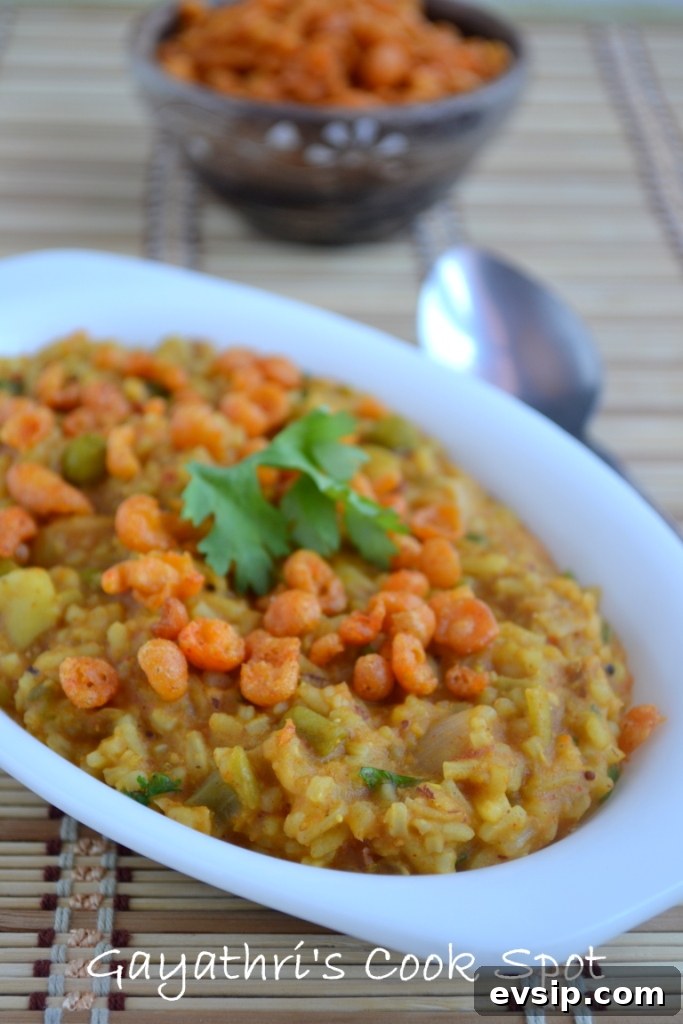
Bisi bele bath is a celebrated rice dish from Karnataka, made with lentils, vegetables and a fragrant spice mix. Also known as bisi bela huli anna, the dish often includes tamarind for a pleasant tang. This version is inspired by memories of Mysore and family kitchens. My neighbor Latha aunty once taught my mother how to make it, and it became a favorite at home—served steaming hot from a large pot and often topped with crisp kaara boondhi. After I moved away, I missed that homemade flavor. Recently I persuaded my mother to share the recipe; she usually measures by eye, so I converted her instincts into tablespoons and tried it myself. Preparing the roasted spice powder brought back nostalgic aromas, and though my first attempt wasn’t quite as perfect as my mother’s, it captured the spirit of the dish. When K returned home and smelled the bisi bele bath, he said it smelled like Karnataka itself—and he enjoyed it. Here is the recipe I used.
Ingredients:
Rice – 1 cup (about 200 g)
Toor dal – 1/2 cup (about 100 g)
Mixed vegetables – 500 g (example: 1 carrot, 1 radish, 5–6 beans, 1 capsicum, 100 g green peas, 1 potato)
Tamarind – small lemon-sized ball
Salt – to taste
Turmeric powder – 1/2 tsp
Oil – 2 tbsp + 1 tbsp
Mustard seeds – 1 tsp
Marathi moggu (mace) – 2–3 pieces
Onion – 2 (medium)
Tomato – 2 (medium)
Grated copra (dried coconut) – 1 cup
Coriander leaves – 1/4 cup, finely chopped
For the spice powder:
Poppy seeds (khus khus) – 1 tbsp
Cinnamon – 1 stick
Cloves – 4–5
Coriander seeds – 2 tbsp
Dried red chilies – 8–10 (adjust to taste)
Fenugreek seeds (methi) – 1/2 tsp
Chana dal – 1 tbsp
Urad dal – 1 tbsp
Ghee – 1 tbsp
Procedure:
1. Prepare the spice powder: heat ghee in a small pan and roast the poppy seeds, cinnamon, cloves, coriander seeds, red chilies, fenugreek, chana dal and urad dal until they turn golden and release a fragrant aroma. Cool, then grind to a fine powder and set aside.
2. In a pressure cooker, combine the toor dal, chopped vegetables, tomatoes, turmeric powder, 1 tbsp oil and 2 1/2 cups of water. Pressure-cook until the dal and vegetables are soft. When pressure releases, open and mash the mixture lightly with the back of a ladle to break down the vegetables and dal.
3. In a large, heavy-bottomed pan, heat 2 tbsp oil. Add mustard seeds and Marathi moggu. When the mustard seeds crackle, add sliced onions and sauté until golden brown.
4. Add 5 cups of water to the pan and bring it to a boil. Add the washed and drained rice and cook on medium heat with the pan covered until the rice is fully cooked.
5. Once the rice is cooked, add the mashed dal-and-vegetable mixture to the rice and mix well. Stir carefully and frequently, as the mixture can stick to the bottom of the pan.
6. Continue cooking and stirring until the entire mixture becomes slightly mushy and well combined.
7. Extract tamarind pulp from the tamarind ball and add the tamarind juice and salt to the rice-dal mixture. Cook on medium flame for another 5 minutes to let the flavors blend.
8. Add the prepared spice powder, mix and cook briefly for about a minute so the powder releases its aroma.
9. Stir in the grated copra and chopped coriander leaves, give a final mix and remove from heat. The bisi bele bath will be slightly runny when hot; it thickens as it cools.
10. Serve piping hot, traditionally topped with kaara boondhi or your preferred accompaniment.
P.S.: To make copra at home, keep two halves of a fresh coconut in a cool, dry place; over time they will dry and resemble copra. Use store-bought copra if available for convenience.
The flavorful spice powder
Add vegetables, dal, turmeric and 1 tbsp oil with 2 1/2 cups water to the pressure cooker.
Dried coconut in shell; copra comes out of the shell easily.
Grate the copra using a suitable grater.
Once cooked, mash the dal-vegetable mixture with the back of a ladle.
Cook the rice until done.
Add the dal mixture to the rice and mix well.
Add tamarind juice and salt to balance the flavors.
Stir in the roasted spice powder.
Add copra and coriander leaves, mix well and serve hot.
This recipe evokes family memories and the comforting flavors of Karnataka. Enjoy your homemade bisi bele bath!