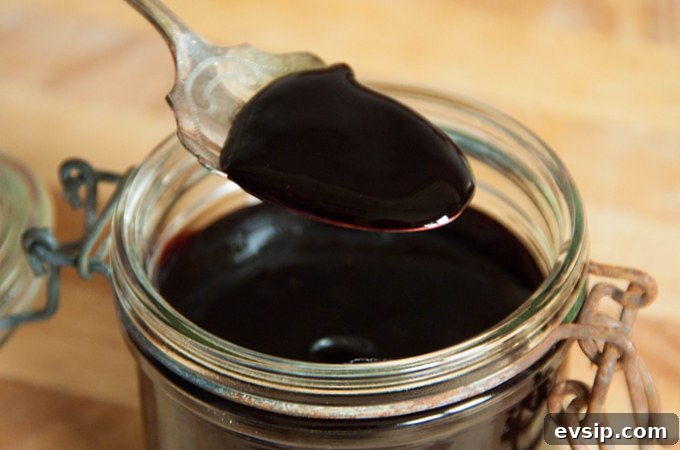
Right now elderberries are in season and this year they’re abundant — which I’m happily taking advantage of. I’ve been making large batches of elderberry jelly, cordial and even cough syrup from these dark, nutrient-dense berries. They’re simple to harvest and clean; if you’re collecting them yourself, follow a reliable guide to identify and gather them safely.
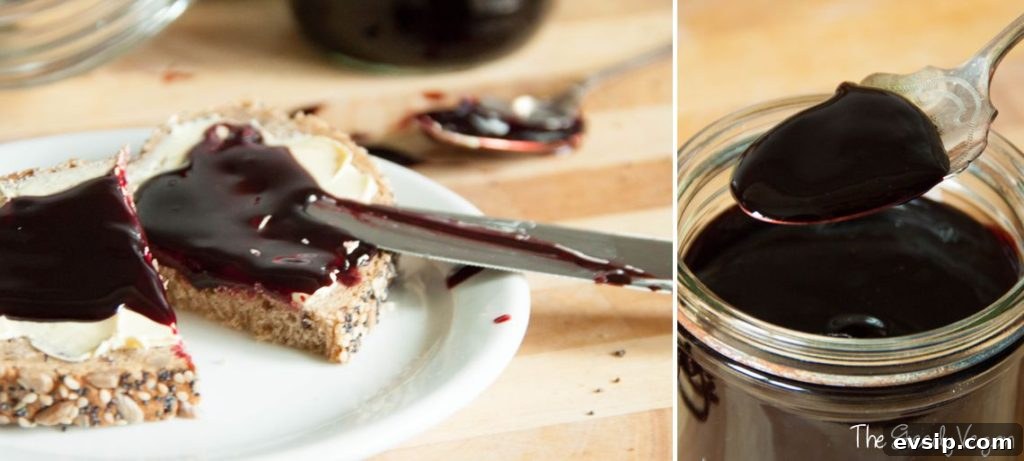
There are many things you can make with elderberries, but my favourite is jelly. It’s perfect on pancakes, toast, or ice cream, and also works well stirred into smoothies. A spoonful each morning gives a pleasant vitamin C boost along with other nutrients like vitamin A, several B vitamins and trace amino acids.
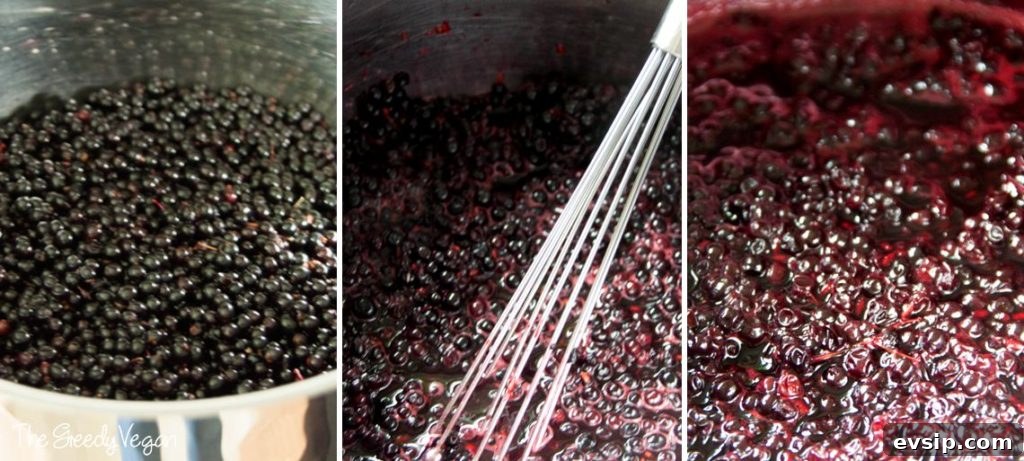
Below is a straightforward, step-by-step method for making elderberry jelly at home. I prefer a less-sweet jelly, so taste before jarring and adjust the sugar to your preference; some recipes call for considerably more sweetener than I use.
If it’s your first time making jelly and you’re unsure about the pectin level, try a quick test: spoon a small amount of the hot jelly liquid onto a plate and place it in the freezer for a minute or two. It will cool rapidly and show you the final set. If it’s still too runny, add more pectin and boil briefly again until it reaches the texture you want.
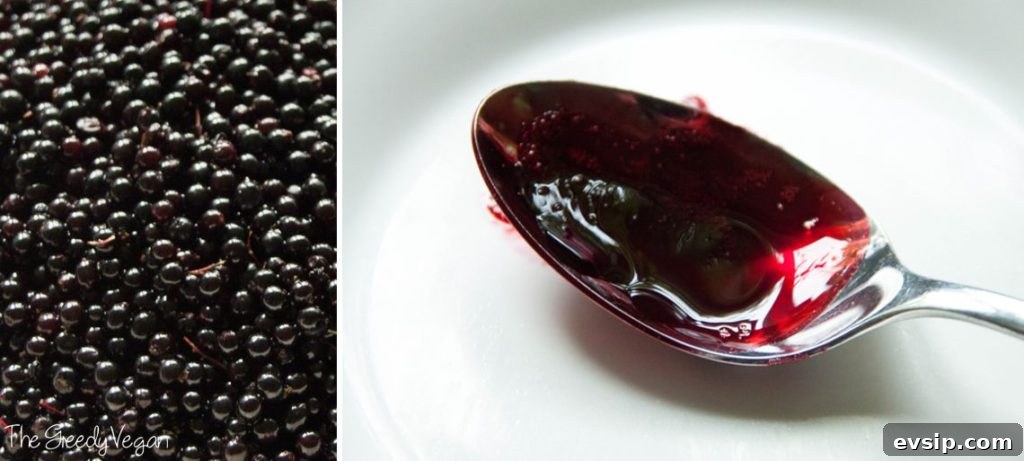
How to Make Elderberry Jelly
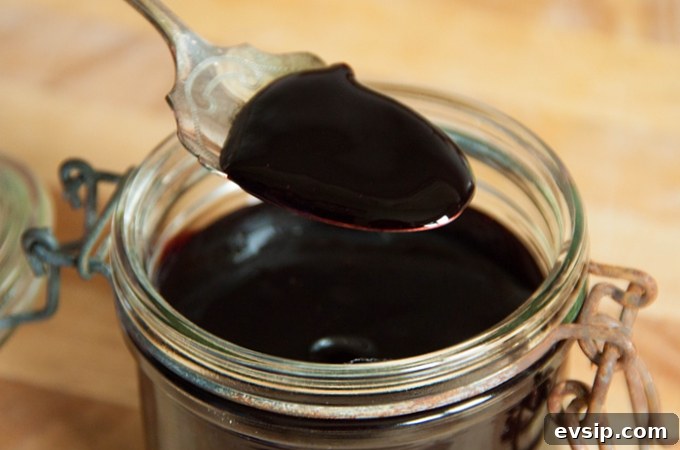
Author: The Greedy Vegan
Summary: A step-by-step guide to making elderberry jelly from scratch. This jelly is flavorful, healthy and rich in vitamin C.
Prep Time: 15 mins · Cook Time: 20 mins · Total Time: 35 mins
Course: Jelly · Cuisine: Vegan · Servings: 40 tbsp · Calories: 35 kcal per tablespoon
Ingredients
- 1 kg elderberries (cleaned)
- Juice of 1 lemon
- 175 g sugar (adjust to taste)
- 2 tablespoons pure pectin (or preferred gelling agent)
Instructions
- Place the cleaned elderberries into a heavy-bottomed pot over low to medium heat. Stir gently until they begin to release their juices. When the berry mass starts to break down, increase the heat just enough to bring it to a gentle boil. Simmer for 10–20 minutes, until the berries are soft and thoroughly broken down. Remove from heat.
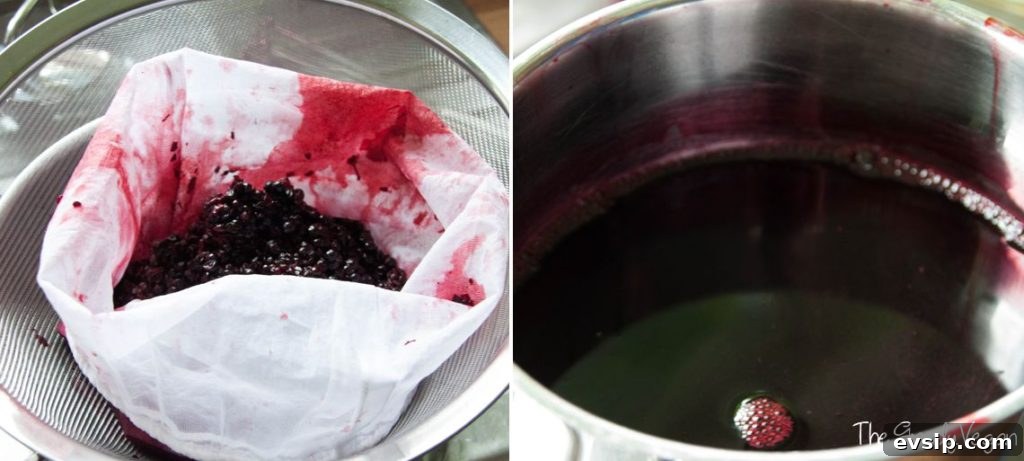
- Set a large fine-mesh sieve, cheesecloth or nut-milk bag over a pot. Transfer the berry mixture into the sieve and allow the juice to drain into the pot. You can let it strain slowly for several hours or overnight for a clear result. If pressed for time, wait until it’s cool enough to handle and press or squeeze the pulp to extract the juice — you should end up with roughly 500 ml (about 2 cups) of elderberry juice.
- Gradually whisk the pectin into the juice until dissolved. Add the sugar and the lemon juice and bring the mixture to a boil. Depending on the pectin you use, it may take only a few minutes of boiling to reach the desired set — follow the pectin package instructions when in doubt. Using pure pectin (rather than pre-sweetened jam sugar) gives you full control over sweetness.
- When the jelly has reached the set you want, remove it from heat and wait about five minutes before pouring into sterilized jars. Sterilize jars by rinsing them with boiling water or warming them briefly in a 100°C (200°F) oven. Use caution handling hot jars — oven mitts or heat-resistant gloves help prevent burns.
Notes
Your homemade elderberry jelly will keep for months when properly canned and stored. It also freezes well if you prefer to preserve smaller portions. This recipe yields a pleasantly flavoured jelly that’s easy to adjust for sweetness and pectin strength based on your taste and the exact product you use.
Nutrition (per 1 tbsp)
- Calories: 35 kcal
- Sodium: 1 mg
- Potassium: 73 mg
- Carbohydrates: 9 g (Fiber 1 g, Sugar 4 g)
- Vitamin A: 150 IU · Vitamin C: 10.4 mg
- Calcium: 10 mg · Iron: 0.4 mg
If you try this recipe, leave a note on how it turned out — adjustments for sweetness and pectin are common, and small tweaks will help you perfect it for your taste.