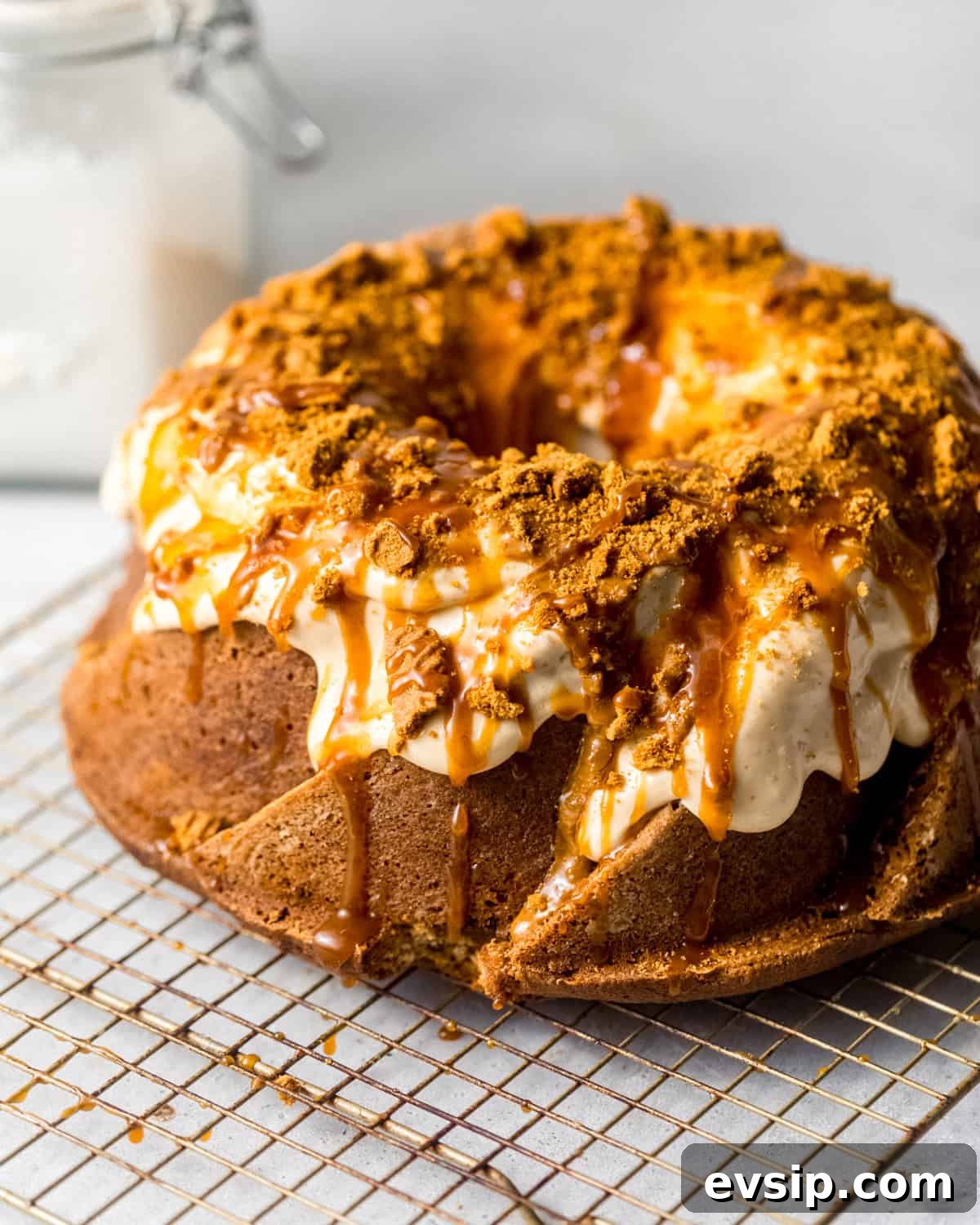
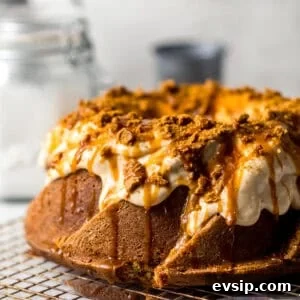
This browned-butter cookie butter pound cake is rich, cozy, and packed with Biscoff flavor in every bite. It bakes up buttery and tender, then gets finished with a creamy Biscoff cream cheese glaze, salted caramel, and crushed Biscoff cookies for crunch.
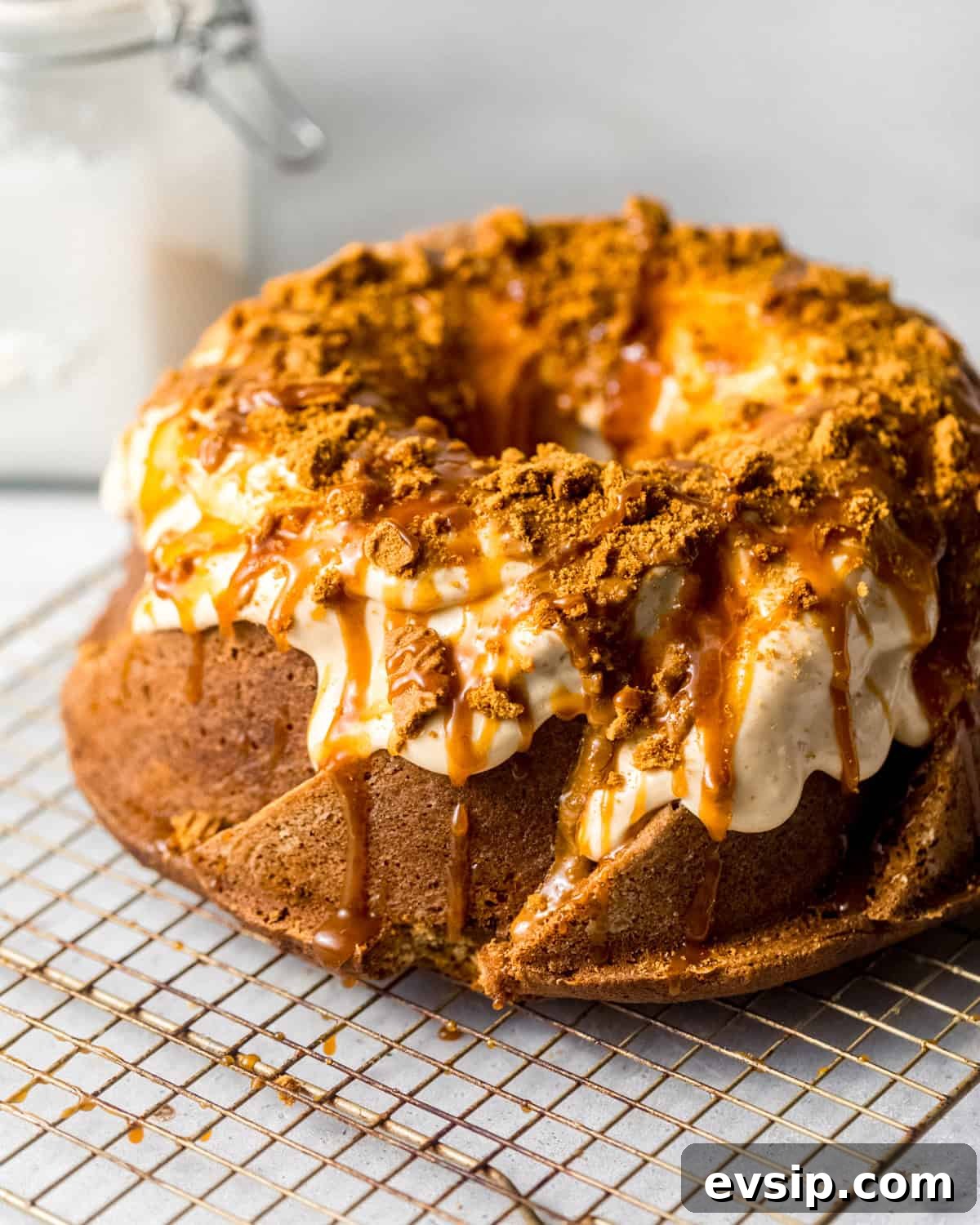
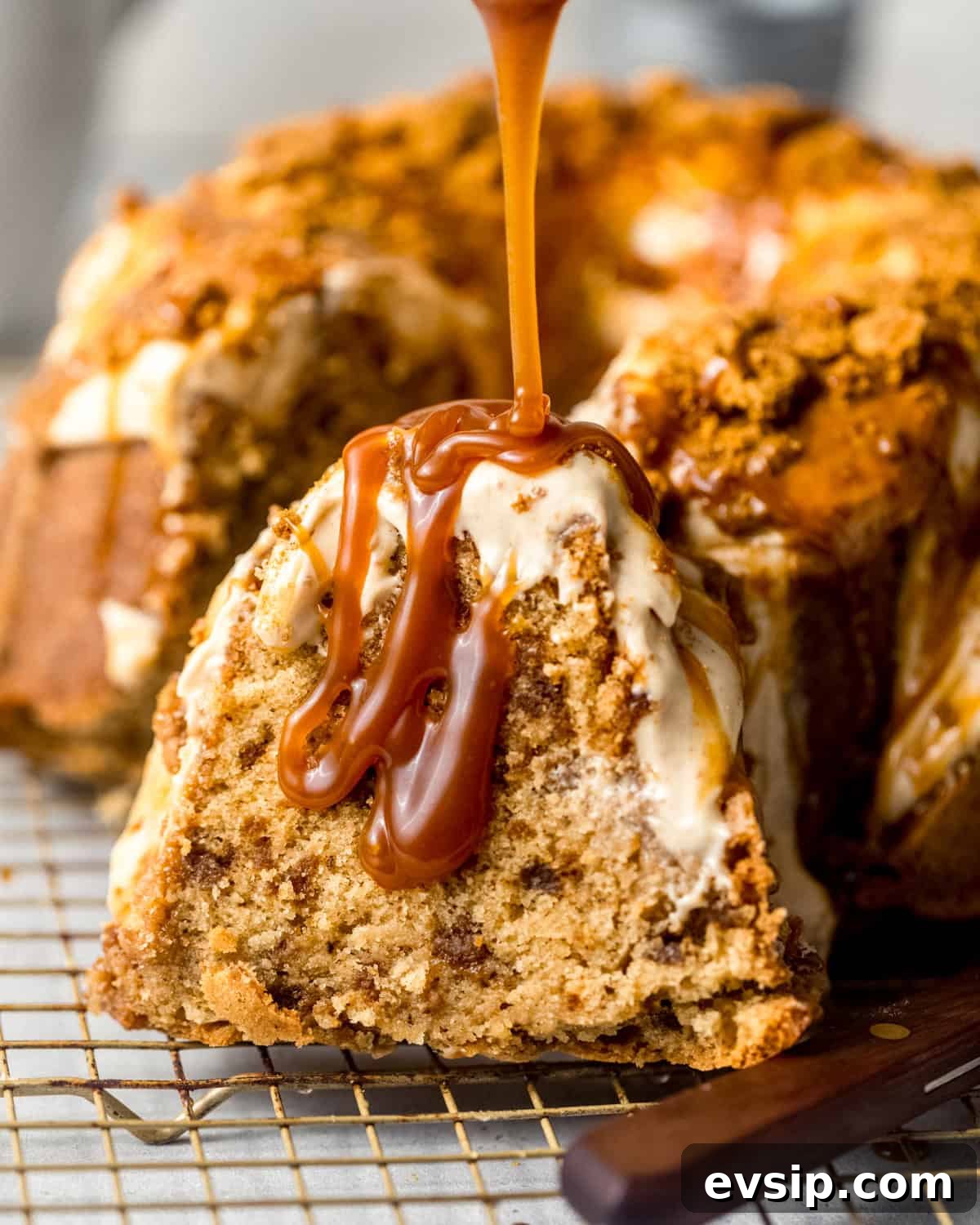
This Biscoff pound cake answers every cake craving: a moist, decadent brown-butter cake studded with chunks of crushed Biscoff cookies. A silky Biscoff cream cheese glaze and a salted caramel drizzle take it over the top, with extra crushed cookies for texture and presentation.
Cookie butter behaves differently than other spreads because it’s made from crushed Lotus Biscoff cookies, oil, and sugar. That unique composition required some tweaks while developing this recipe, but the result is worth every trial.
If you love cookie butter (and who doesn’t?), this cake is a crowd-pleaser—serve it with ice cream for an extra special treat.
Table of contents
- Why You’ll Love This Biscoff Pound Cake
- Key Ingredients
- Substitutions and Variations
- How to Make Cookie Butter Cake
- Brown the Butter
- Make the Cake Batter and Bake
- Make the Caramel and Biscoff Cream Cheese Frosting
- Assemble
- Pro Baking Tips
- Recipe FAQs
- More Pound Cake Recipes
Why You’ll Love This Biscoff Pound Cake
- Full-on Biscoff flavor: Warm, spiced cookie butter baked directly into the cake for a caramelized, buttery profile.
- Ultra-moist, tender crumb: This pound cake stays soft for days when made as directed.
- Bakery-quality, home-friendly: It looks impressive and tastes indulgent, but is approachable for home bakers.
- Better the next day: Flavors deepen overnight, making it a perfect make-ahead dessert.
Key Ingredients
(See the recipe card below for the full ingredient list and measurements.)
- Biscoff cookie butter and Biscoff cookies: The cake’s defining flavors. Cookie butter adds caramelized sweetness and warm spices; crushed cookies add bite and texture.
- Evaporated milk: Adds richness and helps create a silky, moist crumb.
- Sour cream: Boosts moisture and adds a subtle tang to balance sweetness.
- Butter: Browned butter brings nutty, caramel notes; use salted or unsalted to suit your taste.
- Cream cheese (for the glaze): Provides a tangy, creamy base that keeps the glaze balanced and not cloying.
Substitutions and Variations
- Cookie butter emulsion: Some recipes call for it to intensify the Biscoff flavor. It’s optional here because this recipe layers cookie butter in the cake, streusel, and glaze for a strong profile.
- Salted caramel: Use store-bought if you prefer, or follow the simple homemade method in the recipe card for a four-ingredient caramel.
- Pan options: Make this in a 12- or 15-cup bundt pan, a tube pan, or divide the batter between two 9×5-inch loaf pans—adjust baking time accordingly and start checking earlier.
How to Make Cookie Butter Cake
Brown the Butter
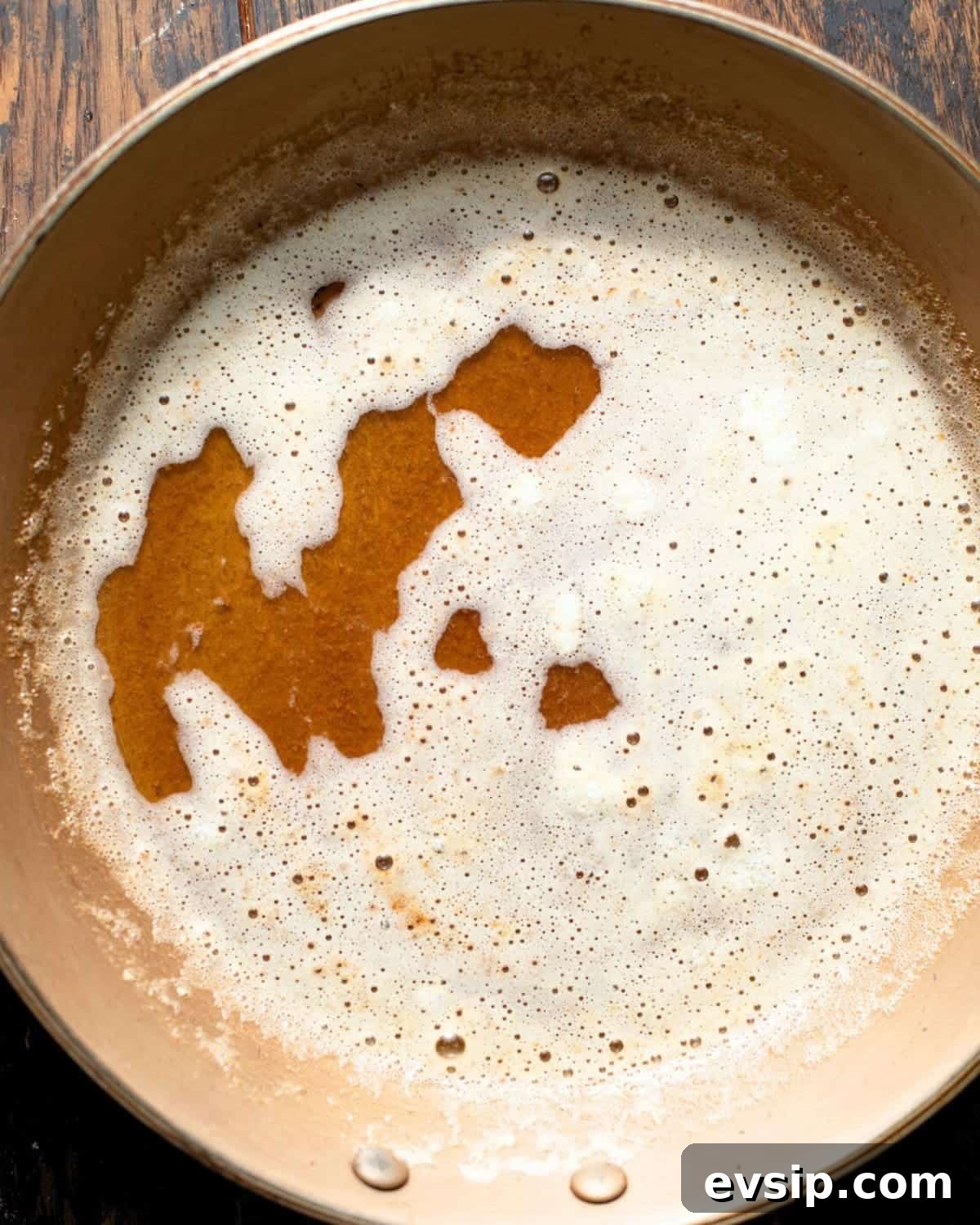
Step 1: Melt 1 cup (2 sticks) of butter in a skillet over medium heat. Add milk powder and whisk to prevent clumps. Reduce heat to medium-low and cook, stirring frequently, until the butter turns golden with brown specks and gives off a nutty, caramel aroma. Transfer to a heatproof bowl and chill in the refrigerator until solid but still soft, about 1 hour.
Make the Cake Batter and Bake
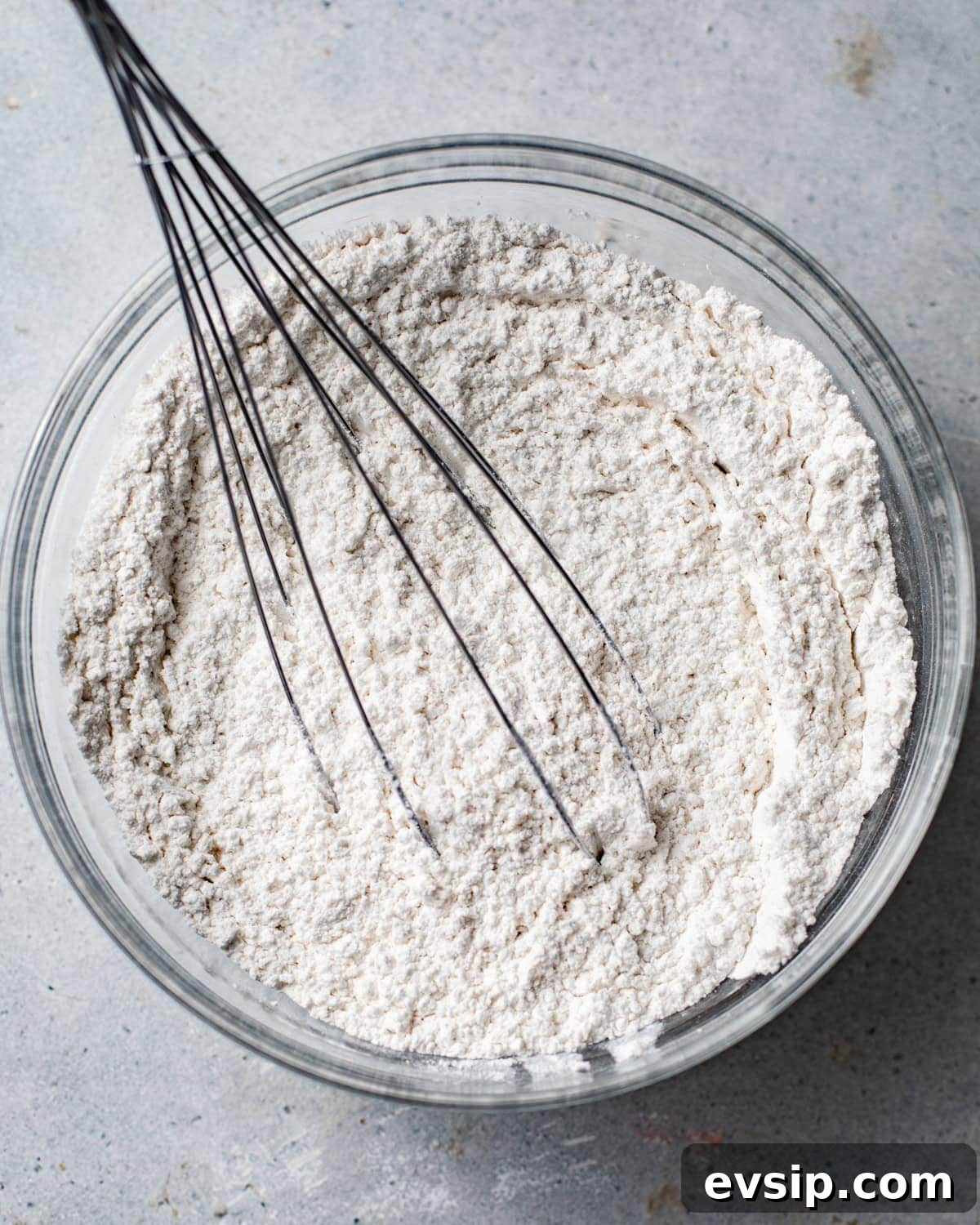
Step 2: Preheat the oven to 325°F. Whisk together the dry ingredients—flour, espresso powder, baking powder, kosher salt, cinnamon, and nutmeg—and set aside.
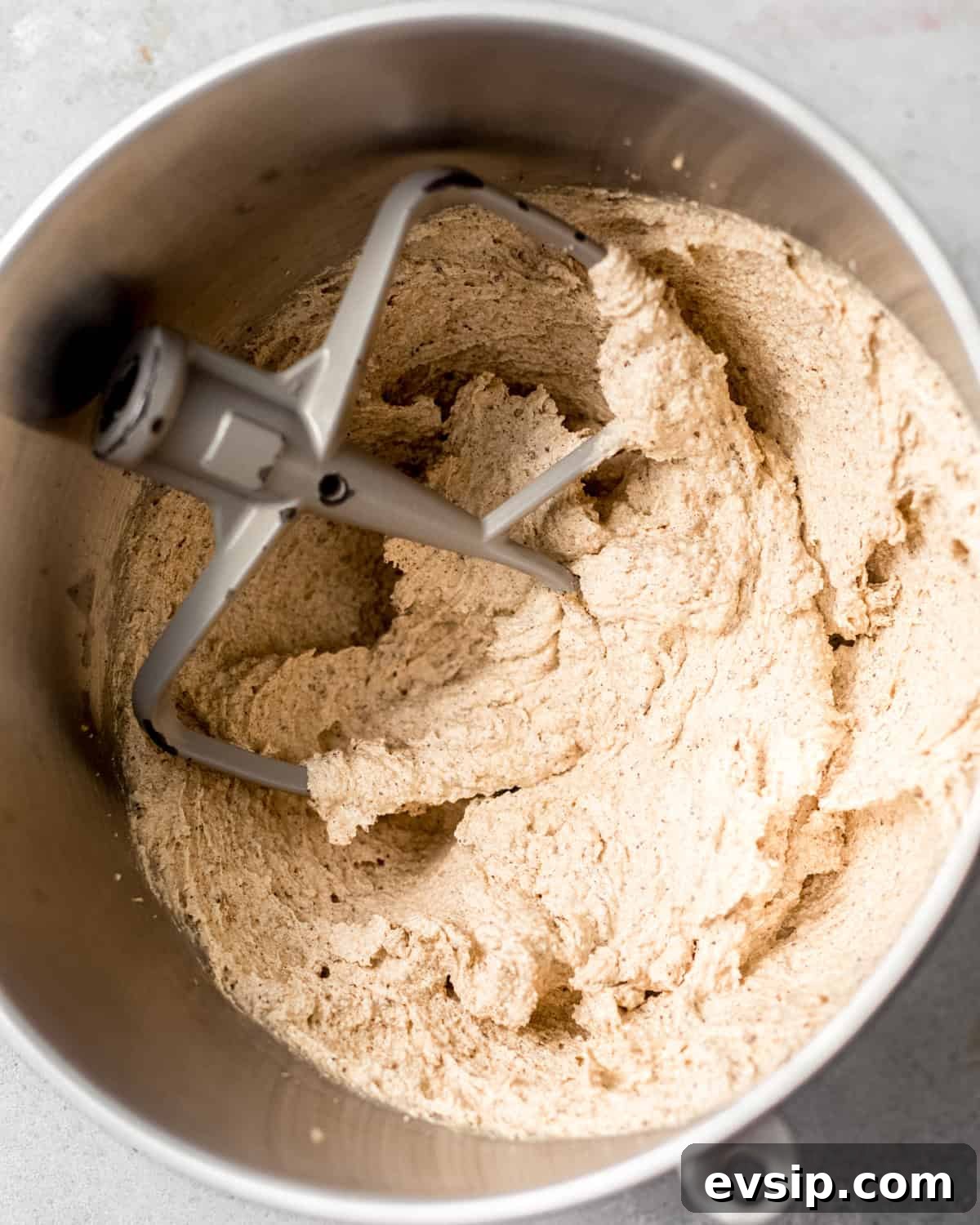
Step 3: In a stand mixer, combine the solidified browned butter with the remaining 1/2 cup butter and both sugars. Cream on medium until light and fluffy, scraping the bowl as needed. Reduce speed and add eggs one at a time.
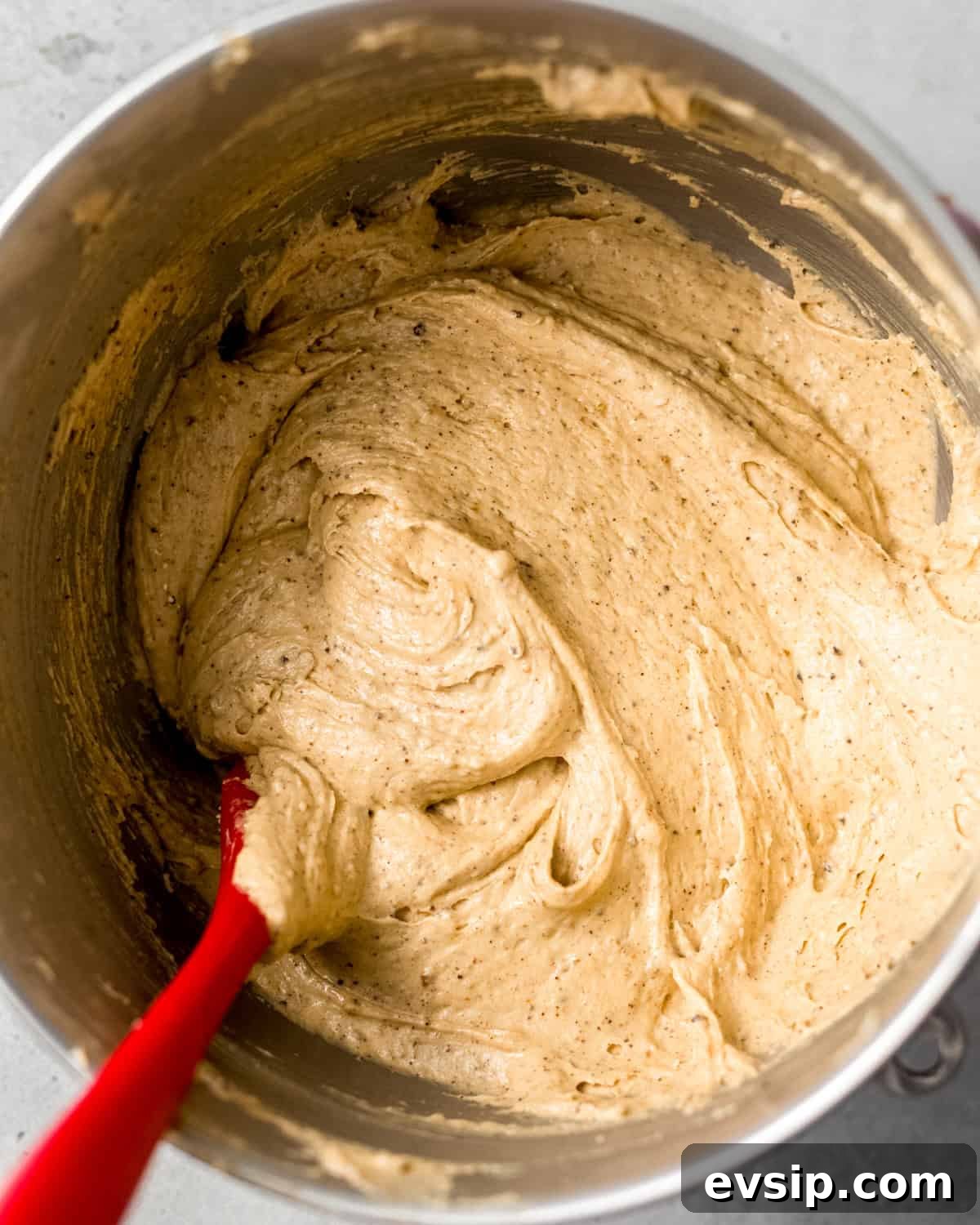
Step 4: Add half the dry ingredients and mix until just combined. Add vanilla, cookie butter, evaporated milk, oil, and sour cream; mix briefly. Add remaining dry ingredients and mix until smooth, taking care not to overmix.
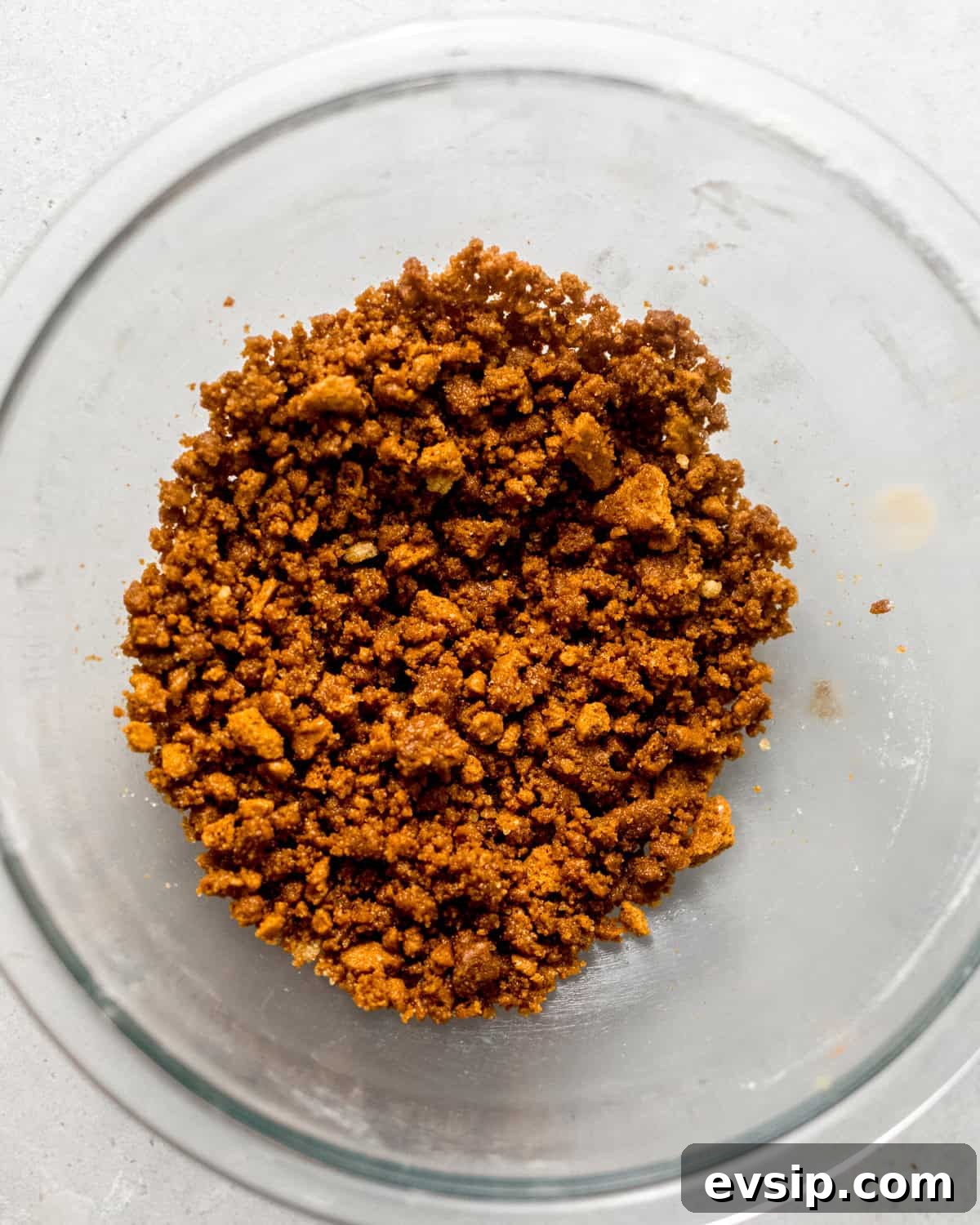
Step 5: For the Biscoff streusel, roughly crush Biscoff cookies, toss with melted butter and brown sugar, then fold into the batter for pockets of cookie crunch throughout the cake.
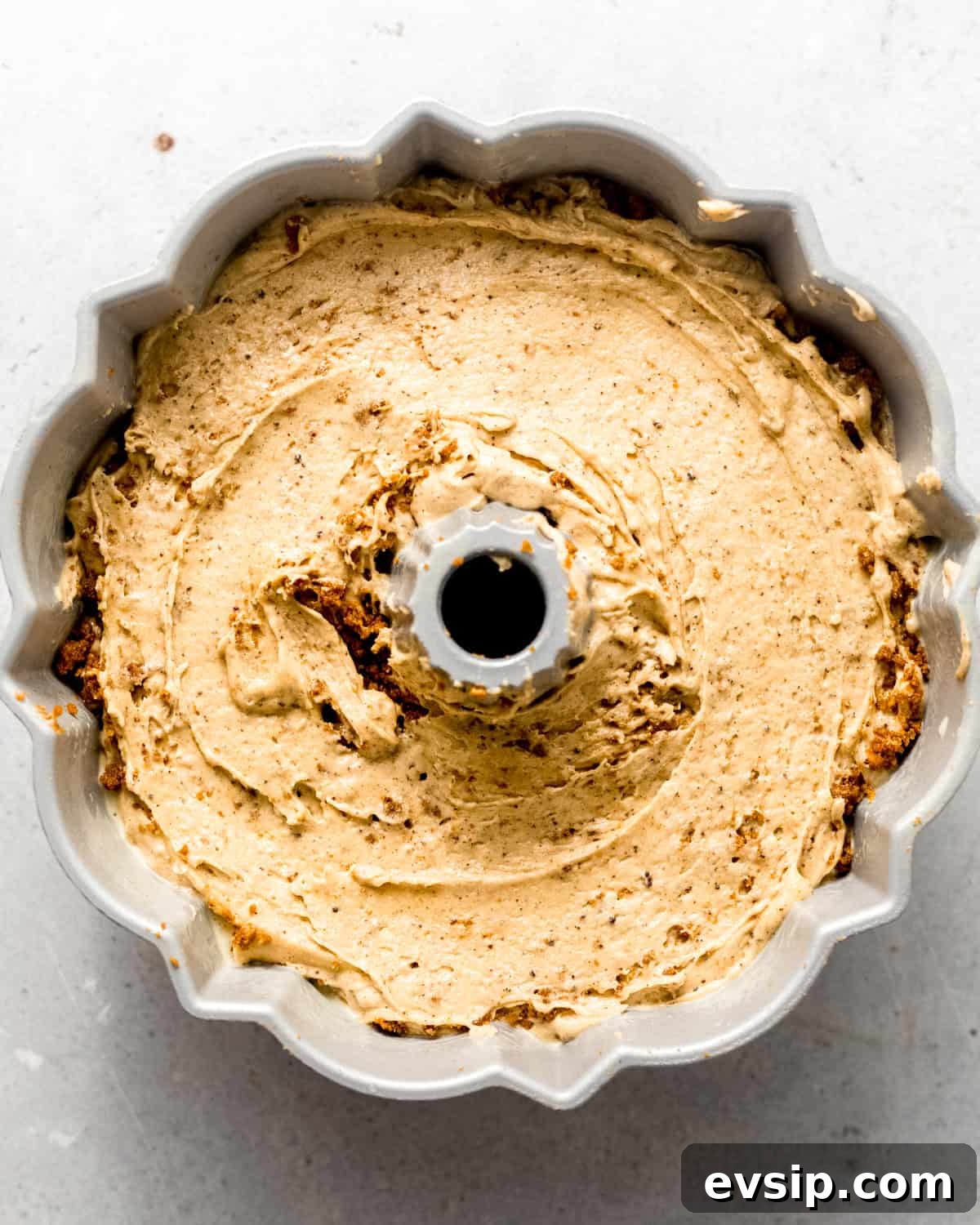
Step 6: Spray a 12- or 15-cup bundt pan with nonstick spray, pour in the batter, and bake for 1 hour 15–25 minutes, until a toothpick comes out with a few moist crumbs. Cool in the pan 10 minutes, then invert onto a wire rack.
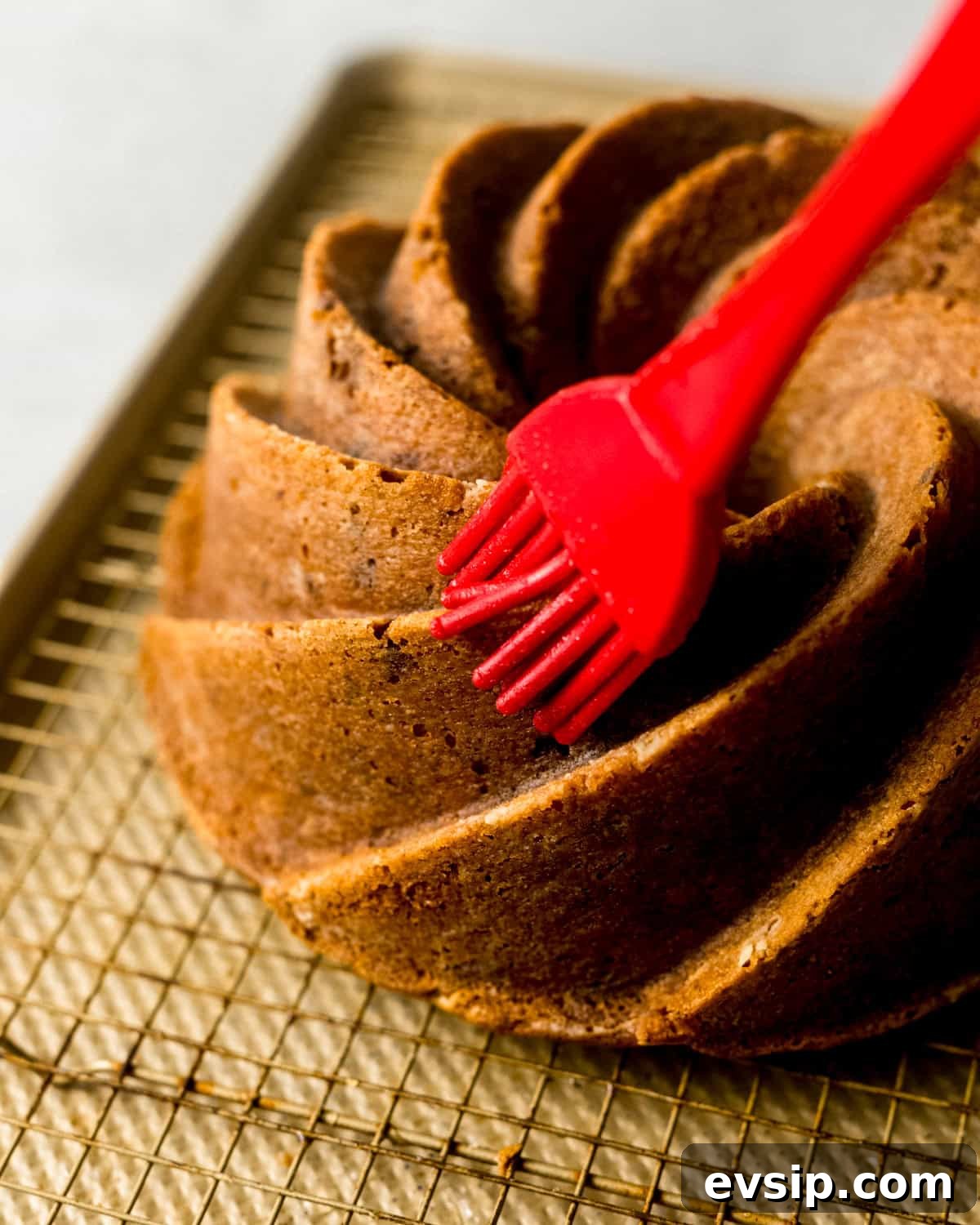
Step 7: While baking, make a vanilla simple syrup: simmer water and sugar until the sugar dissolves, remove from heat and stir in vanilla bean paste or extract. Brush the cooled cake with the syrup and let it cool completely.
Make the Caramel and Biscoff Cream Cheese Frosting
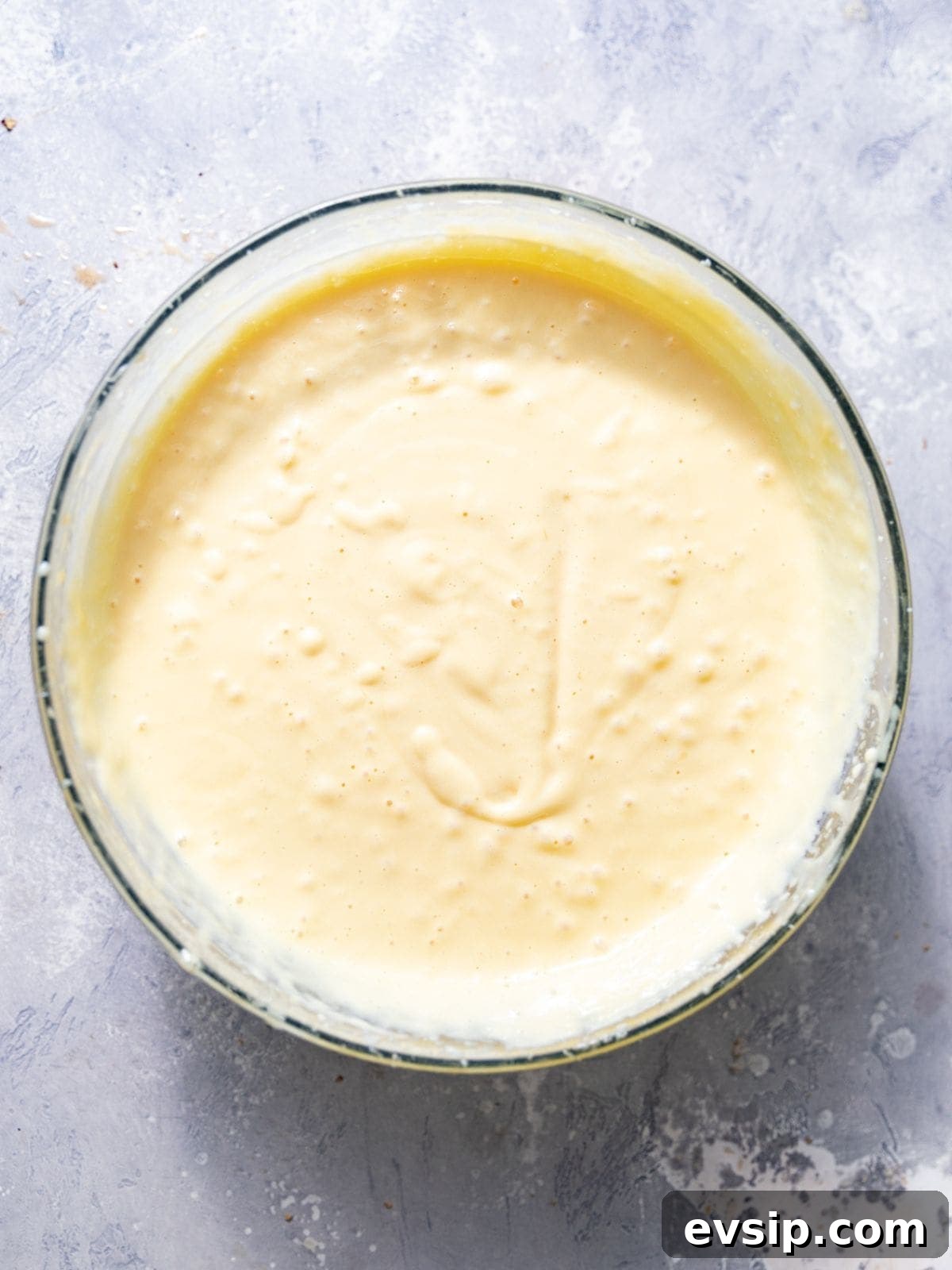
Step 8: Beat room-temperature cream cheese until smooth. Add butter, powdered sugar, and cookie butter, then mix until combined. Add milk gradually to reach your preferred glaze consistency—use more milk for a thinner glaze, less for a thicker one.
Salted caramel (optional homemade method): Melt sugar in a heavy-bottomed pan over medium heat until it becomes a deep amber syrup, carefully add butter and whisk, then stir in heavy cream and a pinch of kosher salt. Cool before using; the sauce will thicken as it cools.
Assemble
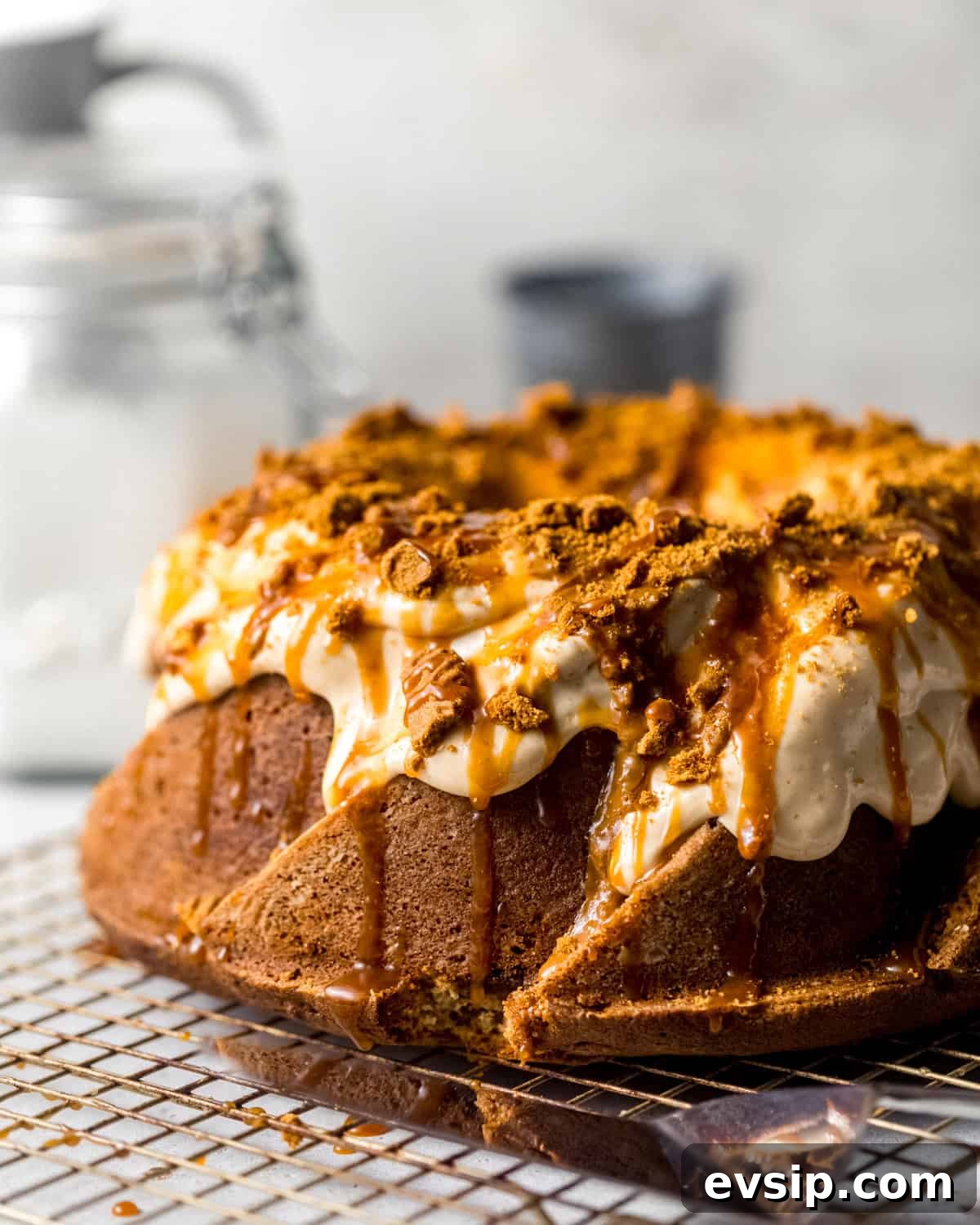
- Melt 2–3 tablespoons of cookie butter until pourable.
- Spread the Biscoff cream cheese glaze over the cooled cake. Drizzle melted cookie butter and salted caramel on top, then sprinkle crushed Biscoff cookies as a finishing garnish.
Pro Baking Tips
- Let the browned butter solidify: It should be soft but spreadable, similar to room-temperature butter.
- Don’t overmix after adding flour to keep the cake tender.
- Check doneness with a skewer; it should come out with moist crumbs, not wet batter.
- Cool before glazing: Allow the cake to fully cool so the glaze sets properly.
Recipe FAQs
Yes. Wrap slices or the whole cake tightly in plastic wrap and foil, and freeze up to 2 months. Avoid freezing the glazed cake—add frosting and garnishes after thawing at room temperature.
It tastes rich and buttery with browned-butter and caramel notes and the warm, spiced profile of Biscoff cookies baked into a tender pound cake.
Yes—Biscoff spread and cookie butter refer to the same type of spread. Avoid the crunchy varieties if you want a smooth texture in the batter.
Dense or gummy texture is often caused by overmixing or underbaking. Mix only until ingredients are combined and bake until a skewer shows moist crumbs, not wet batter.
More Pound Cakes Recipes
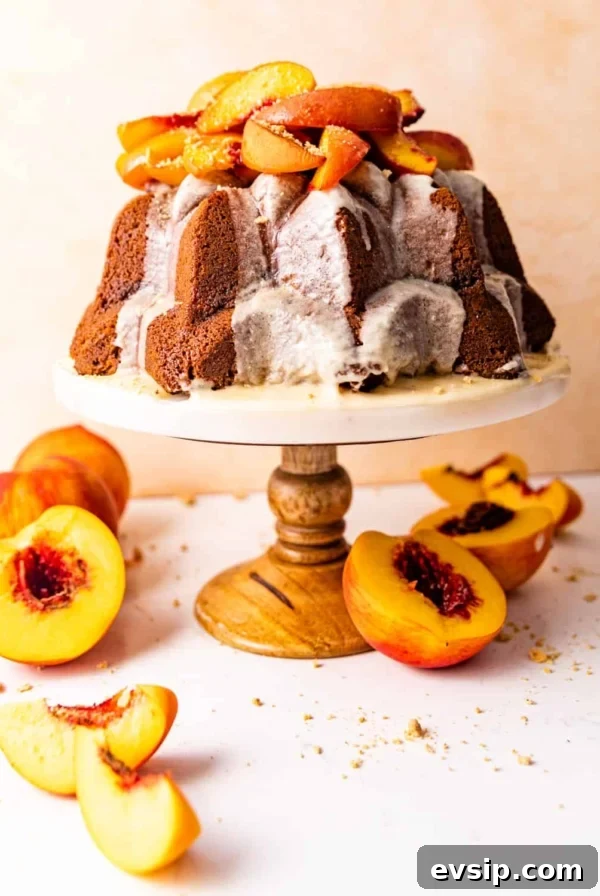
Desserts
Peach Cobbler Pound Cake
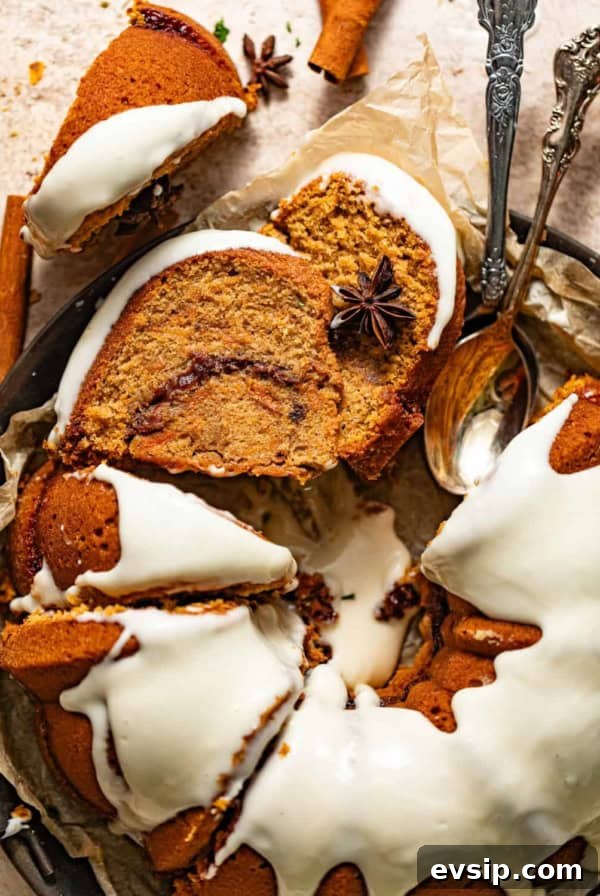
Desserts
Sweet Potato Pound Cake with Cream Cheese Frosting
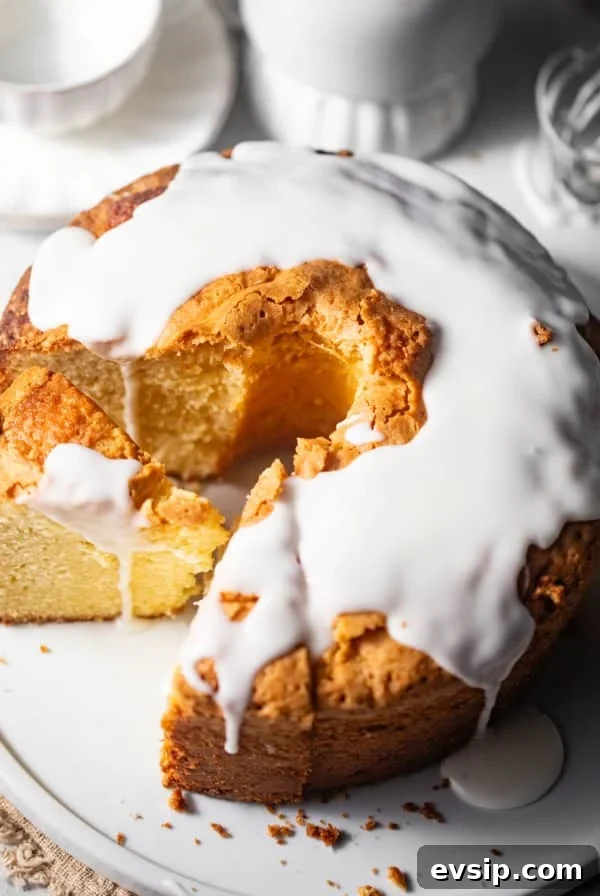
Desserts
Mile High Pound Cake
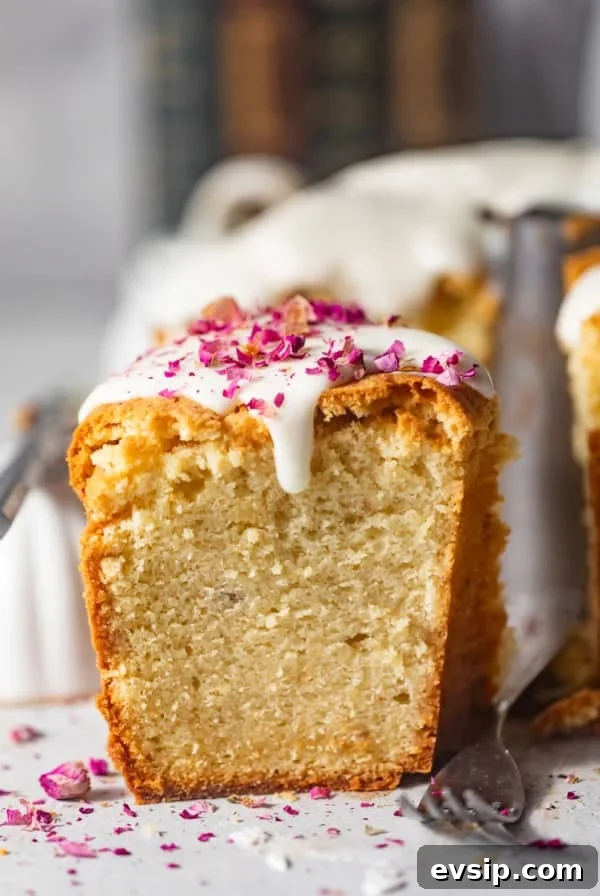
Desserts
Cream Cheese Pound Cake
Want more recipes? Subscribe to get new seasonal recipes delivered when they’re released. If you try this cake, leave a rating and a comment on the recipe card and tag @BritneyBreaksBread on social media so your creation can be celebrated!
Cookie Butter Cake
Equipment
- 12- or 15-cup bundt pan
- Skillet
- Heavy-bottom saucepan (for the caramel)
- Stand mixer or hand mixer
Ingredients
- 3 cups (375 g) all-purpose flour
- 1 tsp baking powder
- 1 tsp kosher salt
- 1/2 tsp espresso powder
- 1/2 tsp cinnamon
- 1/4 tsp nutmeg
- 1 cup (227 g) salted butter, browned
- 1 tbsp milk powder
- 1/2 cup (113 g) salted butter, room temperature
- 1 1/4 cup (250 g) sugar
- 3/4 cup (165 g) brown sugar
- 5 large eggs, room temperature
- 1 tsp vanilla extract
- 1/2 cup (130 g) Biscoff cookie butter
- 3/4 cup (180 g) evaporated milk
- 1/4 cup (60 g) sour cream
- 2 tbsp (28 g) vegetable oil
Biscoff Streusel
- 1 cup (125 g) Biscoff cookies, crushed into chunks
- 4 tbsp (56 g) salted butter, melted
- 2 tbsp (28 g) brown sugar
Vanilla Simple Syrup
- 1/3 cup (80 g) water
- 1/3 cup (67 g) sugar
- 1 tbsp vanilla bean paste or extract
Biscoff Cream Cheese Frosting
- 8 oz (226 g) cream cheese, room temperature
- 3 tbsp salted butter, room temperature
- 3 tbsp cookie butter
- 2 cups (240 g) powdered sugar
- 6–7 tbsp whole milk, to thin
Salted Caramel (optional)
- 1/2 cup (100 g) sugar
- 4 tbsp (56 g) salted butter
- 1/4 cup (60 g) heavy cream
- 1/4 tsp kosher salt
- 2–3 tbsp Biscoff, melted for garnish
Instructions
- Add and brown the butter with milk powder, chill until solidified but soft.
- Preheat oven to 325°F. Whisk dry ingredients and set aside.
- Cream the browned butter, remaining butter, and sugars until fluffy. Add eggs one at a time.
- Alternate adding dry ingredients with the wet additions: vanilla, cookie butter, evaporated milk, oil, and sour cream. Mix until just combined.
- Fold in the Biscoff streusel made from crushed cookies, melted butter, and brown sugar.
- Pour batter into a prepared bundt pan, tap out air bubbles, and bake until a skewer shows moist crumbs. Cool 10 minutes in pan, then invert to cool completely.
- Brush the cooled cake with vanilla simple syrup.
- Make the glaze by beating cream cheese, butter, powdered sugar, and cookie butter, then thin with milk to the desired consistency.
- Melt a few tablespoons of cookie butter for drizzling and make or heat salted caramel if using.
- Top the cooled cake with the glaze, drizzle melted cookie butter and caramel, and sprinkle crushed cookies for garnish.
Notes
Pro baking tips: Let browned butter solidify before creaming, avoid overmixing after adding flour, test doneness with a skewer, and cool fully before glazing.
Variations: Use cookie butter emulsion to intensify flavor, swap in store-bought caramel, or bake in loaf pans—adjust times accordingly.
Nutrition
Nutrition information is an approximation.